

The Further Expansion of the European Union and the Euro
If peace in Ukraine can be achieved, the issue of that country’s path to membership in the European Union will become one of the most important – if not the most important – facing the EU. European leaders have promised accelerated membership, and Ukraine’s agreement to a peace settlement is partly dependent on this promise. Given Ukraine’s deep internal problems and the destruction wrought by the war, it is however very doubtful that the country can meet the stringent conditions of the acquis communautaire for many years to come. Ukrainian membership will also face strong opposition from farmers and national populist parties in several existing EU member states. This has led to renewed discussion of a possible “two-tier EU”.
At the same time it faces this challenge (and that of expansion to the western Balkans), the EU continues to push ahead with the extension of the Euro to new countries, with Bulgaria adopting the currency on January 1st of this year. This was despite deep (and roughly equal) divisions on the subject in the Bulgarian population, and the doubts of some economists as to the country’s readiness to join and ability to withstand any future economic crisis like that of 2008.
To discuss these issues, join a distinguished panel of experts featuring Robert Skidelsky, British economic historian, Wolfgang Streeck, director emeritus at the Max Planck Institute for the Study of Societies, Cologne, and Rada Laykova, Bulgarian politician of the Revival party. Anatol Lieven, director of the Eurasia program, will moderate.
Program
Entities
Panelists

Robert Skidelsky
Professor Robert Skidelsky, Baron Skidelsky is a British economic historian, author, fellow of the British Academy and crossbench life peer. He is best known for his award-winning three-volume biography of John Maynard Keynes. He has held academic posts in history and political economy at several universities, and is emeritus professor of Political Economy at the University of Warwick. Lord Skidelsky has played a leading part in British public debates on economic, social and foreign policy, and served as the founding chairman of the Social Market Foundation.
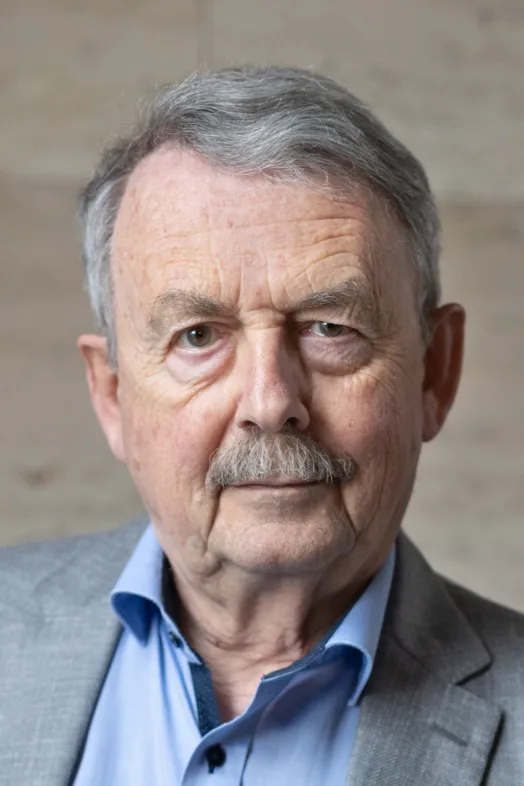
Wolfgang Streeck
Professor Wolfgang Streeck is Director Emeritus at the Max Planck Institute for the Study of Societies, Cologne. He is a member of the British Academy, of the Berlin Brandenburg Academy of Sciences, and of the Academia Europaea. He is the author of several leading books on international political economy, including "Buying Time: The Delayed Crisis of Democratic Capitalism. London and New York", Verso, 2014. His most recent book, "Taking Back Control? States and State Systems after Globalism", was published in November, 2024. He writes frequently for the New Left Review, the London Review of Books and other publications.

Rada Laykova
Rada Stefanova Laykova is a Bulgarian politician of the Revival party who was elected to the European Parliament in 2024, where she sits as part of the Europe of Sovereign Nations group. She serves on the parliament’s Economic and Monetary Committee. She holds an MA in European Studies from the Humboldt University in Berlin.
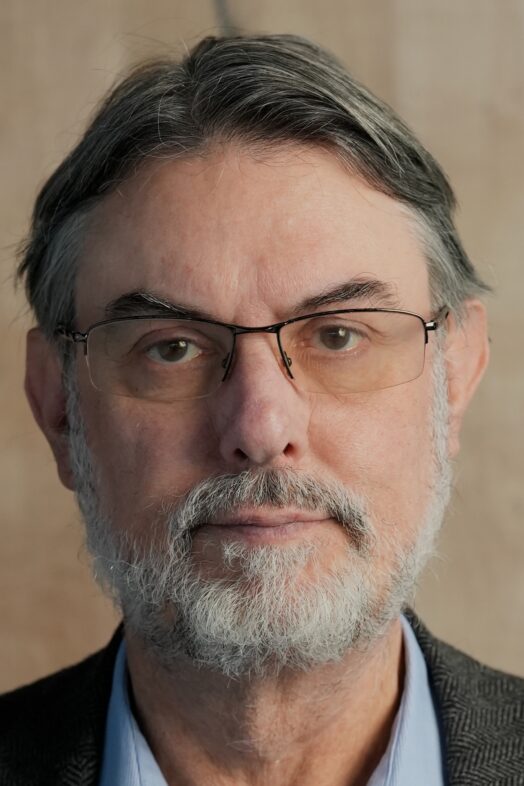
Anatol Lieven
Anatol Lieven is the director of the Eurasia Program and the Andrew Bacevich chair in American Diplomatic History at the Quincy Institute for Responsible Statecraft. He was formerly a professor at Georgetown University in Qatar and in the War Studies Department of King’s College London. He also served as a member of the advisory committee of the South Asia Department of the British Foreign and Commonwealth Office and of the academic board of the Valdai discussion club in Russia. Lieven is author of several books on Russia and its neighbors including "The Baltic Revolutions: Estonia, Latvia, Lithuania and the Path to Independence" (Yale University Press, 1993), "Chechnya: Tombstone of Russian Power?" (Yale University Press, 1998), and "Ukraine and Russia: A Fraternal Rivalry" (US Institute of Peace, 1999).