
A Smarter Way to Fight Mexico’s Cartels
Overview
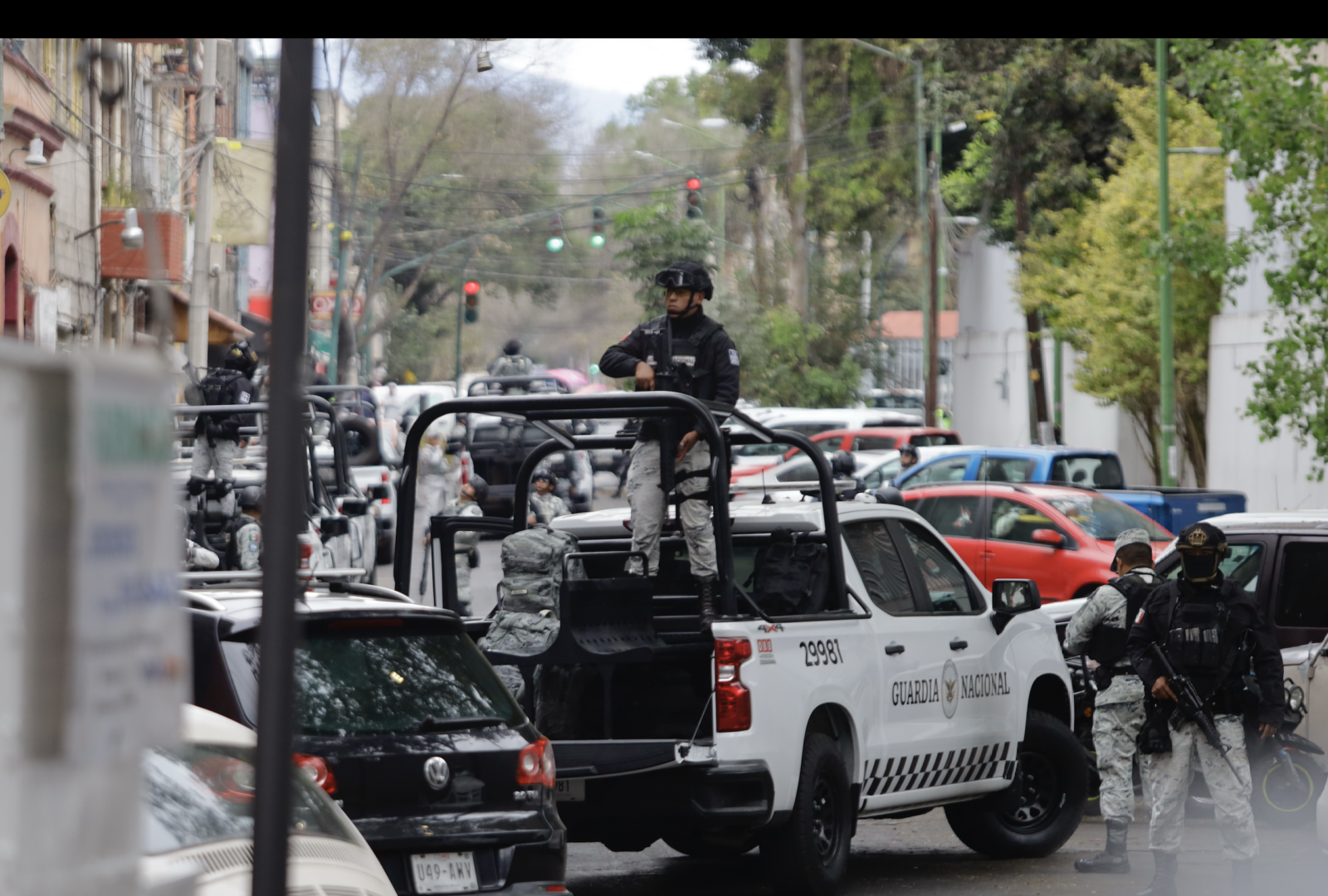
US–Mexico security tensions are reaching potentially unprecedented levels amid repeated threats from President Trump to unilaterally strike Mexican drug cartels, which he now claims “run” the country. The violent reaction by the Cartel Jalisco Nueva Generación, or CJNG, after the Mexican National Guard killed its leader, “El Mencho,” with the support of US military intelligence in late February underscores the broad impacts of cartel terror in Mexico and the lack of neat solutions to eliminating it.
What restraint-oriented strategies can the United States and Mexico develop together to tackle this scourge? To address the issue of crime and drugs from Mexico, Congress has appropriated $3.6 billion in security assistance between 2008 and 2024, and the Trump administration has designated six Mexican cartels as foreign terrorist organizations. Both of these measures have done little to address the surging demand for illicit narcotics or the “iron river” of US weapons flowing across the border. Meanwhile, Mexican President Claudia Sheinbaum has deployed 10,000 additional troops to the US–Mexico border, transferred almost 100 high-level drug criminals to US custody, and allowed expanded US drone flights over Mexican territory.
But unilateral US strikes in Mexico and American boots on the ground for joint operations with Mexican personnel remain a red line for Sheinbaum, who, under immense pressure, has overseen targeted interventions in high-crime Mexican states that have led to a 32 percent drop in homicides.
The Trump administration should focus on three broad policy areas to help effectively stem the flow of illicit narcotics into the United States and weaken transnational criminal threats, while also avoiding counterproductive unilateral military strikes on Mexican territory:
- Improved security cooperation and bilateral coordination, including making better use of the Department of Defense’s advise-and-assist, educational, and professional training programs as well as exploring a US advisory role in Mexican command centers over the country’s domestic operations.
- Tougher laws to combat arms smuggling, judicial cooperation to disrupt illicit financial networks and money laundering, and joint cross-border investigations into Mexican and US officials credibly alleged of ties to drug trafficking and corruption.
- Funding for overdose-prevention and demand-reduction programs, strengthening the Treasury Department’s Counter-Fentanyl Strike Force, and pursuing commercial diplomacy with Mexico and China to stem the production and flow of precursor chemicals.
Discussion
Dangers of over-militarization
Despite repeated threats from the Trump administration, the FY26 National Defense Authorization Act explicitly precludes US military action in Mexico, stating: “Nothing in [Section 8365] may be construed as an authorization for the use of military force against Mexico or any entity within Mexico.” Yet decades of bilateral security and anti-narcotics cooperation — from the Mérida Initiative and the Bicentennial Framework in the past, to the US–Mexico Security Implementation Group at present — have proven woefully inadequate in boosting the institutional capacity and professionalism of Mexican security forces to combat cartels and the illicit economies that sustain them, demanding new approaches within existing frameworks.
Past US–Mexico security cooperation has fallen short for various reasons. Not only has it created “cooperation siloes” plagued by limited interagency planning, coordination, and information sharing but the “train-and-equip model” that formed the basis for the Mérida Initiative actually contributed to cartel expansion and exacerbated insecurity. Meanwhile, existing US training and technical assistance programs have not established clear metrics to evaluate and calibrate performance outcomes.
Militarized approaches like the elimination or extradition of high-value targets — the kingpin strategy — have produced a proliferation of violence and a fractured cartel leadership, dispersing command and control and making operations harder to track and dismantle. Bombing drug targets and labs, or forcibly eradicating precursor crops, can also increase risk premia and spur competition, making drug markets more profitable and shifting production and highly adaptable trafficking routes elsewhere. Meanwhile, striking go-fast boats ferrying cartel cocaine makes only a marginal dent in cartels’ bottom lines, encourages diversification of their revenue streams, and diminishes intelligence sharing from top US security partners.
Unilateral strikes on Mexican territory or US military ground operations both pose risks to broader US national interests. Such actions could strain ties with a top US trading partner, undermine joint coordination on migrant repatriations, narrow or eliminate possibilities for future security cooperation, and lead to enhanced cross-border violence and drug flows. Given the extent of the US political and economic relationship with Mexico, it is essential to avoid unilateral military action that could further complicate the upcoming renegotiation of the US–Mexico–Canada Agreement, exacerbate illicit drug flows, jeopardize Mexico’s willingness to cooperate on irregular migration, and enfeeble diplomatic ties.
Improved security cooperation and bilateral coordination
Despite the dangers of excessive militarization and given the military threat of the cartels, security cooperation should remain an important part of US strategy. One option that US policymakers can pursue to improve bilateral security cooperation while respecting Mexican sovereignty is to make use of “advise-and-assist” authorities under the Department of Defense, whereby small technical teams can help their Mexican counterparts plan offensive operations on a short-term basis. These Planning Assistance and Advisory Teams, for example, would not have any operational authority in Mexico, but they would move beyond training settings to help Mexican partners develop options and scenarios for targeted security operations, as the United States has previously done in El Salvador, Colombia, and elsewhere. Congressional oversight and supervision would be crucial before operationalizing this authority.
Rather than opting for unilateral strikes or military operations in Mexican territory, the United States can also explore enhancing its advisory capabilities in Mexican operational command centers. The United States should refrain from pushing to establish a permanent or supervisory presence in Mexican command centers.
Lastly, existing training, educational, and professional development programs for Mexican security forces would benefit from improved assessment, monitoring, and evaluation mechanisms. Regular audits of US “train-and-equip” funding for Mexican forces and evaluations of the outcomes achieved through these programs would represent an important step toward increased accountability and oversight of bilateral security cooperation with Mexico.
Arms smuggling, illicit financial flow, and joint anti-corruption investigations
Reducing the flow of US–made weapons and ammunition to Mexico is perhaps among the most consequential regulatory reforms the United States can pursue to reduce the levels of violence in Mexico and debilitate cartel operations. An estimated 70 percent of guns recovered and traced by Mexican law enforcement agencies were bought in the United States through straw purchasers and unlicensed resellers. Restricting the sale of military-grade weapons, particularly .50 caliber firearms and ammunition by US arms dealers, should be a top policy priority. Increased oversight and tracing of arms flows to Mexico — as proposed in the ARMAS Act, which returns authority over small arms exports to the State Department from the Commerce Department and mandates an interagency strategy to disrupt weapon flows to Latin America — offers a step in the right direction.
Another option for US policymakers to explore would be increased border security for flows of travelers and cargo going into Mexico. While security checks, scanners, and sensor technology are quite robust entering into the United States, thorough checks are nearly absent when traveling to Mexico. The United States can assist by providing Mexican border authorities with twenty-first-century technologies and helping implement enhanced security protocols that match what is in place for US–bound flows. While Mexico faces fiscal constraints to enhanced monitoring, some of the funds allocated for border security under the Trump administration’s “Big Beautiful Bill” can be utilized on both sides of the border, particularly for nonoperational personnel training, technology, and equipment.
An area that demands increased attention is cooperation to disrupt illicit financial flows and sophisticated money-laundering operations through targeted reforms and better communication between financial institutions and authorities. Major Mexican cartels are not financed solely through drug production and trafficking but also migrant smuggling, fuel theft, illegal mining, extortion, and kidnapping, laundering their proceeds through banks and licit industries. Boosting funding for the US Financial Crimes Enforcement Network and encouraging increased engagement with its Mexican counterparts, the Financial Intelligence Unit, would go a long way toward harmonizing anti-money-laundering laws across jurisdictions and sharing information between law enforcement and financial regulatory agencies.
Lastly, joint investigations into Mexican and US security officials, politicians, and business executives credibly alleged of ties to drug trafficking and corruption constitute another area that both countries should pursue. Given the political sensitivities in Mexico around unilateral probes into Mexican officials, these cross-border investigations should target infractors on both sides of the border to avoid finger-pointing and resistance from the Sheinbaum administration. These cases could range from building cases against corruption in the banking and business sectors to targeting lower-level municipal and state authorities that facilitate narcotics trafficking. One promising ongoing operation, Enjambre, has led to the detention of Mexican local officials tied to cartel operators, which US prosecutors and law enforcement officials can support through information sharing and technical assistance. Documented cases of corruption and irregularities by border security and port officials on the US side, while not as prevalent as in Mexico, should not be left unscathed by these prosecutions to ensure reciprocity and increase mutual trust.
Demand reduction, a Treasury counter-fentanyl strike force, and commercial diplomacy
Instead of designating fentanyl as a “weapon of mass destruction” and combatting it through the Department of Defense (the US Northern Command’s Joint Interagency Task Force–Counter Cartel), the Trump administration should commit to increasing funding for efforts that target fentanyl production, smuggling, and consumption through the Departments of Health and Human Services, Treasury, and Homeland Security. Demand-reduction and overdose-prevention programs are indispensable components of any sustained campaign to undercut cartel finances and operations. Despite billions of dollars in cuts early last year for these public health initiatives, the administration reversed course after considerable backlash. It recently announced the Great American Recovery Initiative, a positive step toward recognizing that US demand for illicit narcotics is half of the equation and must be seriously addressed in order to reduce a major driver of violence and insecurity in Mexico.
Regarding fentanyl, the drug killing more Americans than any other and the most difficult to combat, the administration can strengthen the Treasury Department’s Counter-Fentanyl Strike Force, which has the authority to launch special investigations, enhance the capabilities of the Bureau of Alcohol, Tobacco, Firearms and Explosives, and expand financial intelligence sharing. While results may be gradual and do not dominate news cycles, they advance the key objective of safeguarding the integrity of the US financial system by making it increasingly difficult for transnational criminal organizations to coordinate across borders. An enhanced Counter-Fentanyl Strike Force should aim to fortify integrated intelligence-sharing networks that connect financial data, shipping records, assets seizures, police investigations, and surveillance across jurisdictions, while striving to harmonize laws among allied nations that close feedback loops and facilitate multinational criminal prosecutions.
Finally, commercial diplomacy with Mexico, China, and other nations supplying precursor chemicals for fentanyl production should be deepened in order to reduce the overall supply of deadly drugs by preventing their manufacture. Diplomatic engagement last year between Treasury Secretary Scott Bessent and Chinese officials led to the reduction of 20 percent tariffs on China over the export of fentanyl precursors as well as more bilateral cooperation, including the US–China Counternarcotics Working Group, which has proven effective in regulating, reducing, and enforcing these flows into Mexico. Other, more precise tools of economic statecraft that can be deployed within the framework of international trade agreements, such as targeted fentanyl-related border tolls or adjustments, could also be explored.
Conclusion and recommendations
Decades of research and lessons learned in applied drug control policy show that the administration’s militarized “high-value target” and “boat strike” strategies in Latin America and the Caribbean will not be particularly effective in weakening cartels and stemming narcotics flows, as other actors will readily step in and take over. A smarter approach would target the power players, financiers, institutions, and high-level traffickers at the center of complex illicit networks.
Instead, concrete steps can be taken to improve and recalibrate existing bilateral security cooperation, strengthen regulations on gun and ammunition sales, boost resources to disrupt illicit financial flows, and pursue joint investigations into Mexican and US security officials and business elites benefiting from narcotics trafficking.
Finally, restoring demand-reduction and overdose-prevention programs, reinvigorating the Treasury Department’s Counter-Fentanyl Strike Force, and engaging in robust commercial diplomacy and economic statecraft to curb the flow of precursor chemicals can help stem the demand for and lethal effects of illicit narcotics, reinforce US investigative and enforcement capabilities, and weaken the supply chains that cartels rely on to produce and transport fentanyl into the United States.
Program
Countries/Territories
Authors

Lee Schlenker is a research associate with the Global South program at the Quincy Institute for Responsible Statecraft and a MA candidate in Latin American Studies at Georgetown University’s Edmund A. Walsh School of Foreign Service.