
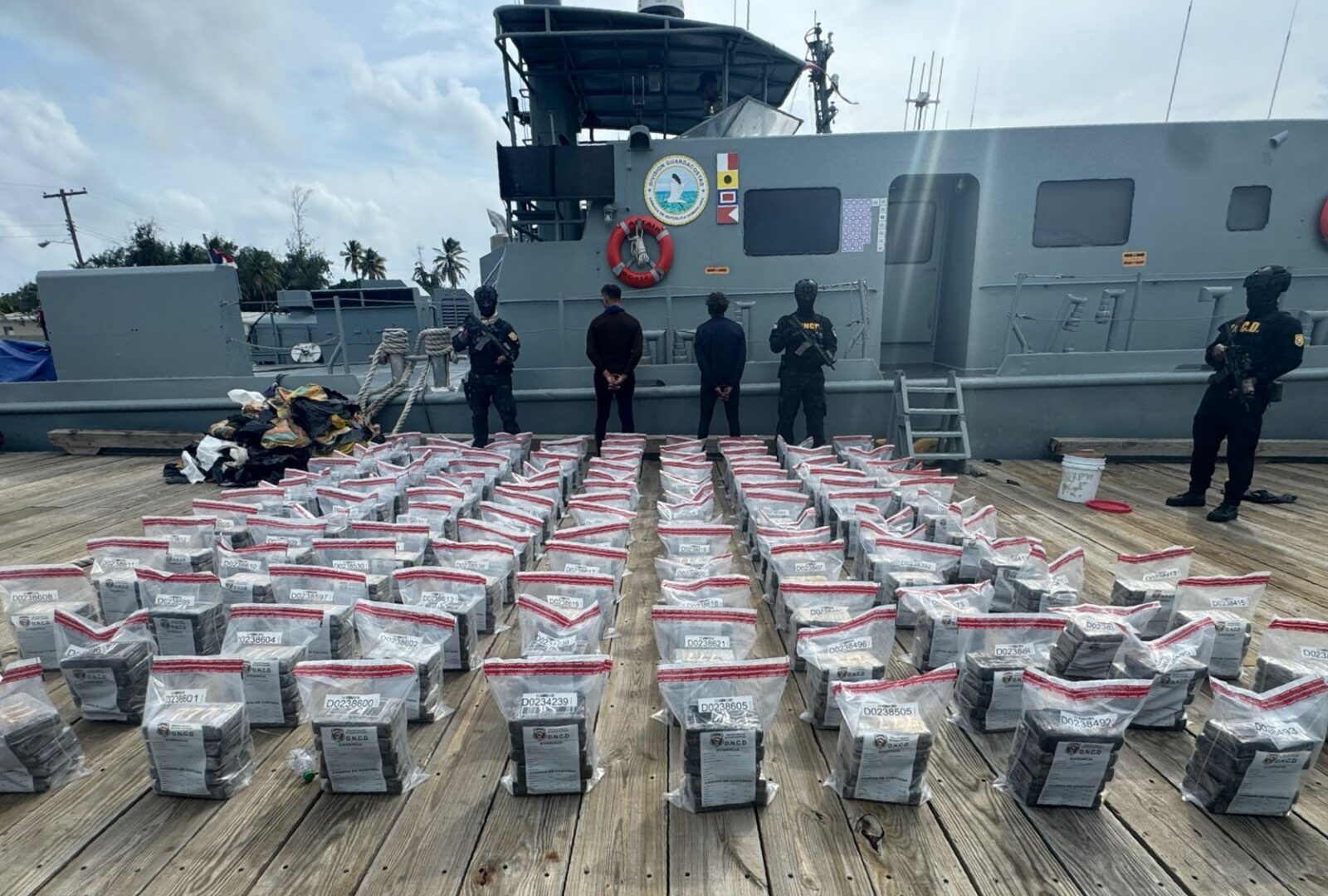
The War on “Narco-Terror”: Illicit Economies, Organized Crime and Better Approaches in Latin America
Ongoing U.S. military strikes against alleged drug trafficking boats in Latin America and the Caribbean raise the question of the most effective and least lethal way to prevent deadly narcotics from entering the United States. As the Trump administration increasingly views U.S. relations in the Western Hemisphere through the lens of combatting “narco-terrorism” and ramps up military operations against newly designated foreign terrorist organizations (FTOs) in the region, understanding the lessons learned from decades of drug control policy and mapping out more productive approaches to combatting irregular armed actors and dismantling the illicit economies sustaining them could not be more urgent.
The Quincy Institute held discussion with prominent drug policy and organized crime experts as they discuss the key issues at stake in the administration’s militarized war on “narco-terror” in the Western Hemisphere and more effective ways to reduce regional threats to U.S. national security. We heard from Guadalupe Correa-Cabrera, co-director of the Corruption, Networks, and Transnational Crime Research Center (CONTRA) at George Mason University, Isabel Pereira Arana, senior coordinator for Drug Policy at the Center for Law, Justice and Society (Dejusticia), and Lee Schlenker, research associate in QI’s Global South program. Kelley Beaucar Vlahos, editor-in-chief of Responsible Statecraft and senior advisor at the QI, moderated.
Panelists
Guadalupe Correa-Cabrera
Guadalupe Correa-Cabrera is professor at the Schar School of Policy and Government, George Mason University and co-director of the Corruption, Networks, and Transnational Crime Research Center (CONTRA). She studies transnational crime, security and geopolitics in the Americas. She holds a PhD in Political Science from The New School for Social Research. Her areas of expertise are organized crime, migration studies, US-Mexico relations, border studies, drug policy, social movements, and human trafficking. She is author of Los Zetas Inc.: Criminal Corporations, Energy, and Civil War in Mexico (University of Texas Press, 2017; Spanish version: Planeta, 2018). Her newest book (co-authored with Sergio Chapa) is entitled Frontera: A Journey Across the U.S.-Mexico Border (Texas Christian University Press, 2024). Professor Correa-Cabrera is Past President of the Association for Borderlands Studies (ABS). She is co-editor of the International Studies Perspectives (ISP) journal.

Isabel Pereira Arana
Isabel Pereira Arana is a senior coordinator for Drug Policy at the Center for Law, Justice and Society (Dejusticia). She focuses on documenting the differentiated impacts of drug policy on women, the interactions between drug policy reform and other high-impact agendas such as the right to health and transitional justice and developing advocacy strategies for drug policies rooted in human rights. Before joining Dejusticia, she was an advisor for international cooperation programs in conflict affected areas, and negotiator on behalf of Colombia in multilateral fora. She holds a BA in Political Science from Universidad de los Andes in Colombia (2008), and a Master in Development Studies, from the Graduate Institute of International and Development Studies (IHEID) in Switzerland (2015).
Lee Schlenker is a research associate with the Global South program at the Quincy Institute for Responsible Statecraft. Schlenker previously served as the policy director at an advocacy organization working to improve U.S.-Cuba relations, a journalist and producer with an award-winning independent media outlet, and Cuba program co-director and Northeast regional director at an international peace organization. Schlenker’s work has been published and/or cited in The Guardian, Responsible Statecraft, Jacobin, Newsweek, ESPN, NPR, The Nation, The Hill, Miami New Times, USA Today, La Jornada, Boston Review and The American Prospect, among others, and he has conducted research on Latin American political and economic issues at Boston University, Brandeis University, the Center for Economic and Policy Research, Columbia University, and Corporación Escenarios.

Kelley Beaucar Vlahos is editor-in-chief at Responsible Statecraft and a senior advisor at the Quincy Institute. Previously she was executive editor of The American Conservative magazine. Before joining TAC in 2017, Vlahos served as a contributing editor to the magazine, reporting and publishing regular articles on U.S. war policy, civil liberties, foreign policy, veterans, and Washington politics since 2007. She spent 15 years as an online political reporter for FOX News at the channel’s Washington D.C. bureau, as well as Washington correspondent for Homeland Security Today magazine. She is on the board of PublicSquare.net, a non-profit media project promoting informed Left-Right debate.