

The German State Elections and the Rise of AfD
The surge in support for the right-wing populist AfD in state elections in eastern Germany this month has sent shockwaves through Europe. If continued, it has the potential to transform both the German political scene and the European Union, with profound implications for the war in Ukraine and other issues.
To discuss the German election results and their implications, QI held a conversation featuring Wolfgang Streeck, director emeritus at the Max Planck Institute for the Study of Societies, Cologne, Thomas Fasbender, German journalist, and Molly O’Neal, non-resident fellow at the Quincy Institute. Anatol Lieven, director of the Eurasia program at the Quincy Institute, moderated.
Panelists
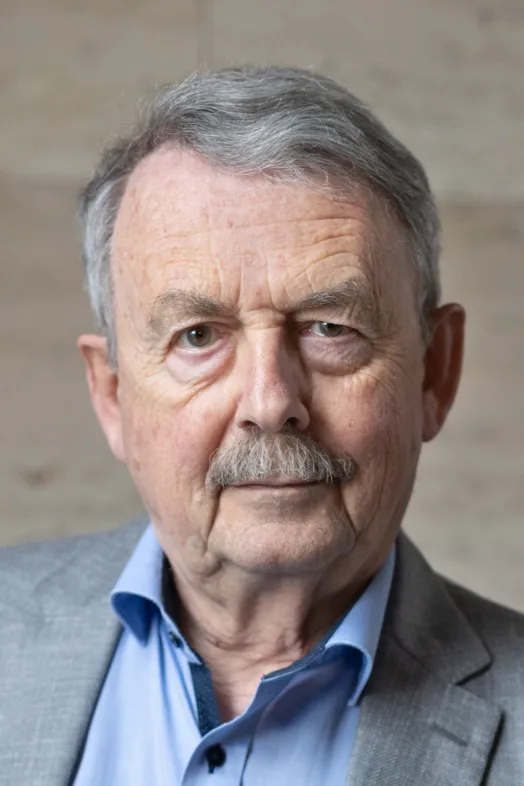
Wolfgang Streeck
Wolfgang Streeck is director emeritus at the Max Planck Institute for the Study of Societies, Cologne. He is a member of the British Academy, of the Berlin Brandenburg Academy of Sciences, and of the Academia Europaea. He is the author of several leading books on international political economy, including “Buying Time: The Delayed Crisis of Democratic Capitalism. London and New York”, Verso, 2014. His most recent book, “Taking Back Control? States and State Systems after Globalism”, was published in November, 2024. He writes frequently for the New Left Review, the London Review of Books and other publications.
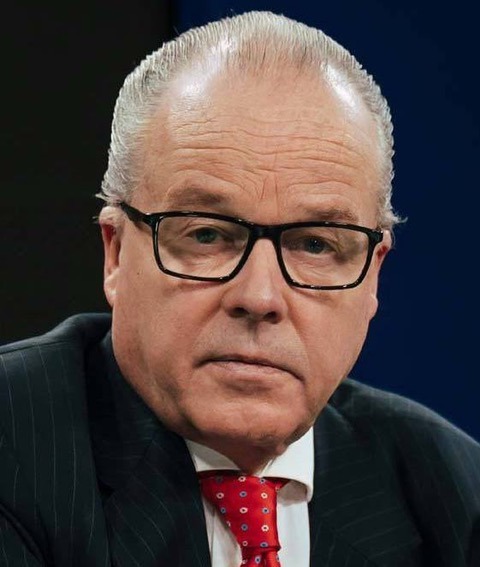
Thomas Fasbender
Thomas Fasbender is a German journalist who worked in Moscow from 1992 to 2015. He holds a PhD in philosophy from the University of Hamburg, Since 2023 he has been head of geopolitics at the Berliner Zeitung, a German daily newspaper. He is author of several books, including a biography of Vladimir Putin (2022). His latest book Der Eurasienkomplex: Warum und wie dem Westen die Zukunft entgleitet (“The Eurasia Complex. Why and how the future slipped away from the West”) was published this month.
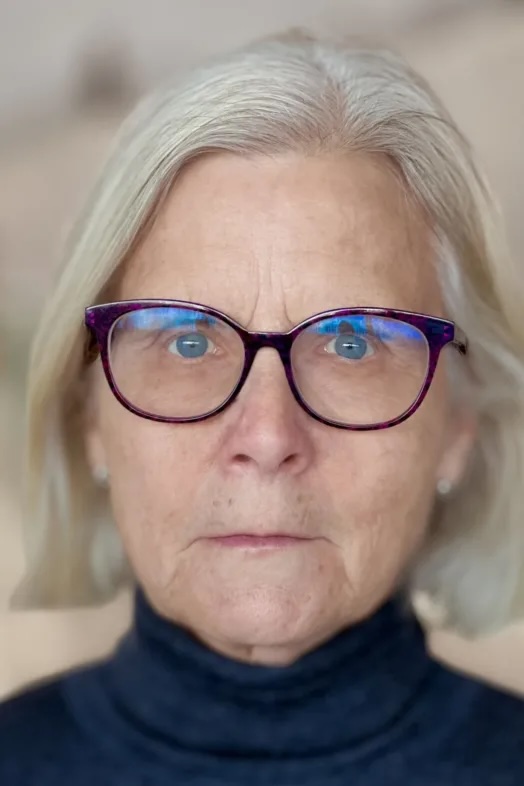
Molly O'Neal
Dr. Molly O’Neal is a non-resident fellow at the Quincy Institute and former U.S. Foreign Service Officer whose career, from 1989 onward, was devoted to U.S. relations with Central and Eastern Europe, Russia, and Eurasia. After leaving the Foreign Service in 2006, she earned her PhD at Johns Hopkins School of Advanced International Studies (SAIS) in 2012, specializing in international political economy, comparative politics, American foreign policy, and European and Eurasian studies. She has lectured and written on these subjects since 2010, most recently as a Fulbright professor and researcher at the Center for International Studies at the Technical University of Dresden through the spring and summer of 2022. In fall of 2019, she was a visiting researcher in the European department of the German Institute for International and Security Affairs (Stiftung Wissenschaft und Politik) in Berlin.

Anatol Lieven
Anatol Lieven is the director of the Eurasia Program and the Andrew Bacevich chair in American Diplomatic History at the Quincy Institute for Responsible Statecraft. He was formerly a professor at Georgetown University in Qatar and in the War Studies Department of King’s College London. He also served as a member of the advisory committee of the South Asia Department of the British Foreign and Commonwealth Office and of the academic board of the Valdai discussion club in Russia. He holds a B.A. and Ph.D. in history and political science from Cambridge University in England From 1985 to 1998, Lieven worked as a journalist in South Asia, the former Soviet Union and Eastern Europe and covered the wars in Afghanistan, Chechnya and the southern Caucasus. From 2000 to 2007 he worked at think tanks in Washington DC.