

Thriving, Surviving, Zombifying or Dying: What Future for USMCA?
Amid persistent mixed messages from the White House, the scheduled review of the United States Mexico Canada Agreement (USMCA) is now in its “overtime” phase of negotiations. Washington wants to reshore industrial supply chains onto US territory and strengthen rules of origin with a specific focus on Chinese content, but is facing resistance from its trading partners. Beyond the economic issues, there are also political and geopolitical disagreements, with particularly rancorous rhetoric flying across the 49th parallel. At the same time, there are also decades of deep economic interconnections, shared economic interests, and important constituencies that support USMCA. The pact could thrive, survive in a less ambitious format, stumble through another decade of negotiations, or simply end.
The Quincy Institute held a conversation with Juan Carlos Baker Pineda, CEO and founding partner of Consultores Internacionales Ansley, resident fellow with Georgetown’s Americas Institute and formerly Mexico’s Vice Minister for foreign trade; Simon Lester, nonresident fellow for the Baker Institute International Economics Program the co-founder of the outlet China Trade Monitor; and Rachel Ziemba, adjunct senior fellow at the Center for New American Security and founder of Ziemba Insights, a firm specializing in geoeconomic risk analysis. Karthik Sankaran, senior research fellow, geoeconomics in the Global South Program at the Quincy Institute, moderated.
Panelists
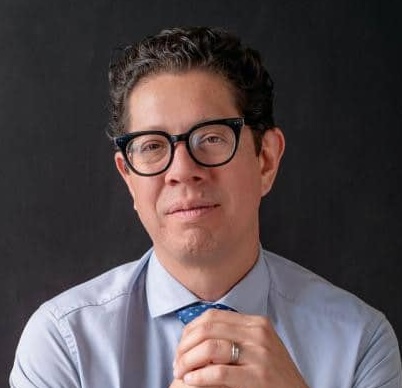
Juan Carlos Baker Pineda
Juan Carlos Baker Pineda is CEO and founding partner of Consultores Internacionales Ansley; resident fellow with the Georgetown Americas Institute; and an expert in international trade, regional economic integration, and foreign affairs. He served the Mexican government as director general for North America and deputy chief negotiator for Mexico in the Trans-Pacific Partnership (TPP). As vice minister for foreign trade he designed and proposed to the minister of the economy and the president of Mexico the strategies to conduct and implement Mexico’s foreign trade negotiations in North America, Europe, Asia, and Latin America. He was a leading figure in the negotiations that eventually produced the United States, Mexico, and Canada agreement, which upgraded and modernized the North American Free Trade Agreement (NAFTA). Baker represented Mexico in several organizations, including the World Trade Organization (WTO), the Organization for Economic Cooperation and Development (OECD), the G20, and the Asia-Pacific Economic Cooperation (APEC).

Simon Lester
Simon Lester. J.D., is a nonresident fellow for the Baker Institute International Economics Program and the co-founder of the trade law and policy websites WorldTradeLaw.net and China Trade Monitor. Previously, he was the associate director of the Cato Institute’s Herbert A. Stiefel Center for Trade Policy Studies, where his research focused on World Trade Organization (WTO) disputes, regional trade agreements, disguised protectionism, and the history of international trade law. Lester started his professional career at a Washington, D.C., law firm, where his practice included advising companies and governments on matters before the WTO and the Office of the U.S. Trade Representative He later served as a legal affairs officer at the Appellate Body Secretariat of the WTO. While there, he assisted the Appellate Body members with all aspects of the conduct of individual appeals and arbitrations before the Appellate Body.

Rachel Ziemba
Rachel Ziemba is a geo-economic and country risk expert focused on how government policies impact energy and resource markets. She runs Ziemba Insights, an advisory firm that supports clients in their macroeconomic scenario analysis and policy due diligence. Much of her work focuses on how governments are reshaping markets to meet economic and political goals – and what this means for investors. She is also Senior Advisor, Economic Statecraft at Horizon Engage, Adjunct Senior Fellow at the Center for a New American Security (CNAS) and a non-resident fellow at the Gulf International Forum. She teaches International Political Economy at New York University’s Center for Global Affairs and writes regularly at the Weaponized Economy Substack. Before founding Ziemba Insights, Rachel was the head of emerging markets research at Roubini Global Economics, a global macro strategy and country risk firm.
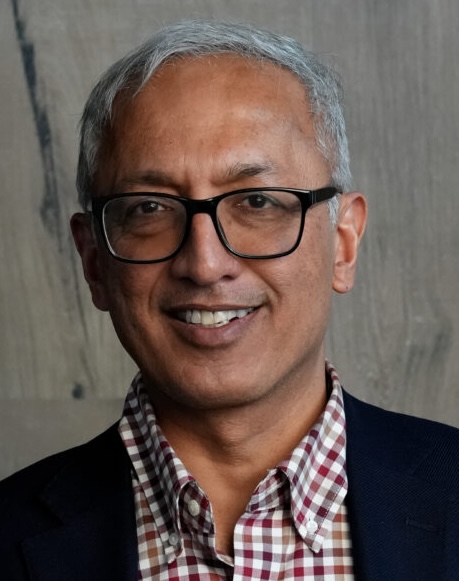
Karthik Sankaran
Karthik Sankaran is a senior research fellow in geoeconomics in the Global South program at the Quincy Institute for Responsible Statecraft. He was originally trained as a Modern European Historian but instead pursued careers in journalism and then finance as a strategist and as a trader/portfolio manager. He was engaged primarily with foreign exchange and fixed income in emerging markets at a variety of institutions on the sell-side and the buy-side. In this capacity, he saw the ripples of the Asian financial crisis of 1997 into Russia and Latin America, and then the Great Financial Crisis of 2008, and the subsequent Eurozone crisis of 2011. He then joined Eurasia Group as Director, Global Strategy, where he worked with country and regional teams to chart feedback loops among political and geopolitical risks, macroeconomics, and market responses.
Related
The USMCA Review: What Future for North American Economic Integration?
We discuss the future of the USMCA.
Ukraine Peace Talks and the Pitfalls of Maximalism in a Multipolar World
How to bring the Ukraine War to a close in a multipolar world.

Money Beyond Borders: Global Currencies From Croesus to Crypto
How secure is the dollar’s position as the world’s leading currency?