
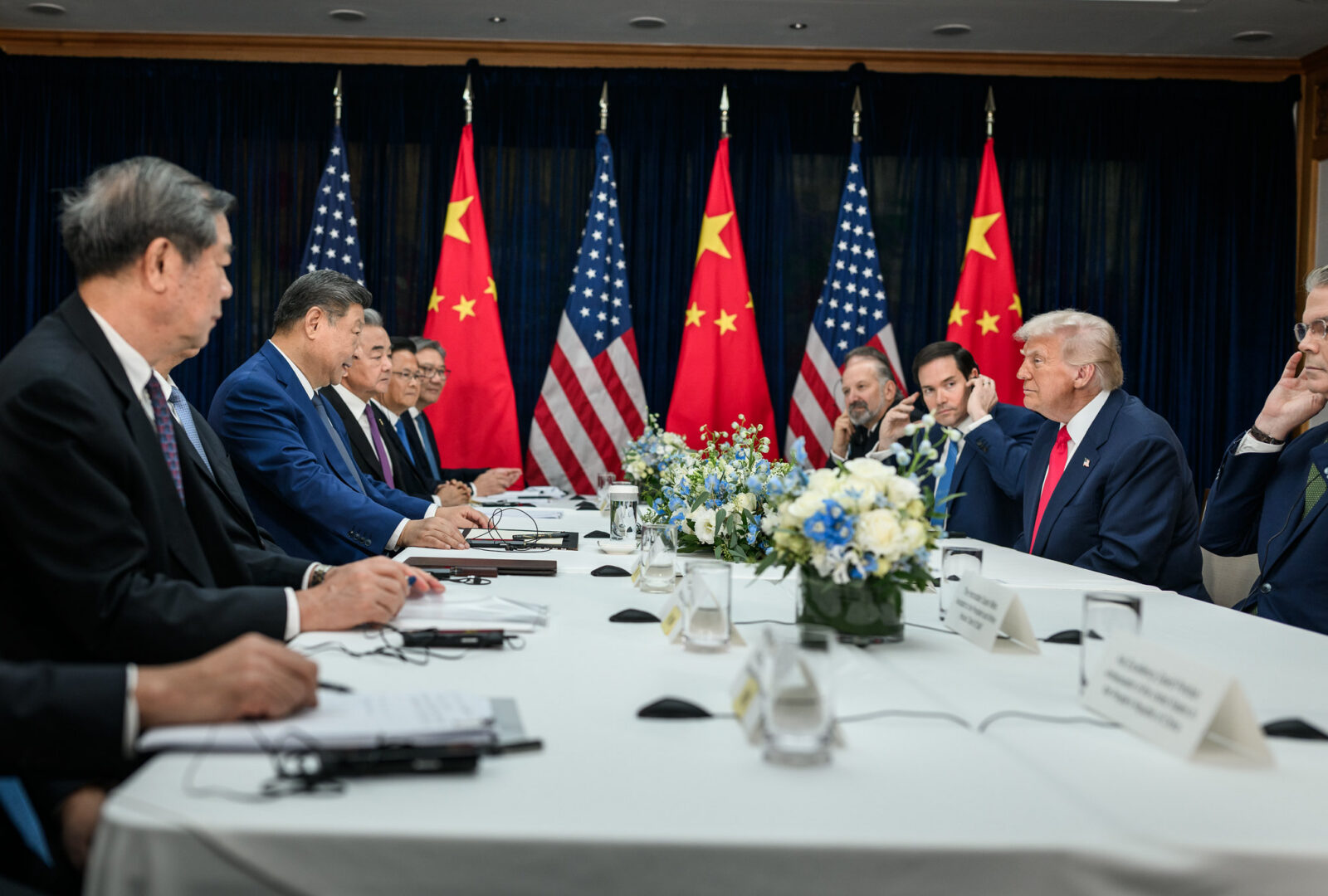
Trump Returns to Beijing: A New Opening for US–China Relations?
On May 14–15, for the first time in nearly a decade, a president of the United States will travel to China. On the last presidential visit to Beijing in 2017, Donald Trump told Xi Jinping he thought the US and China working together on world problems could “solve almost all of them — and probably all of them.” In the years that followed, far from offering solutions, the US–China relationship became one of the world’s most ominous problems. After a stormy 2025, Trump seems open to resuming his earlier optimism. Yet the obstacles are forbidding: trade and technology disputes, disagreements on Latin America and the Middle East, an arms race in the Pacific, and the specter of war over Taiwan.
What will Trump and Xi be discussing and is there any prospect for success? What possibilities are there for a more stable or even constructive relationship between the two superpowers? What are the biggest dangers and how can they be avoided?
To discuss these questions and more, QI held a webinar featuring Jake Werner, director of Quincy Institute’s East Asia Program and Michael Swaine and Denis Simon, senior research fellows at the Quincy Institute. Kelley Beaucar Vlahos, editor-in-chief of Responsible Statecraft, moderated.
Panelists
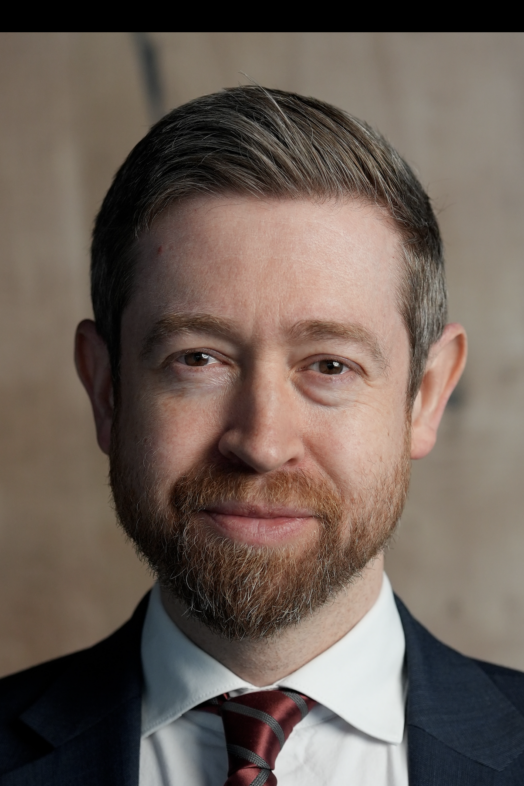
Jake Werner
Jake Werner is director of the East Asia Program at the Quincy Institute. His research examines the emergence of great power conflict between the US and China and develops policies to rebuild constructive economic relations. Prior to joining Quincy, Jake was a Postdoctoral Global China Research Fellow at the Boston University Global Development Policy Center, a Harper-Schmidt Fellow at the University of Chicago, a Fulbright Scholar at National Chiao Tung University in Taiwan, and a Fulbright-Hays Fellow at East China Normal University in Shanghai. He received his Ph.D. in history from the University of Chicago. Jake is also a cofounder of Justice Is Global, a grassroots organizing project that advocates for reforms to the global economy, and a cofounder of Critical China Scholars, a network of academics engaged in public education on Chinese politics and society.
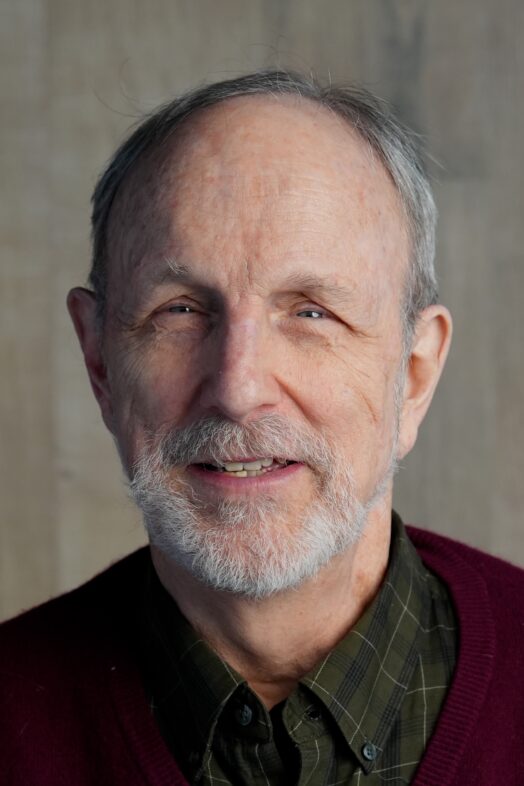
Michael Swaine
Michael D. Swaine is a senior research fellow in the Quincy Institute’s East Asia Program and is one of the most prominent American scholars of Chinese security studies. At the Carnegie Endowment for International Peace, he worked for nearly twenty years as a senior fellow specializing in Chinese defense and foreign policy, U.S.-China relations, and East Asian international relations. Before that, Swaine served as a senior policy analyst at the RAND Corporation. Swaine has authored and edited more than a dozen books and monographs and many articles, papers and opinion pieces, including Interpreting China’s Grand Strategy, Past, Present, and Future, with Ashley Tellis, (2000); Managing Sino-American Crises: Case Studies and Analysis, with Zhang Tuosheng (eds) (2006); America’s Challenge: Engaging a Rising China in the Twenty-First Century (2011); and “A Restraint Approach to U.S.-China Relations: Reversing the Slide Toward Crisis and Conflict” (2023), with Andrew Bacevich.
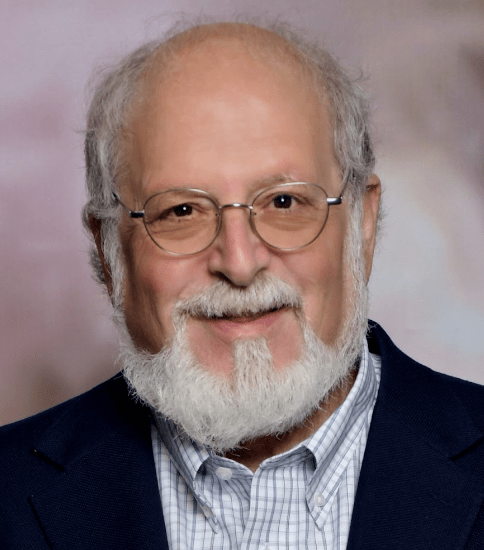
Denis Simon
Denis Simon is a senior research fellow in the Quincy Institute’s East Asia program, focusing on global science and technology (S&T) issues and U.S.-China S&T relations. He also holds a senior faculty appointment at Schwarzman College at Tsinghua University in Beijing. He previously served as non-resident fellow at the Quincy Institute. Simon is a recognized expert on international science and technology affairs. He has more than four decades of experience studying innovation, S&T policy, and talent in China. Most recently, he served as executive director of the Center for Innovation Policy at Duke’s School of Law. And, he also has served as professor of practice for China business and technology at Duke University’s Fuqua School of Business and Executive Vice Chancellor of Duke Kunshan University in China (2015–20)

Kelley Beaucar Vlahos
Kelley Beaucar Vlahos is editor-in-chief at Responsible Statecraft and a senior advisor at the Quincy Institute. Previously she was executive editor of The American Conservative magazine. Before joining TAC in 2017, Vlahos served as a contributing editor to the magazine, reporting and publishing regular articles on U.S. war policy, civil liberties, foreign policy, veterans, and Washington politics since 2007. She spent 15 years as an online political reporter for FOX News at the channel’s Washington D.C. bureau, as well as Washington correspondent for Homeland Security Today magazine. She is on the board of PublicSquare.net, a non-profit media project promoting informed Left-Right debate.