
Revitalizing the Transatlantic Alliance: Principles for a Balanced NATO
Executive Summary
NATO is a Cold War–era institution stripped from the strategic context that once made it integral to US policy. It is an organization in crisis, threatened by a growing divergence between US and European interests.
This brief lays out a sustainable path forward through a comprehensive reset of the transatlantic relationship, both recommending a new American role in NATO and articulating a new set of principles for a leaner, more focused alliance centered on European–led territorial defense and regional stability.
There has been considerable resistance to any fundamental reevaluation of the US role in European security affairs. Russia’s war with Ukraine has reinforced this dynamic, with the Russian threat now constantly invoked to question any minor revision to US troop levels in Europe. NATO is still seen within the Atlanticist community not merely as the realist defense organization it was conceived to be, but as a sacrosanct, values-based community.
These assumptions spur inertia and should be reassessed. While the threat of a Russian incursion into eastern NATO states is real, a NATO led by Europe’s conventional forces would have significant advantages over Russia in terms of overall firepower and on every step of the escalation ladder. Further, deep ideological differences between Western countries render the notion of NATO as simply a community of shared values increasingly implausible.
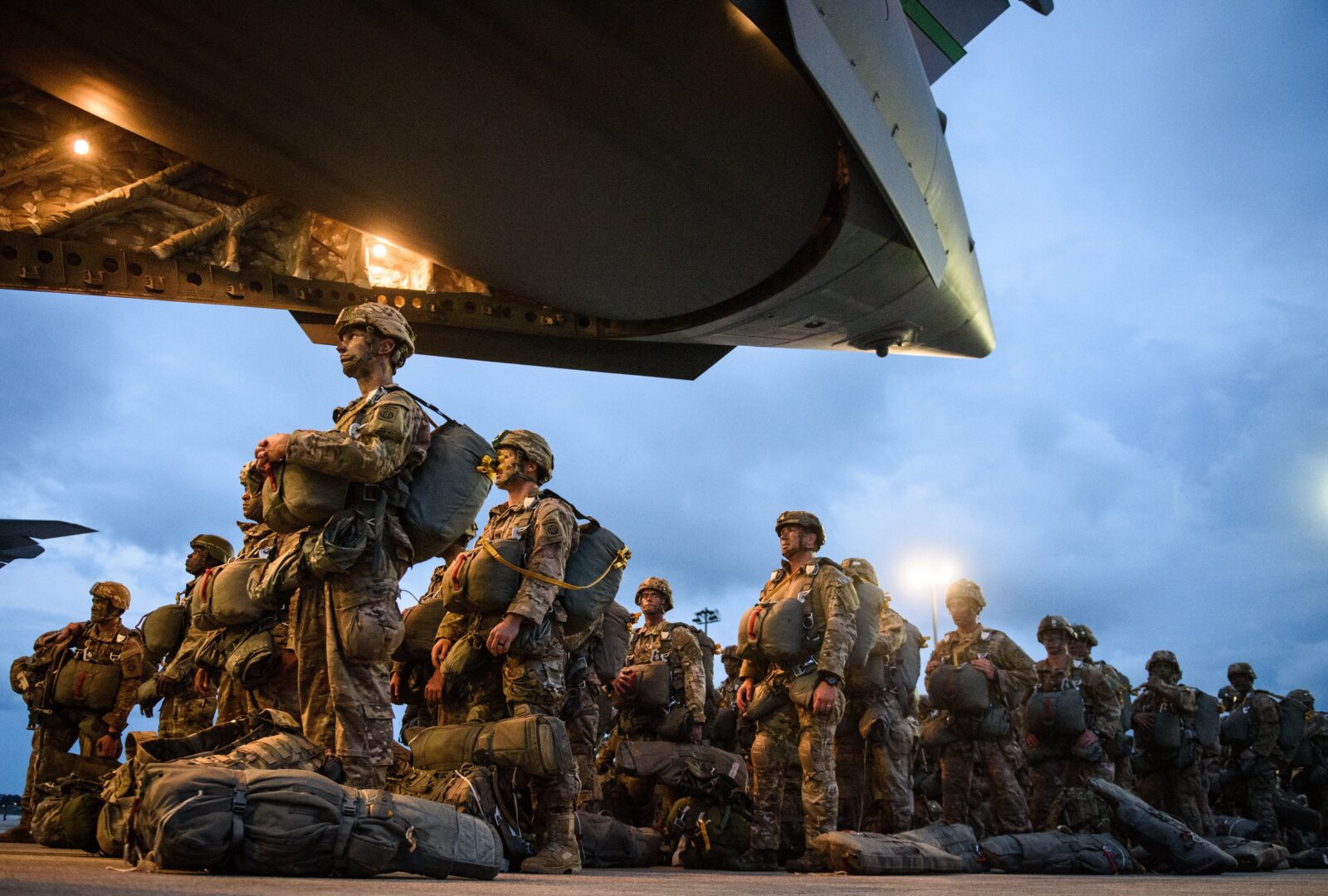
Over the next decade, the US should scale back its European security presence to 20,000 troops. Such retrenchment should be presented to NATO’s leadership and its European leaders as a fait accompli to galvanize not just European burden sharing but also burden shifting, with European countries paying for their own defense and translating that spending into actual battlefield capabilities. At the same time, the US should reassure Europe that it does not intend to leave NATO and that the US nuclear umbrella remains in place.
Alongside this US troop rightsizing, the US should oppose any further NATO expansion to the Eastern Partnership countries: Armenia, Georgia, Moldova, Belarus, Azerbaijan, and Ukraine. The closing of NATO’s open-door policy should be part of broader Western negotiations with Russia conducted through new diplomatic organizations designed for US–Russian–European dialogue. The goal of these negotiations should be to stabilize the European security order by achieving a peace settlement in Ukraine, securing Russian security concessions (including reductions in Russian forces along NATO’s eastern flank), and pursuing arms control negotiations.
These changes will encourage NATO to recommit to its original mandate of territorial defense of core European territories, and allow the US to adjust its grand strategy accordingly toward restraint and a prioritization of other theaters.
Introduction
There is no going back to “business as usual” in NATO or the transatlantic relationship. NATO was conceived and honed over the Cold War to address the singular problem of how to keep a powerful Soviet rival from expanding westward and establishing itself as a regional hegemon in Europe. The contemporary dynamic between Europe and Russia bears little resemblance to the Cold War. Given the comparative military weakness of Russia, the European Union is inherently more than capable of managing its relationship with Russia on its own with a prudent balance between deterrence and engagement.1The immense military difficulties faced by Russia in its ongoing invasion of Ukraine only serve to highlight that there is no credible reason for the US to continue acting as Europe’s primary security provider.2
At the same time, US interests have shifted toward the Indo–Pacific, thereby deprioritizing the old transatlantic alliance structure. In its present form, NATO is not just unsuited to help Washington manage its relationship with China but also serves as a vehicle for the constant diversion of American treasure, commitments, and political attention to Europe and away from other theaters.
This is not, nor should it be seen as, a deficiency to be corrected by pressuring NATO to adopt a China strategy more aligned with US priorities.3NATO is the North Atlantic Treaty Organization, not a North Pacific one. A better division of labor within the alliance — one that works to the benefit of both Europe and the US — is to encourage NATO’s European arm to take responsibility for its own security as the US retrenches from Europe in ways that free up American resources for engagement in other theaters.4
Left without a clear raison d’etre in a post–Cold War and increasingly multipolar world, the alliance has gravitated toward promoting its own bureaucratic continuity over the concrete security interests of the countries it represents. The US forms the backbone of NATO’s conventional and nuclear forces and capabilities, funds one-sixth of its common budget, and is at the heart of the deterrent behind the alliance’s Article V collective security guarantee, yet NATO’s force disposition and strategic priorities have increasingly diverged from core US interests.
The US–Europe security dynamic is shaped by a simple yet powerful moral hazard: European countries, especially NATO’s rich Western European core, have no real incentive to do more for their own defense while the US acts as their principal security guarantor.5Previous US administrations’ attempts to redress this problem by advocating for greater burden sharing within the alliance have fallen flat for several reasons:
- There is a powerful political-ideological inertia on both sides of the Atlantic against revising the US role in European security affairs;
- The Russia threat is leveraged as a continuous injunction against even minor revisions to US force posture in Europe; and
- The alliance’s command structures, operations, public messaging, and funding streams since 1991 are centered on the overriding goal of keeping the US in.
NATO solidified itself as an integral Western institution in part because, unlike most historical coalitions, its members are supposedly bound not only by common interests but by an adherence to shared values.6This vision resonated in a bipolar Cold War milieu wrapped in the trappings of a competition between two starkly different ways of life — Soviet communism and Western liberal democracy. Today, despite Western attempts to claim there is an “alliance of autocracies” opposed to the West, there is no longer a unifying threat to spur ideological convergence within the Western bloc.7Moreover, as the 2025 US National Security Strategy made clear, Western countries are deeply divided, both internally and between each other, in their interpretations of freedom, democracy, order, and justice.8These differences make it increasingly impossible for NATO members to speak in one voice on values — except with platitudes so broad as to be devoid of meaning — and attempts to do so risk being perceived as picking sides in the domestic politics of member states.
An increasingly stark divergence between US and European interests makes the transatlantic relationship unviable in its present form; formal US withdrawal from NATO is neither likely nor necessary to make that fact evident. European and EU leaders who are tempted to wait this White House out in hopes of a more amenable administration taking the reins after 2028 will come a cropper. Future presidents may be less blunt in their criticisms of Europe, but they cannot reverse all the structural changes since 1991 that have made the status quo untenable for both the US and Europe. At the same time, the transatlantic relationship provides the US with benefits in terms of power projection capabilities, access to markets, and regional partnerships that should be preserved.
The only sustainable path forward is through a comprehensive reset of the transatlantic relationship that doesn’t just renegotiate America’s role in NATO but articulates a new set of principles for a leaner, more focused alliance. The administration has identified key elements of retrenchment in its NATO 3.0 concept, but more work remains to institutionalize a vision centered on European–led territorial defense and regional stability.9
Rightsizing US force posture in Europe
US troop levels in Europe are misaligned with American priorities. It must be recognized that there is no deterrence deficit that would invite Russia to test the credibility of NATO’s Article V collective defense guarantee if Moscow is determined to do so, which itself is not a foregone conclusion.10“Russia is not looking for a conflict,” said Supreme Allied Commander Europe, or SACEUR, Gen. Alexus G. Grynkewich, adding that Moscow is deterred by NATO’s conventional advantages.11
Indeed, the alliance will continue to maintain an overwhelming qualitative and quantitative conventional superiority over Russia even if Russia is able to fully reconstitute its capabilities in a post–Ukraine war context and conducts a potential incursion into eastern NATO states without the threat of Ukrainian intervention.12Yet the balance of forces alone does not fully capture the challenges Russia would face in the event of localized or hybrid aggression against an eastern-flank state. It is true that the Baltic countries, particularly Estonia, remain vulnerable to Russian assault and that the alliance has limited tools at its disposal to shore up the direct defenses of these smaller states.13But the West maintains a wide-ranging, potent toolkit to impose overwhelming costs on any such assault. NATO is more than capable of choking off Kaliningrad and imposing a blockade on Russia’s maritime energy trade that would make hostilities difficult to sustain.14There are steps Russia can take to retaliate in kind, but it remains heavily outmatched by NATO in overall firepower and at every step of the escalatory ladder. It is this regional balance of threat that is necessary to deter Russia, and it does not require sustaining the current level of US commitment to Europe.
The US has an interest in maintaining peace and preventing the rise of a regional hegemon, but these goals can be achieved with a far smaller military footprint that better reflects the present threat environment. Importantly, these limited strategic aims do not require the US to take on the burden of being Europe’s primary conventional security guarantor. If Europe assumes a greater share of responsibility for its own defense, it is enough for the US to act primarily as an offshore balancer with a far smaller conventional theater presence.
The US should adopt a plan — with the most complete one offered in a landmark force posture study by Jennifer Kavanagh and Dan Caldwell — to scale back its presence in Europe from 80,000 current service members to 20,000 over the next decade.15The US should, as has been reported, reverse the 2024 decision by the Biden administration to deploy Tomahawk, SM-6, and other US missiles in Germany.16Such deployments should not just be postponed but permanently canceled in order to prioritize dwindling munitions stocks where they are most needed, encourage Europeans to ramp up the development of autonomous capabilities, and avoid feeding into a counterproductive security spiral with Russia.17
NATO’s European arm has little incentive to take charge of its own defense, even in the face of ongoing US cuts, if it knows it can call on a massive surge of US forces in the event of a crisis. The US should therefore pursue steep across-the-board cuts to the NATO Force Model, which refers not to in-theater capabilities but assets that are available for deployment to Europe in the event of a conflict.18Some of the cuts reportedly being planned, such as one of the two assigned carrier strike groups, are largely symbolic in a primarily land-based theater. Others, notably a drastic reduction in F–16 and F–15E fighters from 153 to 99, are vital precisely insofar as they leave open a capabilities gap that Europe should do more to fill.19However, Europe does not have to replace everything the US cuts in a one-to-one fashion. Rather, the goal should be to field a European–led force capable of meeting the requirements of European territorial defense. An effective way to maintain momentum on retrenchment is to simply not replace rotational units when their deployments elapse.20It is vital that assets removed in this way are sent home or to other theaters, rather than reshuffled among different European states. Removing permanently stationed troops will take longer, as space will have to be made, certain troops will be reassigned, and others will be cut as part of the restructuring.
Retrenchment is not something that can be prenegotiated by consensus or gradually phased in. NATO’s European arm has obstructed and will continue to hinder any efforts to renegotiate the transatlantic relationship unless those efforts are implemented in a deliberate, irreversible manner. US rightsizing must be presented to NATO’s leadership and the alliance’s European members as a fait accompli. At the same time, US officials should reassure their European counterparts by making clear that:
- The US has no intention of pulling out of NATO and, to the contrary, seeks to future-proof the transatlantic relationship by ensuring a better, more equitable division of labor;
- The US nuclear umbrella over Europe, which is a major component of the credibility of NATO’s Article V collective defense guarantee, is here to stay; and
- The US is committed to making the transition to a European defense model as painless as possible through an expanded program of technical cooperation, technology sharing, and joint investments.
Retrenchment must gradually be reflected in NATO’s command and operational models. In particular, the SACEUR should be European. Yet making this change prematurely, while the US still plays a leading structural and operational role in European security matters, would only serve to sow confusion. The transition to a European SACEUR should flow logically from the administration’s ongoing efforts to turn operational responsibility for regional deterrence over to Europe. The underlying principle is that Europe must conduct the lion’s share of coordination and operationalization within the NATO Defense Planning Process.21
Maintaining the US nuclear deterrent
Retrenchment seeks to reestablish the US as an offshore balancer with a clear role, albeit not a leading one, in European security.22One of the most effective vehicles for asserting this interest at low cost and high impact is for the US to maintain its nuclear umbrella over Europe.23The US strategic deterrent maintains American influence in Europe without fostering dependence, as nuclear weapons are a complement but never a substitute for conventional capabilities. Accordingly, the White House should continue to categorically oppose any efforts, whether spearheaded by the EU’s Franco–German core or the eastern-flank states, to supply an autonomous European nuclear deterrent.24Nor should US officials accept French assurances that a European nuclear deterrent is merely an additional guarantee that would exist alongside the US nuclear umbrella as a plan B.25
Contorting French nuclear capabilities to fit a role they were never meant to play risks the worst of both worlds; that is, it will needlessly fuel a security spiral in Russia without substantially improving European deterrence. The White House should convey to French, German, and other partners that, while they are welcome to support the alliance’s overall extended deterrence, it is crucial for European security and regional stability that the core function of nuclear deterrence stays in American hands.
Domestic institutionalization
NATO 3.0 must be entrenched as a guiding principle of US strategy if it is to progress without impediments over the coming decade. A sound step would be to detail planned force posture shifts in the next Global Posture Review and to support establishing an interagency process to help the Department of Defense implement these changes. The State Department has a crucial role to play in communicating the intent behind retrenchment to European partners and properly framing it within the context of US grand strategy. The National Security Council should play a greater role in coordinating among relevant agencies to ensure the process remains faithful to the core vision of retrenchment. The White House should make a good-faith effort to demonstrate technical compliance with a provision in the 2026 National Defense Authorization Act, or NDAA, barring the Pentagon from reducing troop levels below 76,000 without a certification by the secretary of defense, consultation with NATO allies, and submission of a report to Congress on the impact of force posture adjustments in Europe.26Nevertheless, the administration should insist that the president enjoys an overriding constitutional right to determine appropriate force posture levels for US troops abroad and to make cuts as they deem necessary.27
Encouraging European states to spend more on their defense is a necessary but insufficient condition of retrenchment. While certain NATO countries are slowly inching closer to the 5 percent defense spending target, the administration should be mindful that greater spending does not necessarily translate into specific capabilities needed for Europe to assume a leading role in its own security.28This is the crucial distinction between burden sharing, or NATO allies paying more to keep the US in as Europe’s primary security provider and guarantor, and what the administration seeks to achieve with the NATO 3.0 model, which is burden shifting.29The latter wants European states to spend more on defense insofar as these investments lead to a gradual transfer of functions, capabilities, and responsibilities within NATO from the US to Europe.
Strategic principles for NATO 3.0
1. Drawing NATO’s eastern borders
The 2025 National Security Strategy rightly identified a need for “ending the perception, and preventing the reality, of NATO as a perpetually expanding alliance,” but the US should go further in pursuing concrete steps to affirm NATO’s identity as a defensive alliance with permanently fixed borders.30
Skeptics argue that reversing what is colloquially known as NATO’s “open door policy,” formally established in Article 10 of the Washington Treaty, risks fundamentally transforming the alliance. In fact, NATO was not originally conceived as a vehicle for the continent’s consolidation into a fixed political bloc. That vision, first described by President George H.W. Bush as a Europe “whole, free, and at peace,” came much later, following the collapse of the Soviet Union.31Accepting fixed borders would merely be a step toward restoring the alliance to its original mission of territorial defense. The seven rounds of NATO enlargement that took place since 1991 extended the US security umbrella in a way that contributed to a pattern of American overstretch, saddled Washington with unnecessary commitments in a theater of fading strategic importance, and fueled a security spiral between Russia and the West.32
The US role in NATO cannot be renegotiated, and a NATO 3.0 concept cannot be fully implemented while the alliance remains politically and institutionally centered on unfettered horizontal expansion. There cannot be a sustainable model of retrenchment — one that keeps the US from being sucked back into European security matters in the future — without stability on NATO’s eastern frontier. This, in turn, requires a regional security architecture that guards against escalatory spirals by locking into place a fixed balance of power.33
The US thus has an interest in closing NATO’s doors, albeit with one major caveat: NATO enlargement in the Balkans is beholden to a different set of strategic factors, as it doesn’t entail the same costs to regional stability or the diversion of US resources, and should be assessed separately. The following recommendations on foreclosing the possibility of future enlargement only apply to current or former Eastern Partnership, or EaP, countries: Armenia, Georgia, Moldova, Belarus, Azerbaijan, and Ukraine.
The White House should establish a task force composed of up to a dozen experts from the US foreign policy community to submit a report, within 45 days of commission, proposing options for shutting NATO’s door.
The White House can and should immediately strengthen the language in the 2025 National Security Strategy to unequivocally state, across a number of policy planning documents and official and non-official platforms, that it opposes future rounds of eastward NATO enlargement. This approach is the quickest but least institutionalizable, as there is no guarantee that a future administration will not reembrace the open-door policy. If the White House wants to entrench a no-enlargement approach in ways that cannot be undone in practice, it should focus on building support within the alliance. The administration should establish a united front with as many like-minded European governments and political movements as possible and engage all other stakeholders (such as the EU Commission, European leaders, and NATO officials, among others) in a dialogue on Europe’s security architecture. One possibility is to forge a coalition of willing NATO members who will commit, unilaterally or potentially as part of a binding agreement with Russia ratified by the UN Security Council, not to accept any current or former EaP country into NATO if Russia and its allies pledge not to enlarge the Collective Security Treaty Organization westward.
A more ambitious framework would be to amend Article 10 of the Washington Treaty.34This is more difficult because it requires the assent of all NATO members as well as Senate approval, but it is the most impactful solution. There are two conditions that can make it politically feasible. First, the US has massive leverage in determining the future of the transatlantic relationship. American officials can engage their European counterparts in wide-ranging talks on ground rules for what NATO 3.0 will look like. The US can offer to reassure allies against a possible American withdrawal from NATO, guarantee the continuity of certain military capabilities and intelligence functions the US performs within the alliance, and offer an expanded program of technical cooperation in exchange for European commitments that include amending Article 10 or settling for another non-enlargement format. US officials should argue that the alliance can no longer ignore the growing tradeoffs between vertical and horizontal integration. The White House should signal that it stands ready to make investments into the former, especially in the realm of offshore and indirect support and defense technology cooperation, if Europe jettisons the latter.35Excluding the Balkans from this proposal makes it easier to frame it not as a blanket ban on enlargement but as a strategic adjustment that is in both American and European interests.
The task force recommended in this brief should assess the full range of political possibilities for Senate–ratified agreements. Ongoing negotiations to settle the Ukraine war provide a valuable window of opportunity for institutionalizing a non-enlargement framework.36 The administration has negotiated a security guarantees package for Ukraine that will be submitted to Congress as part of the final peace agreement between Russia and Ukraine.37The White House should review what, if any, non-enlargement principles can be added as part of the vote on the security guarantees package. Options include:
- A full prohibition on US approval of membership applications from any EaP country;
- A moratorium of five to 20 years on the consideration of any EaP country applications;
- A revival of the 1998 Warner–Moynihan amendment that any EaP country seeking to join NATO must first become a full-fledged EU member; and
- Funding restrictions for new members and clauses stating that European countries must meet burden-shifting requirements before any new members are admitted.38
Barring the possibility of a non-enlargement framework that covers all EaP countries, the White House can include language in a Senate–ratified peace deal conveying that US security guarantees to Ukraine are null and void if Kyiv takes any steps toward NATO membership.
Linking non-enlargement to a Ukraine peace deal is politically advantageous, as senators who are otherwise skeptical of these measures will be hard-pressed to vote against them as part of an agreement that Ukraine itself supports. Additionally, it is both good politics and sound policy to pursue a congressional vote on non-enlargement as part of a larger package involving Russian concessions to the West. These provisions will have to be probed in subsequent negotiations, but can encompass:
- Legally binding commitment from Russia to not engage in, facilitate, or abet armed aggression against NATO countries and fully respect the sovereignty and territorial integrity of all former Soviet states;
- Binding commitments, ratified by the UN Security Council, to scale down Russian exercises on or near the Russia–NATO border; and
- Agreements to reposition or not deploy certain capabilities on NATO’s eastern flank.
The task force should likewise assess the feasibility of bundling non-enlargement language into future NDAA cycles. Even if a full prohibition on enlargement is out of the cards, there may still be room for a wide array of procedural hurdles detailed earlier in this section.
Additionally, non-enlargement should be reflected in US grand strategy toward the former Soviet sphere. The administration has taken positive steps to strengthen US bilateral relations with nearly all countries in the region, including the groundbreaking Trump Route for International Peace and Prosperity project between Armenia and Azerbaijan, an ongoing rapprochement with Belarus, and deepening strategic dialogue with Georgia.39 American officials should clearly communicate to regional partners that the US respects their sovereign decision to pursue multivector foreign policies, and that it does not advance US interests for any country in this region to be brought under the American security umbrella. The US should build bilateral partnerships with EaP countries on the principle that the US does not have vital interests in the former Soviet sphere that would justify extending American security guarantees to any state in the region. Being transparent with former Soviet states about what the US is and isn’t willing to do for them in the event of a real crisis won’t just dissuade them from seeking integration with NATO, as it rightly should, but will pave the way for greater regional stability.
2. Advancing East–West stability
Force posture adjustments, though necessary, are by themselves insufficient for a lasting recalibration of transatlantic relations. Right-sizing must be framed within a strategic vision that advances regional stability, which requires a level-headed assessment of the threat environment by the US and its partners.
The White House can take concrete steps to promote a stable European balance of power that keeps the peace without requiring American micromanagement. Deterrence, while a key component of European security, must be accompanied by a framework for constructive engagement to achieve its desired results.
In any post–Ukraine war scenario, Russia will remain a great power with the capacity to directly or indirectly undermine a future European security order that Moscow views as incompatible with its core security objectives.40The Russia–NATO relationship has too many implications for bilateral US–Russia dynamics, including on arms control, deconfliction, and American goals in other theaters, to be managed by Europeans alone. There is no inconsistency in pushing European states to assume the primary burden of their conventional defense while recognizing that it is in both US and European interests to develop modalities and arrangements that promote East–West stability.
Force posture changes should be accompanied by negotiations between Russia and the West on a new regional balance of forces. While force posture changes should eventually occur regardless, it would be preferable to tie withdrawals of US troops and equipment from Europe, as well as decisions not to deploy highly consequential strike systems like Tomahawks and Dark Eagle hypersonic missiles, to extracting commensurate concessions from Moscow when it comes to Russia’s force posture on NATO’s eastern flank.41Adjustments to Russia’s posture in Transnistria, Belarus, Armenia, and Kaliningrad could be secured as part of a settlement of the war in Ukraine or through separate negotiations on a new regional security architecture that would entail a smaller US conventional footprint in Europe.
Agreements on a mutual scaling back of forces align with European interests because they would relieve pressure on EU states to replace US capabilities by reducing Europe’s overall deterrence burden. While there will unavoidably be a degree of persistent militarization on both sides of NATO’s eastern flank, including the Russo–Finnish border after Finland’s accession to the alliance, Russian and Western negotiators should probe the possibility of mutual limitations on deployments of certain strike systems and jointly delimited buffer zones restricting troop movements in specified frontier zones.42
Force posture adjustments can be complemented by a fresh set of confidence-building and deconfliction measures underpinning a new, legally binding non-aggression principle between Russia and NATO. There should be a parallel effort to engage Russia on initial nuclear arms control agreements that at least involve constraints on current or future positioning of nuclear forces, inspections, data sharing, and launch prenotifications.43
These proposals, in tandem with this brief’s recommendations on a non-enlargement policy for NATO, would address the demand-side problem of European deterrence without compromising on the right-sizing efforts integral to NATO 3.0. There is no single modality for realizing all of these outcomes. The US should instead pursue an all-of-the-above approach in advancing a gamut of institutions and frameworks, as well as regional and bilateral partnerships.
The Russia–NATO Council has long ceased to play any meaningful role in facilitating dialogue and is formally defunct as of December 2025, which also obviates the 1997 Founding Act between Russia and NATO.44A new foundational document is politically out of reach without prior diplomatic legwork.
The Conference on Security and Co-operation in Europe, rechristened as the Organization for Security and Co-operation in Europe, or OSCE, after the Soviet collapse, was founded precisely for the purpose of strengthening East–West stability.45US representatives should continue to reiterate that the OSCE has strayed far from its core mandate and that continued American participation is contingent on the organization’s return to its roots as a platform for dialogue and deconfliction in Europe.46It has never been more evident that new structures are needed to make progress on regional cooperation in a post–Ukraine war setting. A model for regional engagement that can be established as part of a Ukraine peace deal or separately is a council on European and Eurasian cooperation. This would be a platform for consultations, negotiations, and the conclusion of binding agreements among all European and former Soviet countries. Not unlike the Helsinki process, this organization would be structured around working groups responsible for thematic baskets — including conventional security, economic issues, strategic stability, migration and border security, terrorism, crime, and cybersecurity. It would be procedurally simpler to establish an organization like this within the overall structure of the OSCE, as the membership base is already established, but the OSCE would have to be recalibrated and expanded to accommodate an entity of this scale.47
The White House should assess the utility of multilateral regional working groups operating both within and beyond current institutions. A Black Sea contact group comprising all six countries and other stakeholders, including the US, potentially hosted by Türkiye, can serve as an inclusive platform for discussing regional security and interconnectivity initiatives. The Arctic Council should, with US initiative, be revitalized and regional security engagement with Russia restored after the Ukraine war.48The US should offer to host or facilitate, in an appropriate third country like Switzerland or Hungary, a working group on Baltic security that includes Russia. The group would focus on regional deconfliction and stability, with White House officials stressing to their Baltic counterparts that certain forms of direct US support are contingent on their constructive participation in this format.
Senior Pentagon officials spearheading the NATO 3.0 project have prudently taken steps to explain the military-technical substance of retrenchment to European officials.49To date, there has been no interagency effort to provide an accompanying US grand strategic vision for the region. This lack of communication fuels European fears of abandonment while feeding hopes that transatlantic relations may revert to a pre-retrenchment status quo after 2028. Furthermore, the EU Commission suffers from a principal-agent problem. Europe’s administrative-bureaucratic machinery centers on grant and subsidy schemes for defense projects and on a project of supranational political consolidation directed from Brussels. Recalibrating the relationship with Russia along more pragmatic, engagement-driven lines runs counter to the emerging consensus among EU leaders that Europe’s security architecture must be explicitly built against Russia.
It is therefore imperative that right-sizing be accompanied by a broader agenda to engage European states on a common set of strategic approaches to regional security and cooperation. If Europe’s Franco–German core embraces a more forward-looking policy of balancing deterrence with engagement, the EU commission would have to adjust to a new set of political realities.
It must be made clear that US right-sizing will proceed with or without European buy-in for regional stability initiatives. It is, first and foremost, in Europe’s interest to ensure that retrenchment is accompanied by changes to the European security order that reduce the overall threat environment and lowers the risk of security spirals. That argument is more impactful when made in bilateral consultations with French, German, and other officials; engaging European leaders as a bloc is unlikely to yield positive results. This does not mean the White House should ignore or downplay the historically rooted fears of Poland, the Baltic states, and other eastern-flank allies. On the contrary, the overarching message should be that the US is committed to supporting a post–Ukraine war regional architecture that respects Polish, Baltic, and other security concerns. While the overall trajectory of retrenchment should not be up for negotiation, the White House can establish a positive incentive structure by offering bilateral formats for technical, commercial, and security cooperation to European countries that engage constructively on right-sizing and regional stability initiatives.
3. Reasserting NATO’s core mission of territorial defense
The United States is a great power that must balance a global portfolio of complex, often costly interests and policy objectives across every theater. There is an understandable temptation in Washington to channel NATO’s energies toward these ends, whether to help the US balance against a great-power peer like China or to support out-of-area operations in regions where the US is militarily engaged. This approach reflects a suboptimal allocation of both American and European resources.
Europe, unlike the US, is not a Pacific power, has no major security interests at stake in East Asia, and is in no meaningful sense a geopolitical competitor to China. To the contrary, the ongoing recalibration of transatlantic relations and the EU’s standoff with Russia over Ukraine creates incentives for European leaders to seek improved relations with Beijing.50It is unrealistic, given the stark divergence of interests at play, to expect European states to support the US force posture in the Indo–Pacific. What is emerging instead is a kind of pantomime deterrence, in which NATO’s European arm, in a bid to mollify Washington, will take symbolic steps against China without meaningfully altering its policies. There are signs the administration is wise to these tactics, as when Under Secretary of Defense for Policy Elbridge Colby, responding to a decision by the UK to send the HMS Prince of Wales aircraft carrier to Asia, reportedly asked his British counterparts if it is “too late to call it back.”51The White House should continue to communicate to European partners that it neither needs nor wants their help on the Indo–Pacific, and to instead promote a strict division of labor that channels European resources into European defense.52The White House should, for the same reasons, abandon Biden–era efforts to lobby NATO to pursue a securitized framing of China in the alliance’s strategic documents and declarations.53Such statements risk sending mixed messages on the US vision for NATO, do nothing to tangibly improve the US strategic position vis-à-vis China, and are worse than useless insofar as they conjure an illusion of consensus and solidarity where none exists.
The NATO 3.0 emphasis on a leaner, more focused alliance should extend to a strong bias against out-of-area operations. Efforts directed at sustainment and force projection in other theaters risk diluting the core mission of territorial defense at a time when the alliance is already overstretched and failing to muster the resources necessary for its vital functions. This does not mean that the US cannot request out-of-area security assistance from partners or undertake joint ventures with allies outside of Europe on exceedingly rare occasions where such actions are warranted by concrete American interests. It is vital, however, for any such initiative not to be executed under a NATO mandate.
Conclusion
The US has a stake in European security and derives geostrategic benefits from its involvement in NATO, which retains immense latent power and can, within the right conditions, work to the benefit of all its members. However, alliances are never an end in themselves; they are nothing more or less than instruments to realize concrete national aims. NATO, by establishing itself as an immovable pillar of the West, has become a victim of its own success. Whereas most historical alliances are short-lived, NATO has accumulated institutional inertia that makes it highly resistant to even major shifts in the balance of power. Yet the fact remains that NATO and the transatlantic relationship that undergirds it have evolved since the end of the Cold War in ways that do not always serve, and sometimes hinder, core US interests. The recommendations laid out in this brief offer a roadmap for getting the alliance back on track. In summary:
- The US should pursue a deliberate, irreversible program of conventional military retrenchment based on the principle that Europe can and should assume primary responsibility for its own defense.
- Retrenchment should be accompanied by US–led initiatives to advance East–West stability, particularly including diplomatic formats for constructive dialogue between Russia and NATO.
- NATO should fully recommit to its original mandate of territorial defense, defined as an exclusive focus on the hard security of its members and a bias against out-of-area operations under a NATO mandate.
- NATO should adopt a permanent policy of non-enlargement into any current or former Eastern Partnership country.
These recommendations will reverse the alliance’s decades-long slide into overstretch and irrelevance by imbuing it with a clear sense of strategic purpose. The transatlantic relationship will be stronger, more sustainable, and better positioned to meet the challenges of the 21st century if it is recalibrated to better serve both US and European interests. The White House has demonstrated a clear willingness to engage European allies in difficult but necessary conversations about the future of NATO. There is, for the first time since 1991, an understanding among decisionmakers that the problem runs deeper than European states not spending enough on defense, and that the solution must go far beyond simple burden-sharing. Policymakers have a window over the coming years to connect ongoing force posture changes with a new framework for regional stability and transatlantic cooperation that would complete the vision of NATO 3.0 and leave the US in a stronger position to pursue its interests abroad and revitalization at home.
Related
Ukraine Peace Talks and the Pitfalls of Maximalism in a Multipolar World
How to bring the Ukraine War to a close in a multipolar world.
Extending New START and Revitalizing Great Power Nuclear Cooperation
A discussion of the urgent need for the renewal of New START and broader nuclear cooperation amongst great powers.
Program
Topics
Entities
Authors

Mark Episkopos is a research fellow in the Quincy Institute’s Eurasia Program. He is also an Adjunct Professor of History at Marymount University and was formerly the National Security Reporter at The National Interest.
Citations
Benjamin Giltner, “Yes, Europe Can Protect Itself Without the US,” CATO Institute, Jan. 28, 2026, https://www.cato.org/blog/yes-europe-can-protect-itself-without-us. ↩
Seth Jones and Riley McCabe, “Russia’s Grinding War in Ukraine,” Center for Strategic and International Studies, Jan. 27, 2026, https://www.csis.org/analysis/russias-grinding-war-ukraine. ↩
Pierre Morcos, “NATO’s Pivot to China: A Challenging Path,” Center for Strategic and International Studies, June 8, 2021, https://www.csis.org/analysis/natos-pivot-china-challenging-path. ↩
Torben Schütz and Christian Mölling, “Defence: Europe Needs a Plan B for NATO,” European Policy Centre, April 9, 2026, https://www.epc.eu/publication/defence-europe-needs-a-plan-b-for-nato. ↩
Nathan Pinkoski, “Why Transatlantic Relations Broke Down,” Compact Magazine, Dec. 30, 2025, https://www.compactmag.com/article/why-transatlantic-relations-broke-down/; Peter Huessy, “The Long History of US Irritation at European NATO’s Freeloading,” Center for European Policy Analysis, Feb. 21, 2024, https://cepa.org/article/the-long-history-of-us-irritation-at-european-natos-freeloading. ↩
Michael Lind, “Blocpolitik,” National Interest, 2017, https://www.jstor.org/stable/26557399. ↩
Joshua Kurlantzick, “The New, Broader Alliance of Autocracies,” Council on Foreign Relations, Dec. 9, 2024, https://www.cfr.org/articles/new-broader-alliance-autocracies. ↩
“National Security Strategy of the United States of America,” The White House, November 2025, https://www.whitehouse.gov/wp-content/uploads/2025/12/2025-National-Security-Strategy.pdf. ↩
Secretary of Defense Pete Hegseth stated during a June 2026 address to NATO leaders in Brussels that NATO 3.0 referred to “a balanced alliance with Europe in the lead for its own defense.” See “War Department Review to Ensure ‘NATO 3.0’ Becomes Europe-Led Defense Alliance,” US Department of Defense, June 18, 2026, https://www.war.gov/News/News-Stories/Article/Article/4521330/war-department-review-to-ensure-nato-30-becomes-europe-led-defense-alliance. See also “Remarks by Under Secretary of War for Policy Elbridge Colby at the NATO Defense Ministerial (As Prepared),” US Department of Defense, Feb. 12, 2026, https://www.war.gov/News/Speeches/Speech/Article/4404801/remarks-by-under-secretary-of-war-for-policy-elbridge-colby-at-the-nato-defense. ↩
George Beebe, Mark Episkopos, and Anatol Lieven, “Right-Sizing the Russian Threat to Europe,” Quincy Institute for Responsible Statecraft, July 8, 2024, https://quincyinst.org/research/right-sizing-the-russian-threat-to-europe. ↩
Anne-Sylvaine Chassany and Aysun Bora, “Russia ‘Not Looking for Conflict,’ Says NATO’s Top US Commander,” Financial Times, June 11, 2026, https://www.ft.com/content/751d4555-9e8c-42a0-a37b-80893727776c?syn-25a6b1a6=1. ↩
Beebe, Episkopos, and Lieven, “Right-Sizing the Russian Threat to Europe.” ↩
Marta Kepe, “From Forward Presence to Forward Defense: NATO’s Defense of the Baltics,” RAND Corporation, Feb. 14, 2024, https://www.rand.org/pubs/commentary/2024/02/from-forward-presence-to-forward-defense-natos-defense.html; Eldar Mamedov, “A US Framework for Baltic Security and Russia Policy,” Quincy Institute for Responsible Statecraft, Feb. 25, 2026, https://quincyinst.org/research/a-us-framework-for-baltic-security-and-russia-policy/#h-introduction. ↩
Kepe, “From Forward Presence to Forward Defense”; Mamedov, “A US Framework for Baltic Security and Russia Policy.” ↩
Jennifer Kavanagh and Dan Caldwell, “Aligning Global Military Posture with US Interests,” Defense Priorities, July 9, 2026, https://www.defensepriorities.org/explainers/aligning-global-military-posture-with-us-interests. ↩
Paul Mcleary, “Pentagon Likely to Cancel Missile Deal with Germany Over Fears of Russia,” Politico, June 4, 2026, https://www.politico.com/news/2026/06/04/us-germany-tomahawks-missiles-cancel-00950284. ↩
As explained later in this brief, an effort should be made to use the cancellation of these systems’ deployment to secure reciprocal moves from Russia. ↩
Chris Gordon, “US Reduces Forces Committed to NATO, Tells Allies to Step Up Air and Naval Power,” Air and Space Forces Magazine, June 3, 2026, https://www.airandspaceforces.com/us-reduce-forces-committed-to-nato. ↩
“US Plans Cuts to NATO Rapid Response Force Ahead of Ankara Summit: Report,” Türkiye Today, June 6, 2026, https://www.turkiyetoday.com/world/us-pans-cuts-to-nato-rapid-response-force-ahead-of-ankara-summit-report-3221417?s=1. ↩
Kavanagh and Caldwell, “Aligning Global Military Posture with US Interests.” ↩
“NATO Defence Planning Process,” North Atlantic Treaty Organization, April 16, 2025, https://www.nato.int/en/what-we-do/introduction-to-nato/nato-defence-planning-process. ↩
Sumantra Maitra, Emma Ashford, and Nevada Joan Lee, “The Europe Question, the Rationale of Burden Shifting, and the Promise of Germany,” Stimson Center, Sept. 15, 2025, https://www.stimson.org/2025/the-europe-question-the-rationale-of-burden-shifting-and-the-promise-of-germany. ↩
Karl-Heinz Kamp, “What If the USA Closes Its Nuclear Umbrella Over Europe?” German Council on Foreign Relations, March 17, 2025, https://dgap.org/en/research/publications/what-if-usa-closes-its-nuclear-umbrella-over-europe. ↩
Molly O’Neal, “France and Germany Lunch Europe’s Nuclear Plan B,” Responsible Statecraft, March 5, 2026, https://responsiblestatecraft.org/france-germany-europe-nuclear-weapons. ↩
Sylvie Corbet, “Inside Macron’s New Deterrence Strategy: 8 European Allies, 1 French Nuclear Button,” Associated Press, March 3, 2026, https://apnews.com/article/france-nuclear-weapons-macron-europe-deterrence-471cce59f2a31c492ec9966bd532d679. ↩
“H.R. 8800 – National Defense Authorization Act for Fiscal Year 2027,” House Committee on Armed Services, June 10, 2026, https://armedservices.house.gov/uploadedfiles/fy27_ndaa_chairmans_mark_-_final.pdf. ↩
Anthony J. Constantini, “US Congress Can’t Make Trump Stay in Europe,” Brussels Signal, May 29, 2026, https://brusselssignal.eu/2026/05/us-congress-cant-make-trump-stay-in-europe. ↩
“Defence Expenditures and NATO’s 5% Commitment,” NATO, April 10, 2026, https://www.nato.int/en/what-we-do/introduction-to-nato/defence-expenditures-and-natos-5-commitment. ↩
Collin Meisel, “There is More to NATO Burden Sharing Than the 2% Spending Dogma,” Stimson Center, April 9, 2024, https://www.stimson.org/2024/there-is-more-to-nato-burden-sharing-than-the-2-spending-dogma. ↩
“National Security Strategy of the United States of America,” The White House. ↩
“Remarks by the President at Opening of NATO Meeting,” The White House, June 13, 2001, https://georgewbush-whitehouse.archives.gov/news/releases/2001/06/20010613.html. ↩
Emma Ashford, “The 1990s Should Not Be A Nostalgic Decade for NATO,” Stimson Center, July 2, 2024, https://www.stimson.org/2024/the-1990s-should-not-be-a-nostalgic-decade-for-nato. ↩
Michael Kimmage, “Time for NATO to Close Its Door,” Foreign Affairs, Jan. 17, 2022, https://www.foreignaffairs.com/articles/russia-fsu/2022-01-17/time-nato-close-its-door. ↩
“The North Atlantic Treaty,” NATO, April 4, 1949, https://www.nato.int/en/about-us/official-texts-and-resources/official-texts/1949/04/04/the-north-atlantic-treaty. ↩
Ivo Daalder, Camille Grand, and Daniela Schwarzer, “A New Transatlantic Bargain: The Case for Building a Strong European Pillar,” Belfer Center for Science and International Affairs, Feb. 12, 2025, https://www.belfercenter.org/transatlantic-bargain. ↩
Charles Kupchan, “Close NATO’s Door to Ukraine,” Foreign Affairs, June 20, 2025, https://www.foreignaffairs.com/ukraine/close-natos-door-ukraine. ↩
Benjamin Murdoch, “US Signals Readiness to Ratify Ukraine Security Deal in Congress, Sybiha Says,” Euromaidan Press,” Feb. 13, 2026, https://euromaidanpress.com/2026/02/13/us-signals-readiness-to-ratify-ukraine-security-deal-in-congress. ↩
Sonia Winter, “NATO: Senate Gives Resounding Yes To Expansion,” Radio Free Europe/Radio Liberty, May 9, 1998, https://www.rferl.org/a/1088519.html. ↩
Anatol Lieven and Artin DerSimonian, “Engineering Peace?” Sidecar, Sept. 19, 2025, https://newleftreview.org/sidecar/posts/engineering-peace; Mark Episkopos, “Desecuritizing the Belarusian Balcony: Principles for US–Belarus Relations,” Quincy Institute for Responsible Statecraft, Aug. 5, 2025, https://quincyinst.org/research/desecuritizing-the-belarusian-balcony-principles-for-u-s-belarus-relations. ↩
Thomas Graham, “Russia’s Long Descent,” Council on Foreign Relations, May 15, 2026, https://www.cfr.org/articles/russias-long-descent. ↩
George Beebe, “Trump’s Troop Withdrawals from Germany Might Backfire. Here’s Why,” Responsible Statecraft, May 12, 2026, https://responsiblestatecraft.org/germany-troop-withdrawal. ↩
Ott Tammik, “Baltics Plan Hundreds of Bunkers to Fortify Border With Russia,” Bloomberg, Feb. 19, 2026, https://www.bloomberg.com/news/articles/2026-02-19/baltics-plan-hundreds-of-bunkers-to-fortify-border-with-russia; Andrius Sytas, “Lithuania Says Russia Is Expanding Military Units on NATO Borders,” Reuters, March 6, 2026, https://www.reuters.com/business/aerospace-defense/lithuania-says-russia-is-expanding-military-units-nato-borders-2026-03-06/; “Russia Ramps Up Military Infrastructure Along Finnish and Norwegian Borders,” France 24, June 6, 2026, https://www.france24.com/en/tv-shows/press-review/20260611-russia-ramps-up-military-infrastructure-along-finnish-and-norwegian-borders. ↩
Steven Pifer, “What Comes After New START?” Brookings Institution, Feb. 19, 2026, https://www.brookings.edu/articles/what-comes-after-new-start. ↩
Daryna Vialko, “NATO–Russia Council No Longer Exists, Polish Foreign Minister Says,” RBC–Ukraine, Dec. 3, 2025, https://newsukraine.rbc.ua/news/nato-russia-council-no-longer-exists-polish-1764790529.html. ↩
“Why the OSCE Matters,” US Mission to the Organization for Security and Cooperation in Europe, https://osce.usmission.gov/why-the-osce-matters ↩
Stephanie Liechtenstein, “The US Threatens to Leave the OSCE Unless the Organization Implements Reforms,” Security and Human Rights Monitor, Dec. 4, 2025, https://www.shrmonitor.org/the-us-threatens-to-leave-the-osce-unless-the-organization-reforms. ↩
Thomas Greminger, “The OSCE’s Potential in Rebuilding the European Security Order,” Geneva Centre for Security Policy, Jan. 22, 2026, https://www.gcsp.ch/publications/osces-potential-rebuilding-european-security-order. ↩
Pavel Devyatkin, “The Rising US–NATO–Russia Security Dilemma in the Arctic,” Responsible Statecraft, Sept. 11, 2025, https://responsiblestatecraft.org/arctic-nato-russia-2673981485. ↩
Victor Jack, “Top US Official Calls for ‘NATO 3.0,’” Politico, Feb. 12, 2026, https://www.politico.eu/article/elbridge-colby-nato-europe-defense-spending. ↩
Davis Ellison and Paul van Hooft, “NATO Should Not Go to the Indo-Pacific,” Atlantische Commissie, 2024, https://www.atlcom.nl/artikel-atlantisch-perspectief/nato-should-not-go-to-the-indo-pacific. ↩
Juan P. Villasmil, “Why the Establishment Fears Elbridge Colby,” The American Mind, July 17, 2025, https://americanmind.org/salvo/why-the-establishment-fears-elbridge-colby. ↩
James Park and Artin DerSimonian, “The Folly of Interlinking NATO and US Asian Alliances,” The Diplomat, July 12, 2024, https://thediplomat.com/2024/07/the-folly-of-interlinking-nato-and-u-s-asian-alliances. ↩
“NATO Declares China a Security Challenge for the First Time,” Al Jazeera, June 30, 2022, https://www.aljazeera.com/news/2022/6/30/nato-names-china-a-strategic-priority-for-the-first-time. ↩