
Monetizing Primacy
Donald Trump’s second term as President of the United States has not been very good for the dollar. The most recent blow to the currency came when the ratings agency Moody’s stripped the US of its AAA rating. When Standard & Poor’s downgraded the US in 2011, the dollar rallied and Treasury yields fell. This time around, however, the market reaction was different—an extension of the pattern established immediately following the announcement of sweeping global tariffs on April 2. In 2011, the Eurozone crisis was reaching a crescendo, making the dollar the safest haven in the international system. In 2025, the voluntary nature of the crisis has triggered considerably different market behavior. Contrary to the expectations of most economists (including administration officials charged with economic policy making), the so-called Liberation Day tariffs led to a sharp weakening of the dollar and momentary spiking of Treasury yields.
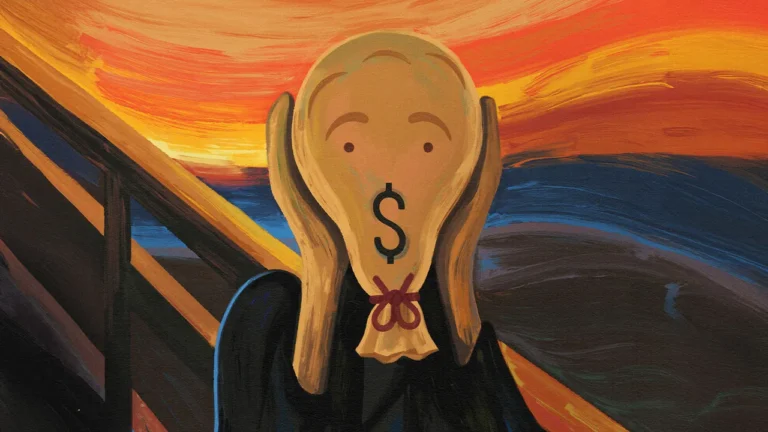
This in turn has fueled speculation of a broader flight from US assets, marked by a Munchian cover story in The Economist raising the shrieking specter of a dollar crisis. There has also been a mounting stream of stories and commentary that US policies were fueling a broader turn in sentiment against the currency—as suggested in this article about China looking at alternatives to US Treasuries, in invocations by Japan’s finance minister of the country’s US bond holdings as a possible negotiating card, and warnings that Asian countries could decide to reduce their exposure to US assets to the tune of $7.5 trillion.
The months since April 2 have clarified the multiple contradictory desires of the Trump administration vis-a-vis its position in the global economic hierarchy. It likes US military dominance, low interest rates, and the extraterritorial powers flowing from dollar centrality, and it would like to keep them. It dislikes trade deficits, supply chain vulnerabilities, deindustrialization, and technological catch-up in its adversaries, and would like to stop or slow them. While these goals are framed largely in terms of the intersection of domestic politics and geopolitics, there are also occasional hints of more traditional—and largely benign—macroeconomic preoccupations at the Treasury. These take the form of a desire for global rebalancing, where economies with large trade surpluses in Northern Europe and East Asia simply increase domestic consumption rather than purely relying on exports for growth.
On the specific question of the dollar itself, Trump administration policy can be characterized as confused. It wants a weak dollar to spur reindustrialization in the US and a strong dollar to offset any inflationary pass-through from tariffs. It certainly does not want a combination of dollar weakness and higher bond yields, which is generally interpreted as a crisis of confidence in the currency. In addition, this administration is increasingly concerned that high bond coupons will increase the deficit and debt, and seems to think that large foreign inflows into US bonds could help hold down interest rates. Finally, it is absolutely determined to retain the centrality of the dollar in the international monetary system, even though several key administration officials believe—mistakenly—that dollar centrality leads to undesirable dollar strength.
Related

After the Apocalypse: America’s Role in a World Transformed
The purpose of U.S. foreign policy is, at least theoretically, to keep Americans safe. Yet as we confront a radically …

Book Talk | The Once and Future World Order
A conversation with Amitav Acharya, one of the world’s leading scholars of global order.