
How to Reset US-China Competition in Africa
This piece was co-written by Wenjing Wang, intern at the Quincy Institute.
Geoeconomic policies—defined as the use of economic tools to achieve geopolitical ends—serve as a corollary to more traditional security policy. When used correctly, they can help advance restraint and shift competition with great or regional powers away from zero-sum militarized security and towards positive-sum trade and global economic investment.
In geoeconomic competition, a nation can strengthen its influence by either deepening engagement with targeted countries or degrading the competitor. Tariffs and export restrictions, for example, can be used as tools to promote domestic industry at the expense of foreign competitors. On the flip side, government-supported international infrastructure projects can promote the economic growth of international partners while supporting the global business endeavors of its own domestic firms, thus promoting domestic interests while pursuing its geoeconomic ends.
While the Donald Trump administration has primarily used geoeconomic policy as a stick against countries that it says have used the international system to promote their own interests at the expense of American interests, the Chinese have been using a subset of geoeconomic policy—namely financing infrastructure investments across the Global South—to promote their interests while seeking to buoy foreign economies to an extent far greater than has the United States.
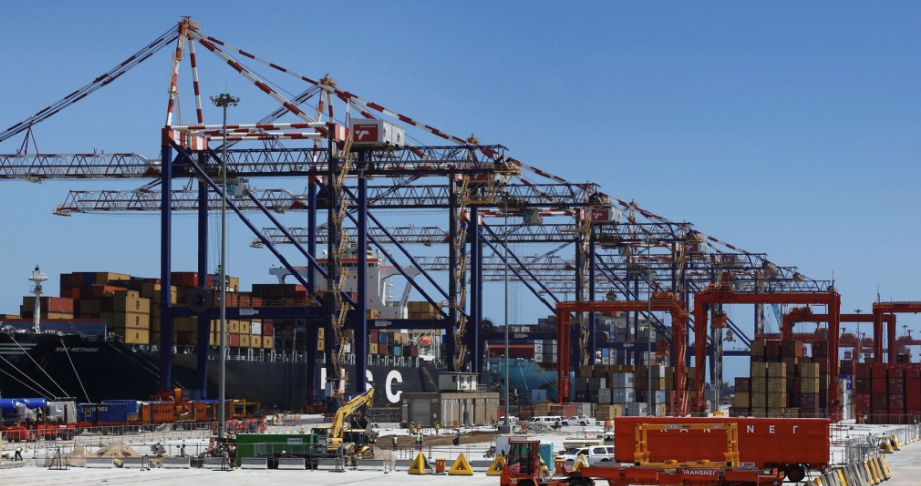
The Chinese are seeking to become a reliable partner for Global South countries across parts of the world with abundant critical minerals, other essential resources, and geopolitical clout. This has been particularly true of China’s geoeconomic engagement in Africa, where Chinese lenders provided $182.28 billion between 2000 and 2023, though its investment has dropped significantly in recent years. Following a peak of nearly $30 billion in annual loans in 2016, Chinese loans to the continent fell to just $1 billion in 2022, rising to $4.6 billion in 2023, the last year with complete data.
Related
Ukraine Peace Talks and the Pitfalls of Maximalism in a Multipolar World
How to bring the Ukraine War to a close in a multipolar world.