
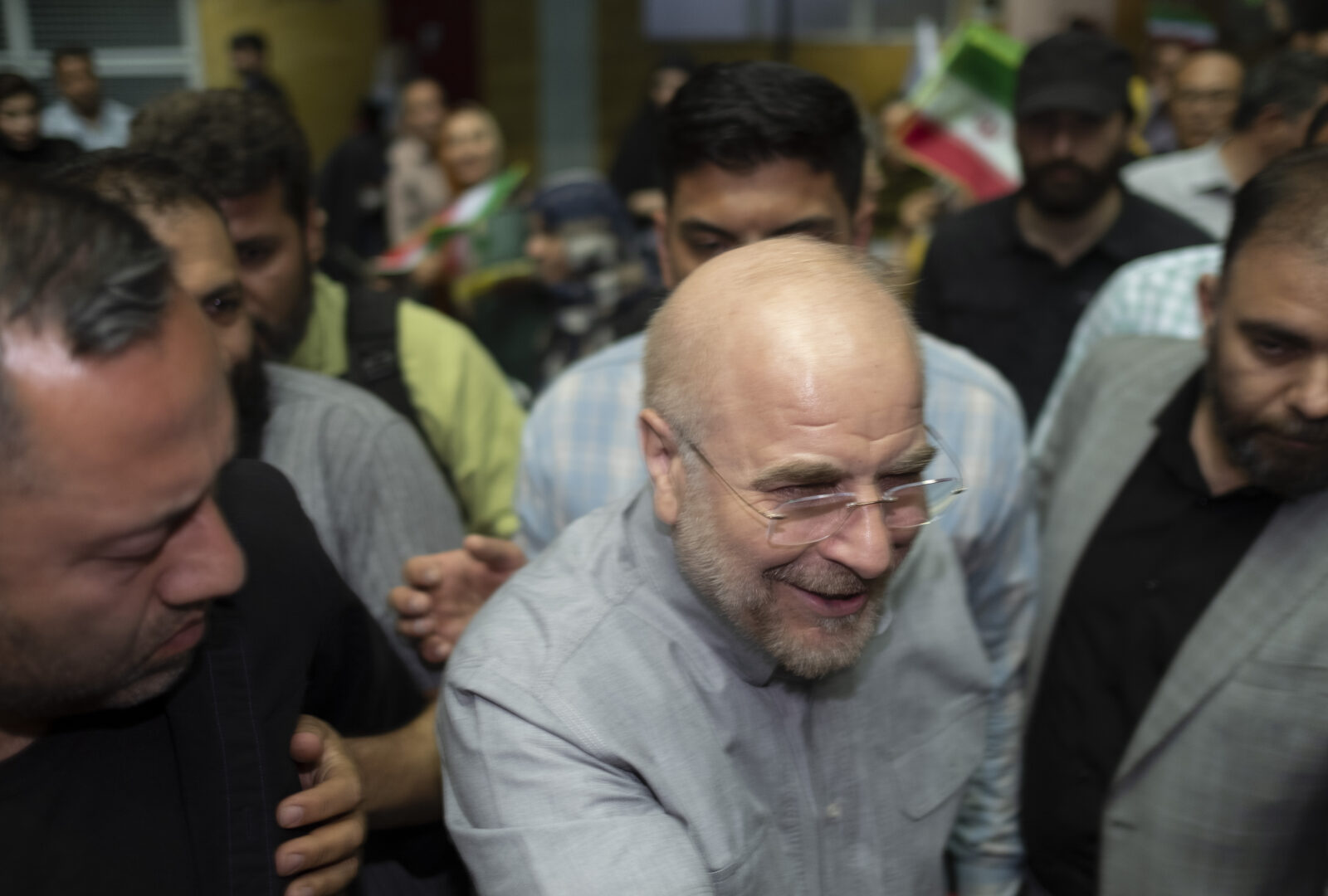
The Man Vance Met in Islamabad
Face-to-face talks over the weekend between U.S. and Iranian delegations in Islamabad ended without a peace agreement. Vice President J.D. Vance, who led the American team, said in a press conference following the marathon talks that the Iranians had not accepted the American terms, and that the failure to reach an agreement is “bad news for Iran much more than it’s bad news for the United States.”
That need not mean an inevitable return to war. The incentives to avoid it are today as powerful as they were before the talks. We are still in the first half of the two-week-long truce agreed by the U.S. and Iran. A quick deal would have been possible only if one or both of the sides had been prepared to soften their bargaining position rather than try securing desired concessions. That was clearly not the case.
Still Vance’s comments suggest the U.S. has underestimated Iran’s political will and misunderstood the moment. The remaining truce time must be used in Washington to fundamentally reassess its own approach: Instead of expecting Iran to simply comply with all the demands, the U.S. should prepare for a series of negotiation rounds, including numerous expert-level meetings—this is how real diplomacy is done and how stable agreements are hammered out. The truce can be prolonged and needn’t be subject to artificial self-imposed deadlines. Peace deserves, and requires, real effort and time.
The good news is that signals from Tehran suggest readiness to make a deal. The speaker of the parliament, Mohammad Bagher Ghalibaf is the man in charge. The delegation he brings is not only large and senior but also covers the entire Iranian political spectrum. It comprises moderates, like the foreign minister Abbas Araghchi and his deputies, reformists like the governor of the central bank Abdolnasser Hemmati, and hardliners like Ali Bagheri Kani, the chief nuclear negotiator under the late conservative president Ebrahim Raisi, and member of the parliament Mahmoud Nabavian.
Related
Book Talk | From Apartheid to Democracy: A Blueprint for Peace in Israel-Palestine
Join our discussion of the new book “From Apartheid to Democracy: A Blueprint for Peace in Israel-Palestine”.