
The End of Gaza
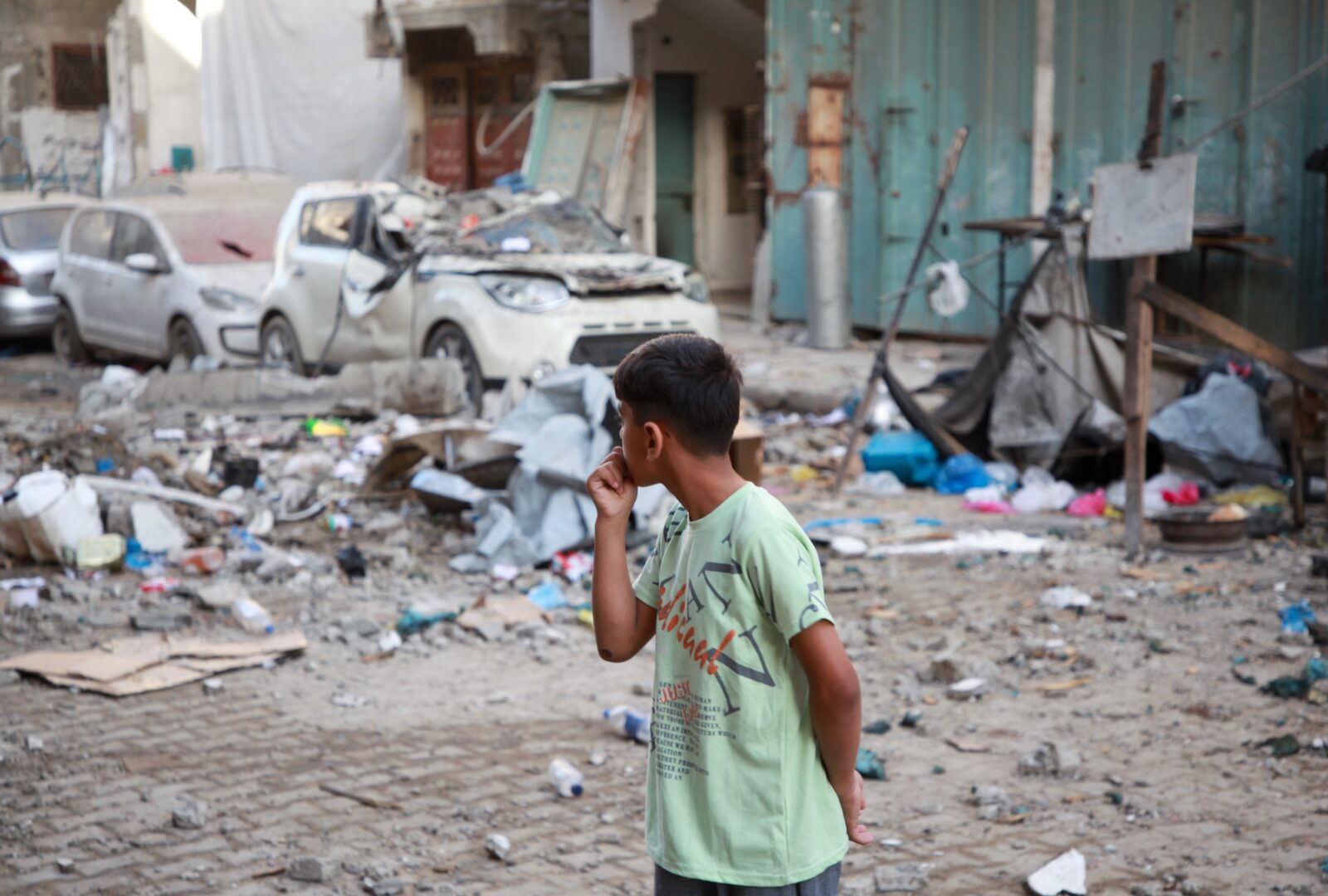
A year after the Trump administration negotiated an agreement to end the war in Gaza, Palestinians are still waiting for the “day after” to arrive. The October 2025 cease-fire plan freed the last remaining Israeli hostages and ostensibly ended hostilities, but Israel continues to constantly strike targets in Gaza, often killing civilians, including some 300 children in the past year. The deal also envisioned a phased political process that would help reconstruct the devastated territory. Jared Kushner, U.S. President Donald Trump’s son-in-law and the point person for the Middle East, promised in January this year that restoration of core services and infrastructure—including water and sewage systems, electricity networks, hospitals, and bakeries—would begin within 100 days. And yet, nine months later, Gaza has seen no reconstruction, no restoration of basic services, or even an end to daily violence. Instead, the vast majority of its inhabitants remain packed into squalid and sprawling tent cities along a tiny—and ever-shrinking—strip of coastline, plagued by disease and rodent infestations, enduring extreme shortages of food, medicine, clean water, and access to basic sanitation.
Gazans may not be in the grip of famine as they were in prior years, but the humanitarian situation remains catastrophic—and it is not sustainable. The intolerable conditions could very well lead to a further explosion of violence. They are also enabling the endgame that many Israeli leaders want: the eventual eviction of Gaza’s over two million Palestinian residents.
Indeed, the status quo seems to suit the Israeli leadership. In a recent interview, Nikolay Mladenov, the Bulgarian diplomat serving as the high representative of Trump’s Board of Peace, which is overseeing the Gaza peace plan, revealed where the main obstacle to progress lies. On Israel’s commitments, Mladenov gently noted, is “where we are little bit stuck right now.” Kushner has also blamed Israel’s “crazy elections” later this month, which he says have made the Netanyahu government “a little irrational” in regard to Gaza.
Although electoral considerations are undoubtedly a factor—Israeli Prime Minister Benjamin Netanyahu is locked in a tight and, for him, existential reelection campaign—the totality of Israeli words and actions point to something deeper and more alarming: ultimately, the Netanyahu government’s strategy has less to do with stabilizing Gaza or even disarming Hamas than with rendering the territory uninhabitable and ejecting its population.
Related
Trump’s Gaza Plan and What It Means for Palestinians
Palestinian perspectives on Trump’s peace plan.

Beyond Aid: How Defense Integration Could Entrench US Support for Israel
Experts discuss the future of US-Israeli relations.