Mutual Delusion
Hardliners on both sides in the Ukraine war are pursuing a chimaera in the hope of a miracle. Moscow appears to believe that in the near future, the Ukrainian defences that have held the Russian advance to a bloody crawl for years will miraculously collapse, or that the European money and arms that have enabled those defences will suddenly vanish. A large part of the Western commentariat (and some, though by no means all Ukrainian security experts) appear beholden to a symmetrical fantasy. Drones and satellite intelligence have made the accumulation of combat power for a Russian breakthrough impossible, enabling the Ukrainian army to fight Russia to a near-standstill. Yet Western observers seem to believe that these technologies will miraculously not allow Russia to do exactly the same to the Ukrainian army.
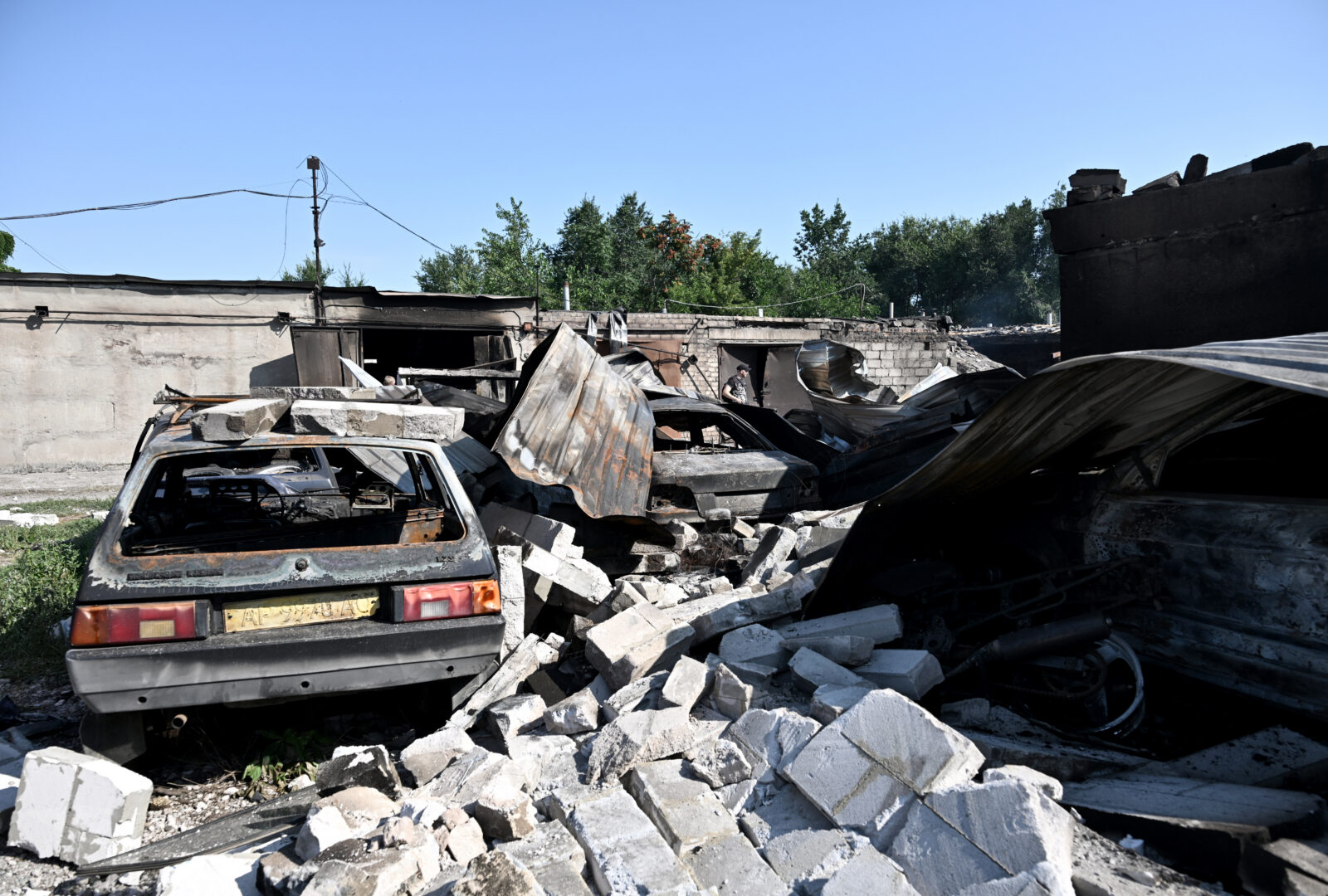
Western military experts who talk of Ukraine having ‘turned the tide’ display an indifference to the lessons of the war that casts serious doubt on either their expertise or their honesty. The much-lauded Ukrainian success in damaging Russian oil refineries (though only eliminating about 13 per cent of production) has been vastly outmatched by Russia’s closure of the port of Odessa and damage to Ukrainian transport and electricity generation. Russia’s capacity to destroy Ukrainian infrastructure has also been greatly increased by the end of the supply of US air defence missiles to Ukraine as a result of the war with Iran.
Russian ultra-nationalists with whom I have spoken still profess to think that Russia can capture Odessa – something that would require the Russian armed forces either to fight their way across the lower reaches of the Dnieper or launch a massive amphibious attack. This would mean rebuilding the Black Sea Fleet that has been decimated and forced from its base in Sevastopol by Ukrainian missiles and drones. Parts of the Western media have tried to foster a mirror-image delusion: that Ukraine’s success in damaging the Russian navy and supply routes to Crimea means that it can recapture the peninsula. As with Russia’s putative conquest of Odessa, this would require the Ukrainian army to fight its way across the Dnieper or launch a seaborne invasion with a navy that it does not possess.
It is hard to know what would be worse: if we are being deliberately lied to, or if these retired officers and security ‘experts’ heralding imminent victory for Ukraine actually believe this nonsense. Most probably, the political, bureaucratic, media, academic and think tank consensus in Europe has now become so monolithic and absolute that they do believe it, since nobody is saying anything different. To find alternative, more realistic voices, all too often one regrettably has to turn to the populist right.