

Book Talk | Retrench, Defend, Compete: Securing America’s Future Against a Rising China
In recent years, Washington has adopted a confrontational grand strategy toward China, focusing on countering China’s rise and defending U.S. strategic dominance in the Asia-Pacific. The implicit assumption is that China’s rise poses an all-encompassing threat to longstanding U.S. interests in Asia, and the U.S. must enhance its commitment to protecting all of those interests.
In his new book, Retrench, Defend, Compete: Securing America’s Future Against a Rising China, Charles Glaser, senior fellow in MIT’s Security Studies program, rebuts much of this argument. He contends that not only is it infeasible for the U.S. to pursue strategic dominance in Asia against China’s rise, but trying to do so would also hurt long-term U.S. competitiveness and greatly increase the risk of a catastrophic war with China. To avoid this dangerous trajectory and pursue a more intelligent, long-term competition with Beijing, Glaser argues that Washington should selectively retrench from high-risk, nonvital commitments, such as Taiwan, while focusing on defending truly vital interests, including the homeland, key treaty allies, and access to the global commons.
To discuss all this and more, the Quincy Institute hosted the author and Michael Mazarr, senior political scientist at RAND, for a webinar discussion. Michael Swaine, senior research fellow of the East Asia Program at the Quincy Institute, moderated.
Program
Topics
Countries/Territories
Entities
Panelists

Charles Glaser
Charles Glaser is a senior fellow in the MIT Security Studies Program. His research focuses on international relations theory and international security policy, including U.S. policy toward China, nuclear weapons policy, and U.S. energy security. His most recent book, "Retrench, Defend, Compete: Securing America’s Future Against a Rising China", was published this past fall. His other books are "Rational Theory of International Politics" (2010) and "Analyzing Strategic Nuclear Policy" (1990); he co-edited Managing US Nuclear Operations in the 21st Century (2022) and Crude Strategy (2016). Glaser holds a PhD and MPP from the Kennedy School of Government at Harvard University, a BS in Physics from MIT, and an MA in Physics from Harvard. He was a professor of Political Science and International Affairs at George Washington University, where he was the founding director of the Elliott School's Institute for Security and Conflict Studies.
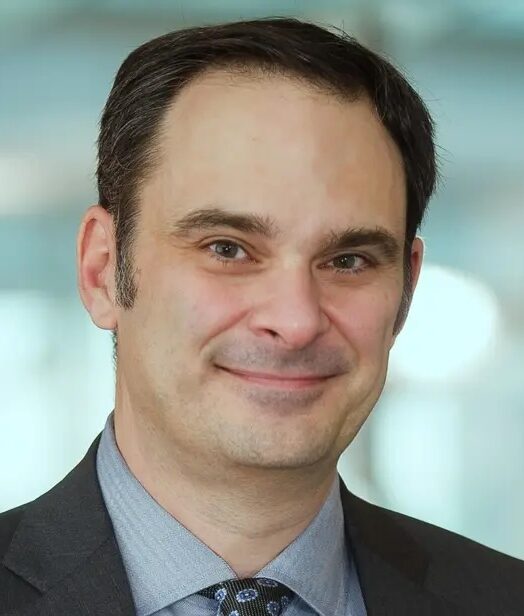
Michael Mazarr
Michael J. Mazarr is a senior political scientist at RAND and a professor of policy analysis at the RAND School of Public Policy. Previously, he worked at the U.S. National War College, where he was professor and associate dean of academics; as president of the Henry L. Stimson Center; senior fellow at the Center for Strategic and International Studies; senior defense aide on Capitol Hill; and as a special assistant to the Chairman of the Joint Chiefs of Staff. His primary interests are U.S. defense policy and force structure, disinformation and information manipulation, East Asian security, nuclear weapons and deterrence, and judgment and decisionmaking under uncertainty. Mazarr holds a Ph.D. in public policy from the University of Maryland.

Michael Swaine
Michael D. Swaine is a senior research fellow in the Quincy Institute’s East Asia Program and is one of the most prominent American scholars of Chinese security studies. At the Carnegie Endowment for International Peace, he worked for nearly twenty years as a senior fellow specializing in Chinese defense and foreign policy, U.S.-China relations, and East Asian international relations. Before that, Swaine served as a senior policy analyst at the RAND Corporation. Swaine has authored and edited more than a dozen books and monographs and many articles, papers and opinion pieces, including Interpreting China’s Grand Strategy, Past, Present, and Future, with Ashley Tellis, (2000); Managing Sino-American Crises: Case Studies and Analysis, with Zhang Tuosheng (eds) (2006); America’s Challenge: Engaging a Rising China in the Twenty-First Century (2011); and “A Restraint Approach to U.S.-China Relations: Reversing the Slide Toward Crisis and Conflict” (2023), with Andrew Bacevich.