
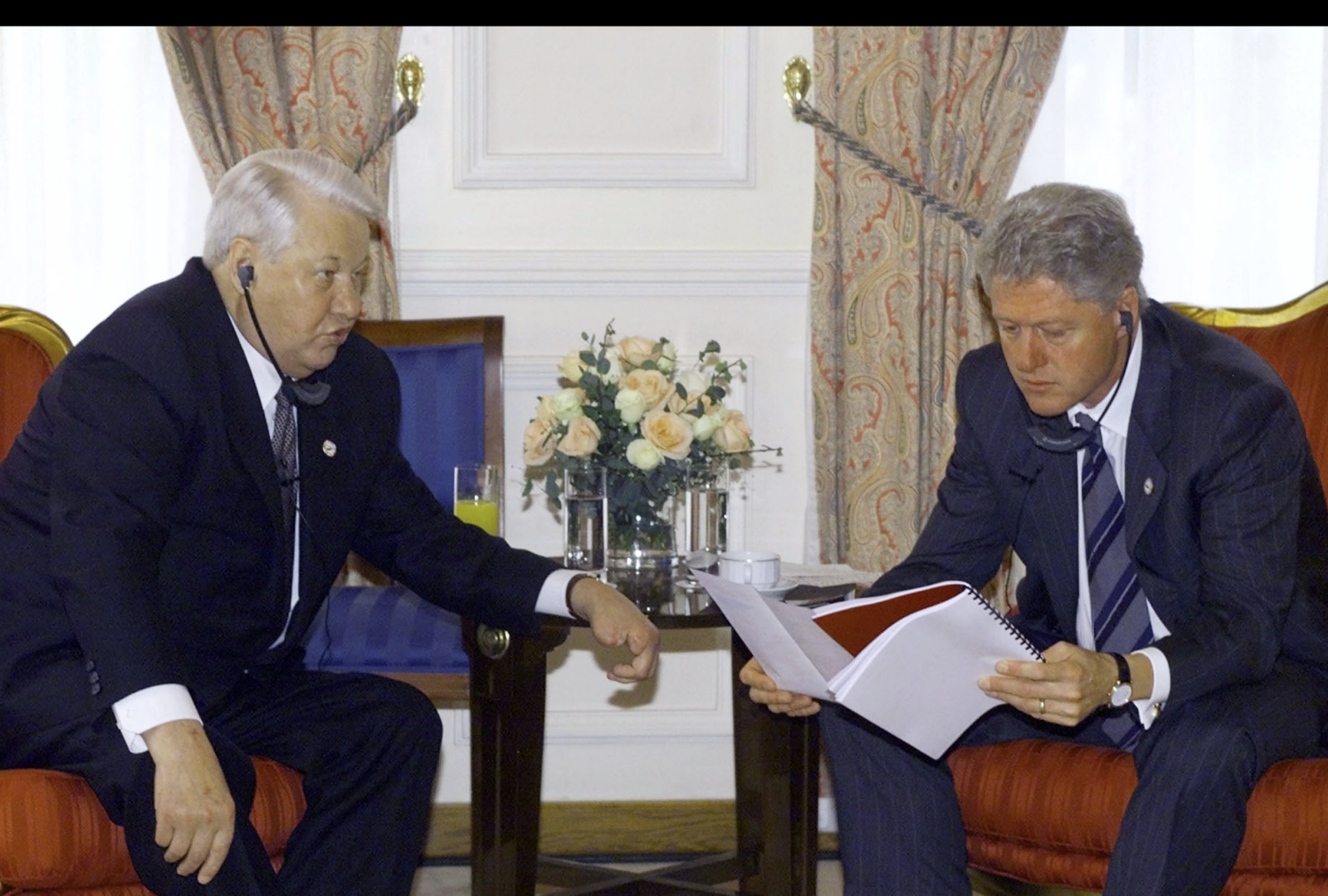
Book Talk | Security Through Co-operation: Attempts at US-Russian Accord After the Cold War
Today, as US-Russia tensions remain at their highest level since the end of the Cold War, it can be difficult to remember that, as the Soviet Union disintegrated and the new Russian Federation emerged, Washington and Moscow sought to jointly manage the transition. Drawing on decades of firsthand experience in nuclear diplomacy and US-Russia relations, Rose Gottemoeller explores these themes and more in her new book, Security Through Cooperation: Space, Nuclear Weapons, and US-Russia Relations after the Cold War.
What early successes did the United States and Russia achieve in their post-Cold War relationship? Was continued cooperation feasible alongside NATO enlargement? What insights can we glean from the past to help guide the future of U.S.-Russia relations?
Anatol Lieven, director of the Eurasia Program at the Quincy Institute, spoke with Rose, the William J. Perry Lecturer at the Freeman Spogli Institute for International Studies at Stanford University, for a discussion of these questions and of her important contribution to our understanding of the history of US-Russia relations—and where that relationship may go from here.
Panelists
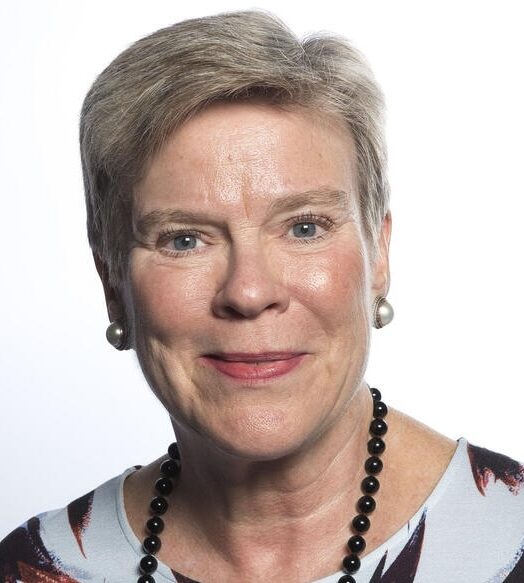
Rose Gottemoeller
Rose Gottemoeller is the William J. Perry Lecturer at Stanford University’s Freeman Spogli Institute for International Studies and Research Fellow at the Hoover Institute. Before joining Stanford, Gottemoeller was the Deputy Secretary General of NATO from 2016 to 2019, where she helped to drive forward NATO’s adaptation to new security challenges in Europe and in the fight against terrorism. Prior to NATO, she served for nearly five years as the Under Secretary for Arms Control and International Security at the U.S. Department of State, advising the Secretary of State on arms control, nonproliferation and political-military affairs. While Assistant Secretary of State for Arms Control, Verification and Compliance in 2009 and 2010, she was the chief U.S. negotiator of the New Strategic Arms Reduction Treaty (New START) with the Russian Federation.
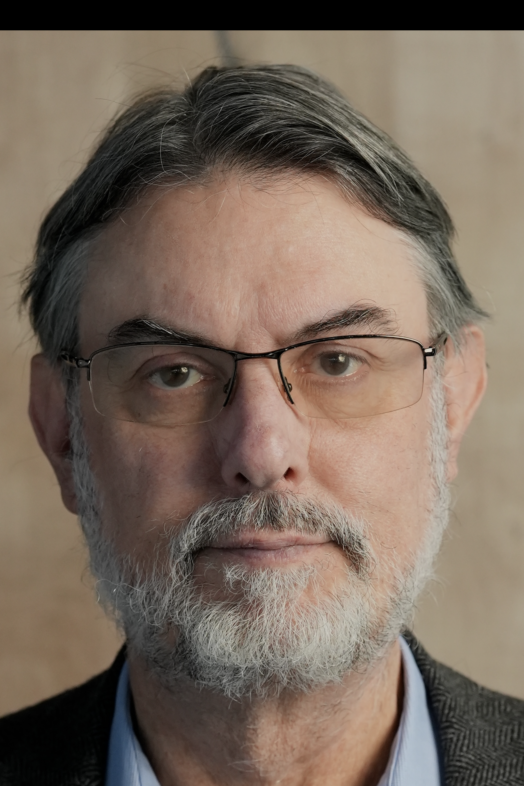
Anatol Lieven
Anatol Lieven is the director of the Eurasia Program and the Andrew Bacevich chair in American Diplomatic History at the Quincy Institute for Responsible Statecraft. He was formerly a professor at Georgetown University in Qatar and in the War Studies Department of King’s College London. He also served as a member of the advisory committee of the South Asia Department of the British Foreign and Commonwealth Office and of the academic board of the Valdai discussion club in Russia. He holds a B.A. and Ph.D. in history and political science from Cambridge University in England. From 1985 to 1998, Lieven worked as a journalist in South Asia, the former Soviet Union and Eastern Europe and covered the wars in Afghanistan, Chechnya and the southern Caucasus. From 2000 to 2007 he worked at think tanks in Washington DC.
Related
Ukraine Peace Talks and the Pitfalls of Maximalism in a Multipolar World
How to bring the Ukraine War to a close in a multipolar world.