
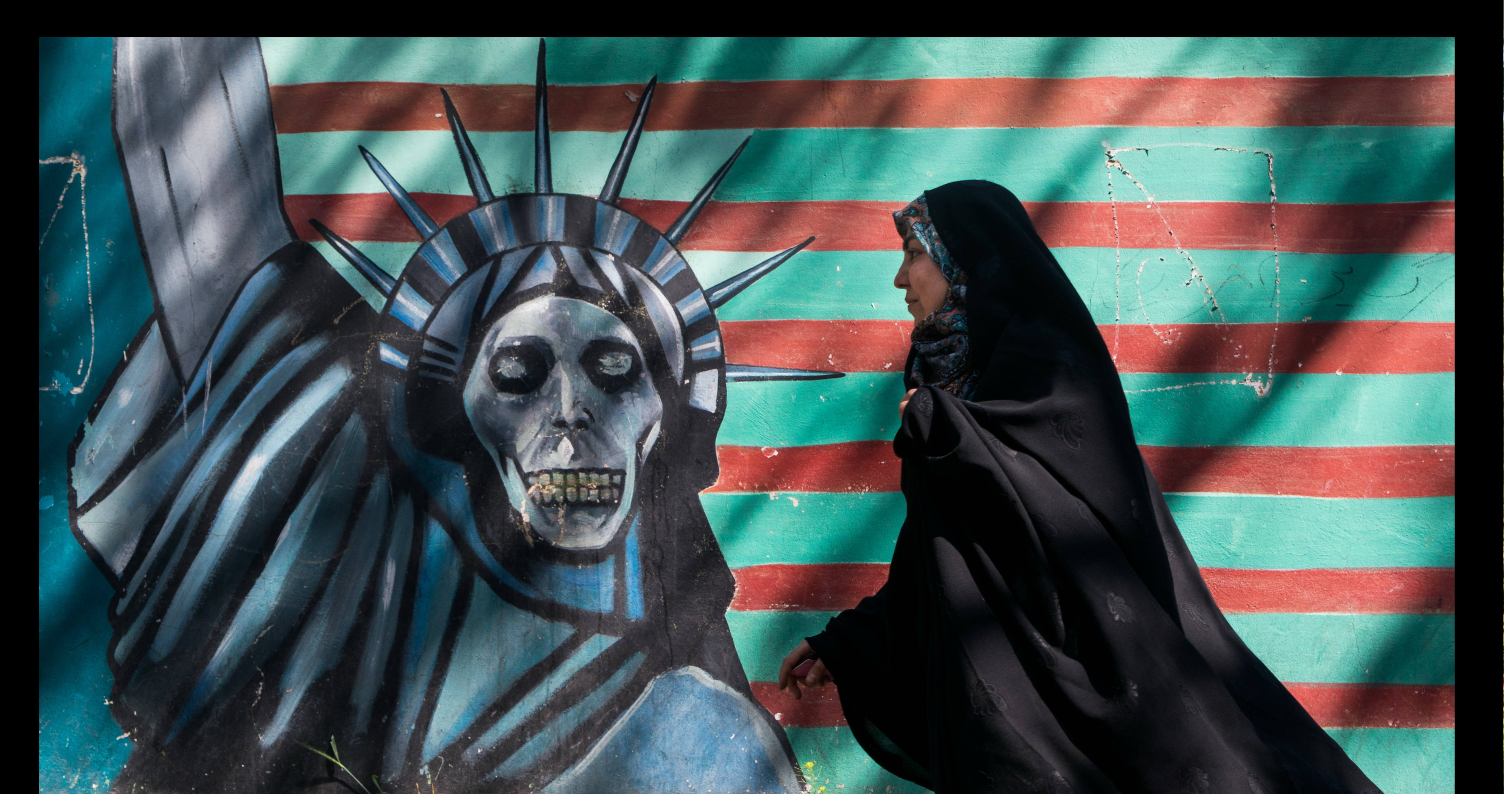
Grand Strategy Implications of Trump’s Iran Debacle: Is This the End of Primacy?
For decades, U.S. grand strategy has been defined by the pursuit of primacy and military dominance. But costly wars—from Iraq to Afghanistan—have repeatedly raised questions about whether this approach is sustainable. Now, in the aftermath of a failed war with Iran, those questions have returned with new urgency. Has this conflict dealt a blow to U.S. power comparable to the Iraq War? Or does it mark a different kind of turning point—one that reshapes how Washington approaches both adversaries and allies?
The Quincy Institute held a timely conversation on the strategic consequences of the Trump administration’s failed war with Iran—and what it means for the future of American foreign policy.
This panel examined the global and regional implications of the conflict. How has the war altered the balance of power in the Middle East? What are the downstream effects for U.S. alliances and deterrence in Europe and Asia? And perhaps most importantly, does this moment create an opening to rethink U.S. strategy—moving away from militarized dominance toward a more restrained, diplomatic approach?
It featured leading voices in the debate over American grand strategy —Stephen Walt, board member at the Quincy Institute, Stephen Wertheim, senior fellow in the American Statecraft Program at the Carnegie Endowment for International Peace, and Monica Toft, non-resident fellow at the Quincy Institute — this discussion explored whether the United States is at an inflection point. Trita Parsi, executive vice president of the Quincy Institute, moderated.
Panelists
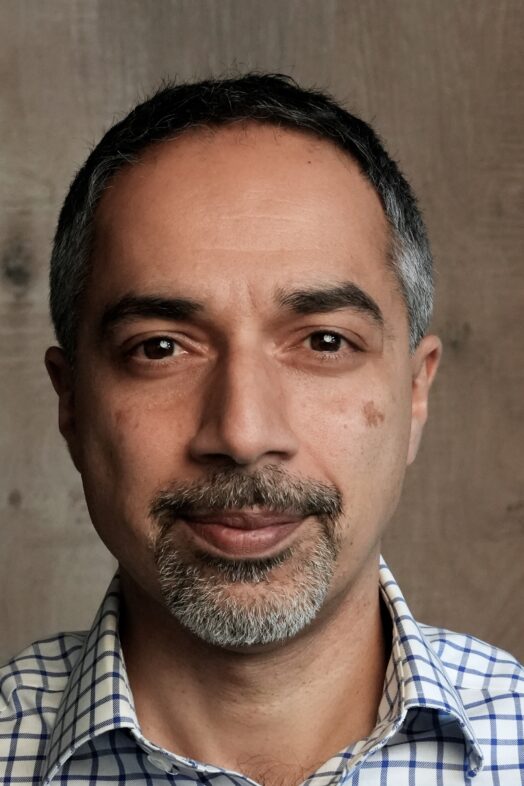
Trita Parsi
Trita Parsi is co-founder and executive vice president of the Quincy Institute. He is an award-winning author and the 2010 recipient of the Grawemeyer Award for Ideas Improving World Order. He is an expert on US-Iranian relations, Iranian foreign policy, and the geopolitics of the Middle East. He has authored four books on US foreign policy in the Middle East, with a particular focus on Iran and Israel. He has been named by the Washingtonian Magazine as one of the 25 most influential voices on foreign policy in Washington DC for five years in a row since 2021, and preeminent public intellectual Noam Chomsky calls Parsi “one of the most distinguished scholars on Iran.”
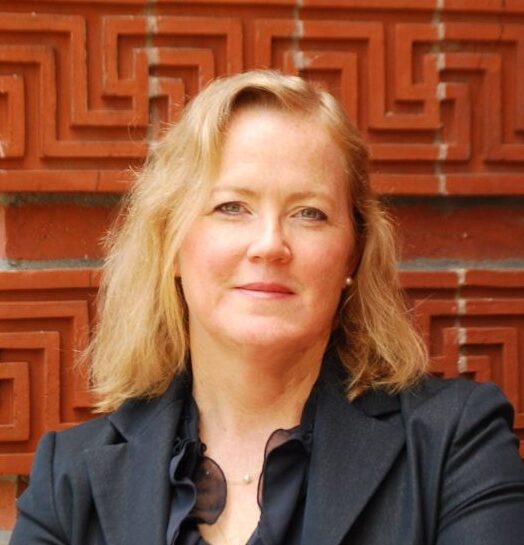
Monica Duffy Toft
Monica Duffy Toft is a non-resident fellow at the Quincy Institute and Professor of International Politics, founding Director of the Center for Strategic Studies at Tufts University’s Fletcher School of Law and Diplomacy. Prior to Tufts, Toft was Professor of Government and Public Policy at Oxford University’s Blavatnik School of Government and Assistant and Associate Professor at Harvard’s Kennedy School of Government. At Harvard, she was also the Assistant Director of the John M. Olin Institute for Strategic Studies and the founding director of the Initiative on Religion in International Affairs. Toft is a Global Scholar of the Peace Research Institute in Oslo, a faculty associate of Oxford’s Blavatnik School, a fellow of Oxford’s Brasenose College, a research advisor to the Resolve Network, a member of the Council on Foreign Relations, and the Political Instability Task Force. The Carnegie Foundation of New York named her a Carnegie Scholar, and she was awarded a Fulbright fellowship to Norway and the World Politics Fellowship at Princeton University. She is the author of seven books and edited volumes and has published widely on international relations, strategy, civil wars and religion, and U.S. national security in academic and policy journals. Toft was educated at the University of Chicago (MA and PhD in political science) and UC Santa Barbara (BA in political science and Slavic languages and literature, summa cum laude). Before college, she spent four years in the US Army as a Russian linguist (honorably discharged).
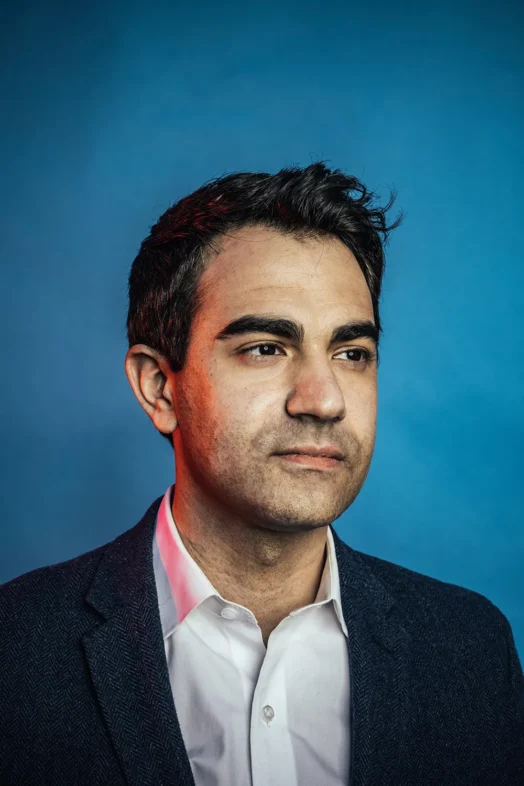
Stephen Wertheim
Stephen Wertheim is a senior fellow in the American Statecraft Program at the Carnegie Endowment for International Peace. He is a historian of U.S. foreign policy and international order and writes widely about contemporary problems in American grand strategy. He has published scholarly research on U.S. ideas and projects of diplomatic engagement, international law, world organization, colonial empire, and humanitarian intervention. In his book, Tomorrow, the World: The Birth of U.S. Global Supremacy (Harvard University Press, 2020), he reveals how U.S. leaders made a decision early in World War II to pursue global military dominance long into the future.
In 2020, Prospect magazine named him one of “the world’s 50 top thinkers for the Covid-19 age.” His essays on contemporary issues have appeared in Foreign Affairs, Foreign Policy, the Guardian, the New York Review of Books, the New York Times, the New Yorker, the Washington Post, and elsewhere. His writing may be viewed here.
Wertheim is currently a visiting faculty fellow at the Center for Global Legal Challenges at Yale Law School. Before coming to Carnegie, he was director of grand strategy at the Quincy Institute for Responsible Statecraft, which he co-founded in 2019. He also held faculty positions in history at Columbia University and Birkbeck, University of London, and postdoctoral research fellowships at Princeton University and King’s College, University of Cambridge. He received a PhD from Columbia University in 2015 and an AB from Harvard University in 2007.
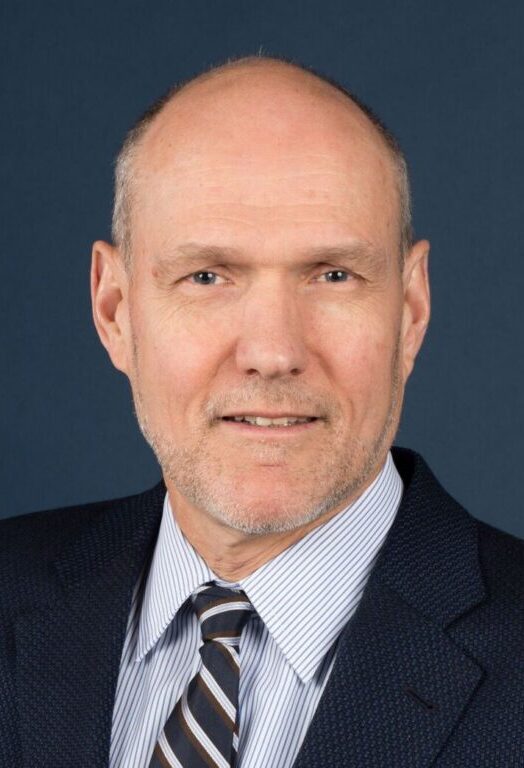
Stephen Walt
Stephen M. Walt is a board member at the Quincy Institute and Robert and Renée Belfer Professor of International Affairs at the Harvard Kennedy School. He is a contributing editor at Foreign Policy, co-editor of the Cornell Studies in Security Affairs, and was elected a fellow of the American Academy of Arts and Sciences in May 2005. He received the International Studies Association’s Distinguished Senior Scholar award in 2014. Walt is the author of The Origins of Alliances (1987), Taming American Power: The Global Response to U.S. Primacy (2005); The Israel Lobby and U.S. Foreign Policy (2007, with John J. Mearsheimer), The Hell of Good Intentions: America’s Foreign Policy Elite and the Decline of U.S. Primacy (2018), and “The End of Hubris and a New Era of American Restraint,” (Foreign Affairs, May/June 2019).