

Smart Openness in U.S.–China Scientific Collaboration
China has become a global science and technology leader. While this development does raise concerns for the U.S., blanket efforts to eliminate U.S.-China scientific interaction do not benefit long-term U.S. security interests. Instead, they can threaten the U.S. innovative edge by cutting off both access to and visibility into global scientific frontiers. It is becoming increasingly urgent to develop new frameworks that manage security risks while continuing to permit U.S.-Chinese scientific cooperation in an atmosphere that is not poisoned by political suspicion.
The Quincy Institute held a conversation with non-resident fellow Denis Simon and Ohio State University professor Caroline Wagner for a discussion of a new scientific policy framework, “Smart Openness“. We will discuss China’s rise to global scientific prominence, the ways in which Chinese scientific leadership requires a re-assessment of long-term American interests in scientific cooperation, the current state of U.S.-China collaboration, and ways to balance national security concerns with the need to maintain a productive and open scientific and research environment in the U.S. The authors will be joined by Kei Koizumi, the former special assistant to president Joe Biden on science and technology policy. Marcus Stanley, director of the studies at the Quincy Institute, moderated the conversation.
Panelists
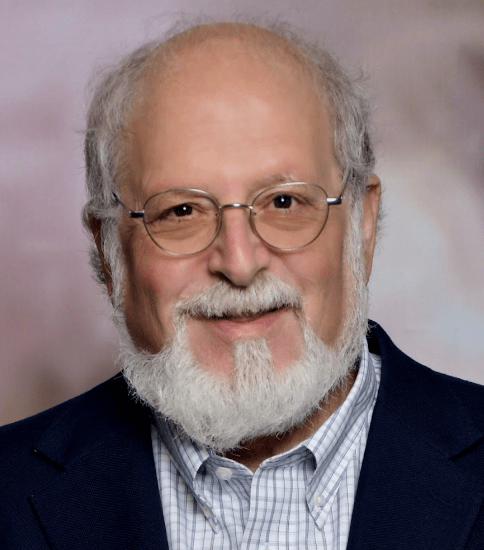
Denis Simon is a non-resident fellow at the Quincy Institute and senior lecturer in the Asian Pacific Studies Institute at Duke University. He is a recognized expert on international science and technology affairs. He has more than four decades of experience studying innovation, S&T policy, and talent in China. Most recently, he served as director of corporate partnerships at the Kenan Institute of Private Enterprise at the University of North Carolina (UNC) Kenan–Flagler Business School. He also has served as professor of practice for China business and technology at Duke University’s Fuqua School of Business and Executive Vice Chancellor of Duke Kunshan University in China (2015–20).
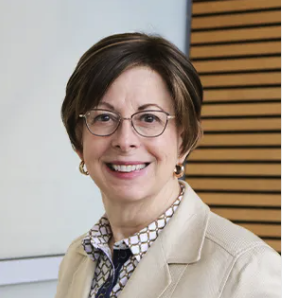
Dr. Caroline Wagner is academy professor at The Ohio State University John Glenn College of Public Affairs. Her research focuses on global research networks, international scientific collaboration, and science policy. Prior to joining Ohio State’s faculty in 2011, Wagner was a policy analyst working with and for government in a career that spanned more than 30 years and three continents. At The RAND Corporation, she was deputy to the director of the Science & Technology Policy Institute, a research center serving the White House Office of Science and Technology Policy.
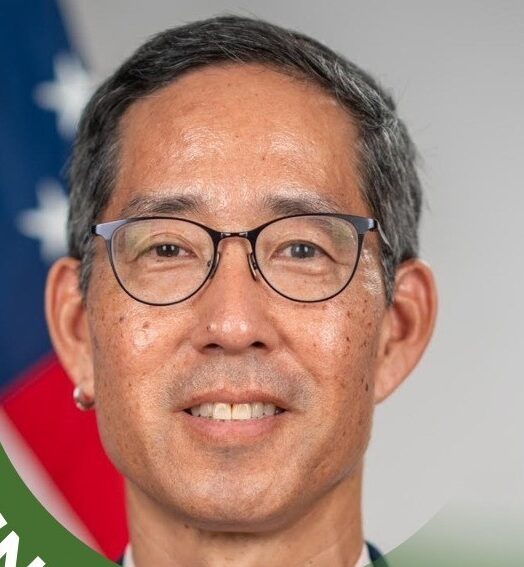
Kei Koizumi is an American science and technology policy expert who served as special assistant to the President and principal deputy director for Science, Society, and Policy in the White House Office of Science and Technology Policy (OSTP) during the Biden administration. Earlier in the Biden Administration, he served as principal deputy director for policy, chief of staff, and acting director. He held various other roles, including senior advisor on science policy for the American Association for the Advancement of Science (AAAS), senior advisor to the National Science and Technology Council, and Assistant Director for Federal R&D at OSTP under President Obama. Koizumi was director of the R&D Budget and Policy Program at AAAS from 1995 to 2009. He received his MA in International Science and Technology Policy from the George Washington University, where he has taught science policy, and his BA from Boston University in Political Science and Economics.

Marcus Stanley is director of studies at the Quincy Institute for Responsible Statecraft. Dr. Stanley has a PhD in public policy from the Kennedy School of Government. Prior to joining the Quincy Institute he had a background as an economist, including as an assistant professor in the Department of Economics at Case Western Reserve University, a senior economist at the Joint Economic Committee of the U.S. Congress, an economic and policy advisor to Senator Barbara Boxer, and the policy director at Americans for Financial Reform, where he played a leadership role in efforts to reform regulation of the U.S. financial system.