
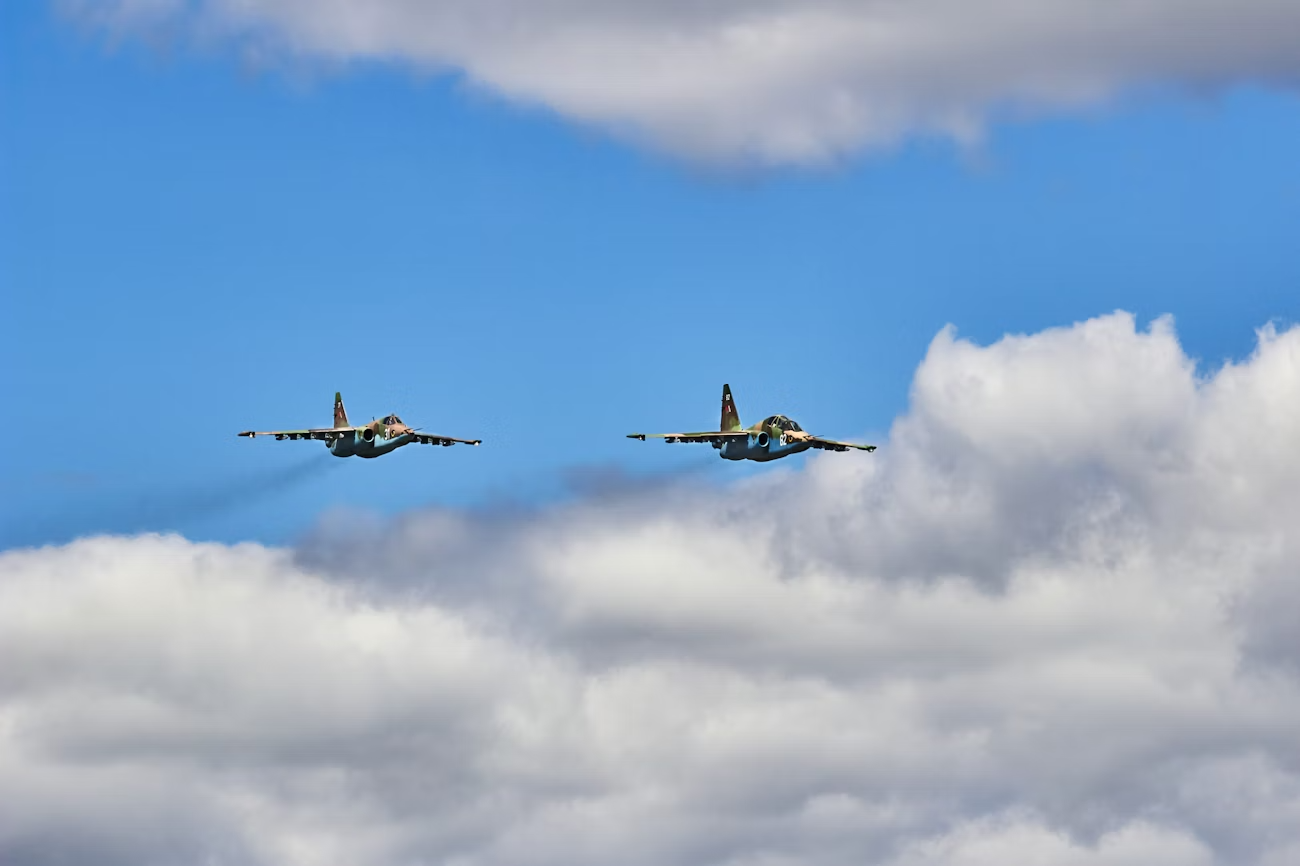
The Russian Air Incursions Are a Warning to Europe
The Russian fighters that briefly entered Estonian airspace last Friday and the drones that flew into Polish and Romanian airspace earlier are very unlikely to have been an accident, but they were not an “attack.” The drones were unarmed decoys, nobody was hurt, and the only damage was done when one was shot down by Polish air defenses.
They may have been intended as a test of those defenses; they were almost certainly intended as a warning—a warning above all against British and European plans to deploy a “reassurance force” to Ukraine after a peace settlement. This has been repeatedly and categorically rejected by the Russian government, but continues to be urged by some European governments with a blind determination that suggests that, rather than making a contribution to peace, they are actually interested in blocking any viable peace settlement.
As for the Russian fighters that entered Estonian airspace on September 19, Western media reporting has given the impression that they flew over Estonia itself. They did not. They deviated by a maximum of about five miles from their internationally recognized route over the sea along the middle of the Gulf of Finland. They continued flying parallel to that route but close to it for about 12 minutes before reentering it. This has not stopped wilder elements in the West from suggesting that the next time this happens NATO should shoot them down.
In normal circumstances, or between countries with normal relations, this “incident” would hardly even be worth reporting. The planes were on their way from St. Petersburg to the Russian exclave of Kaliningrad. Amid all the resulting NATO anxiety, it would be nice if someone reflected that it might have been a good idea for NATO to think about the risks of this before extending membership to the Baltic States and isolating Kaliningrad from Russia. (Relatedly, it is essential that NATO countries think about the risk of Russian military retaliation before deciding to intercept ships from Russia’s shadow fleet in international waters, for this would in effect blockade Russian trade from the Baltic and cut off Kaliningrad by sea—something that under international law constitutes an act of war, and to which Russia would almost certainly respond with armed force.)
Related
Ukraine Peace Talks and the Pitfalls of Maximalism in a Multipolar World
How to bring the Ukraine War to a close in a multipolar world.
The War-Crisis Nexus in Europe: Germany, Europe and the War in Ukraine
Join us we discuss the implications of Germany politics and Donald Trump’s re-election on the future of the Ukraine War.