Armenia as a Bridge, Not a Battleground
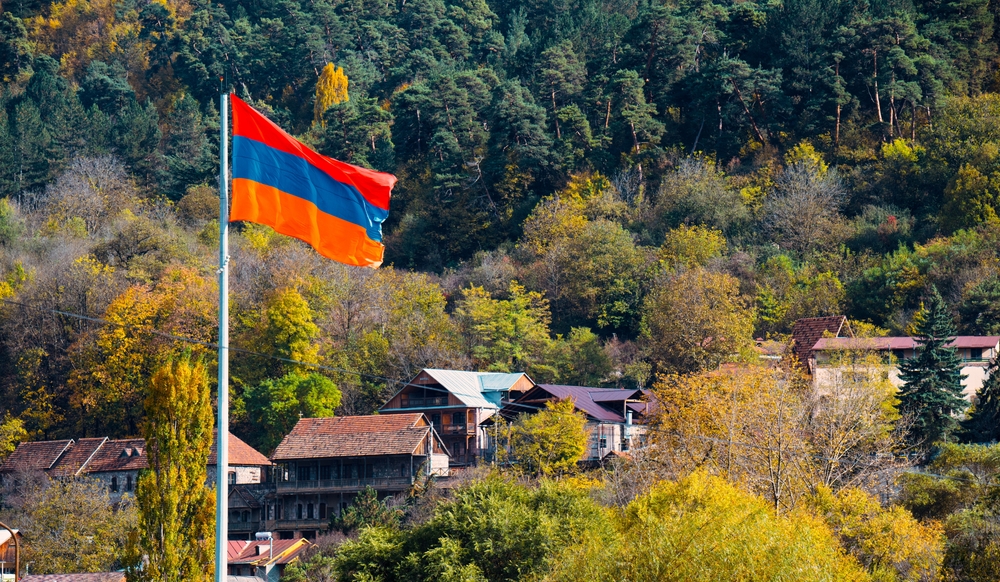
Armenians head to the polls this June for their first regularly scheduled parliamentary elections in nine years. Since 2022, Yerevan has reconfigured its foreign policy away from the historically close relationship with Russia, progressed in (often lopsided) normalization talk with Azerbaijan and Turkey and challenged Armenians’ historical and cultural beliefs. The summer vote is expected to be a referendum on the government’s controversial policies and vision for the country’s new “era of peace.” In this restless domestic environment, an array of external actors is seeking to influence the election and Armenia’s strategic trajectory. Rather than pursuing a “with us or against us” approach, those states seeking to influence the election would be wise to recognize that Armenia can serve as a far better bridge than battleground.
Kaja Kallas, the European Union’s top diplomat, said in December that Armenia had asked Brussels for “help to fight the malign influence, like we granted to Moldova.” The “malign influence” is referencing anticipated Russian interference. Alluding to Brussels’ support for Moldova as the inspiration, Kallas openly acknowledges the EU’s plan to influence Armenia’s election on the ruling party’s behalf.
Last September, Moldova’s ruling Party of Action and Solidarity (PAS) maintained its majority in the country’s most consequential parliamentary election. Before that vote, Moldovan President Maia Sandu stressed that a defeat for PAS would mean a Russian victory and could lead the country into war. As an EU accession frontrunner, Brussels saw a crucial stake in the outcome of the Moldovan vote and expended significant resources to demonstrate the Bloc’s resolve and support for PAS. This followed $2 billion in announced financial assistance from 2024, when Moldova narrowly passed a referendum enshrining the country’s EU aspirations into its constitution.
Such support from Brussels—in the name of supporting democracy and resisting Russian interference—led to Chisinau banning two parties from competing just days before the vote. Labeling the parties “pro-Russian” led the EU to turn a blind eye to an obviously undemocratic action on the eve of a contentious vote.