
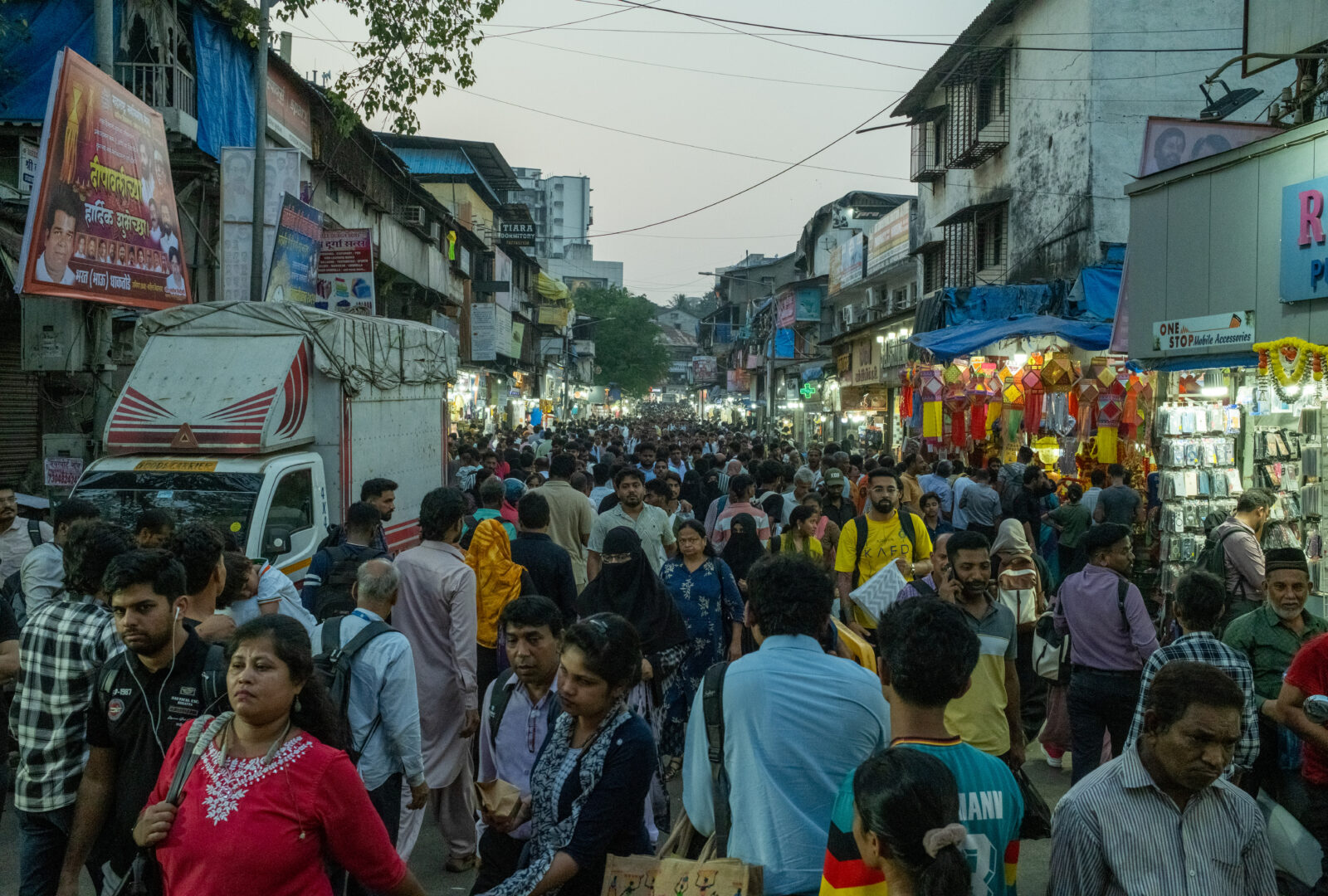
Book Talk | A Sixth of Humanity
What lies ahead for India’s politics and economics in a fast-changing world?
In A Sixth of Humanity: Independent India’s Development Odyssey, economist Arvind Subramanian and political scientist Devesh Kapur provide a comprehensive view of India’s efforts to recast a nation, a state, a society, and an economy all at once in the eight decades since its independence. They explore the interactions of ideologies and interest groups in a “precocious democracy” and the resulting economic outcomes, analyzing the paths taken (and not) in the context both of India’s own history and in a comparative framework. The patterns they unearth in their groundbreaking work will in turn shape the prospects of the planet’s most populous country in a world marked by increasing geopolitical, economic, and technological uncertainty.
Karthik Sankaran, senior research fellow in geoeconomics in the Global South program at the Quincy Institute, spoke with the two authors.
Panelists
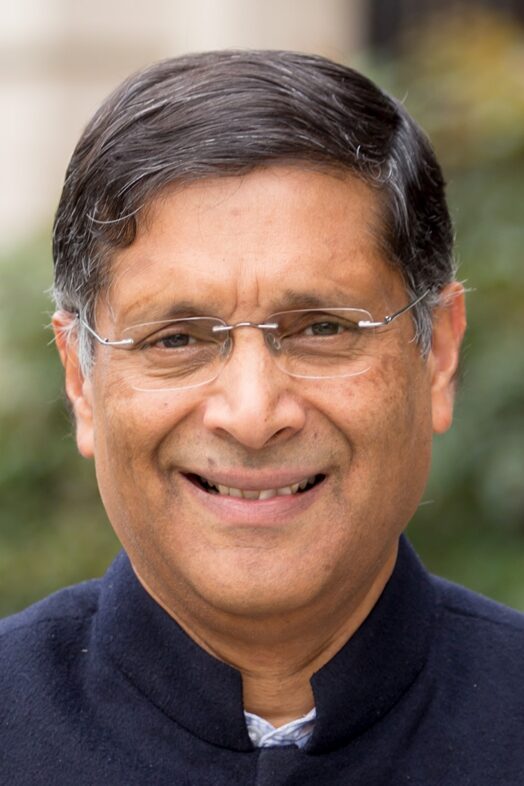
Arvind Subramanian
Arvind Subramanian is a senior fellow at the Peterson Institute for International Economics. He has been associated with the Institute since 2007. He served as the chief economic advisor to the government of India between 2014 and 2018 and has advised the government of the Indian state Tamil Nadu on macroeconomic and sectoral issues. During his tenure as chief economic adviser in 2014–18, India carried out major initiatives, including a uniform nationwide goods and services tax (GST), a bankruptcy code to tackle the Twin Balance Sheet challenge, a financial and digital platform for connectivity, and universal basic income schemes. Subramanian is the author of two critically acclaimed books: “Eclipse: Living in the Shadow of China’s Economic Dominance”, published by PIIE in September 2011, and “India’s Turn: Understanding the Economic Transformation”, published by Oxford University Press in 2008.
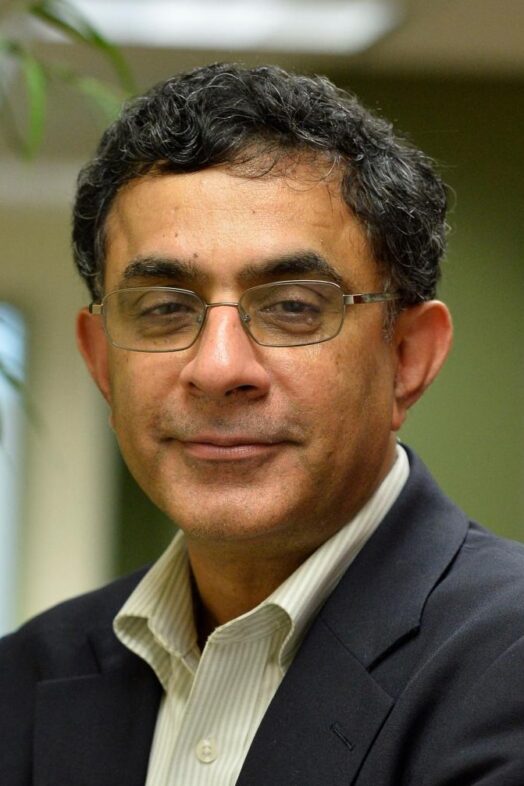
Devesh Kapur
Devesh Kapur is the Starr Foundation professor of South Asia Studies at Johns Hopkins University. He was previously professor of Political Science and Director of the Center for the Advanced Study of India at the University of Pennsylvania, holding the Madan Lal Sobti Chair for the Study of Contemporary India. Kapur’s research has focused on five broad areas that examine the political and institutional determinants of economic development: international financial institutions; political and economic consequences of international and internal migration; the effects of market forces and urbanization on the well-being of socially marginalized groups in India; governance and public institutions; and higher education. His book, “Diaspora, Democracy and Development: The Impact of International Migration from India on India” (Princeton University Press) earned him a 2012 Distinguished Book Award of the International Studies Association, while “The Other One Percent: Indians in America” (with Sanjoy Chakravorty and Nirvikar Singh) was a Choice Outstanding Title of 2017.
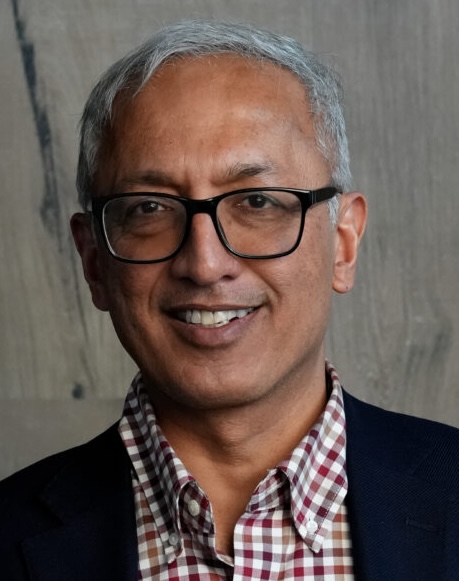
Karthik Sankaran
Karthik Sankaran is a senior research fellow in geoeconomics in the Global South program at the Quincy Institute for Responsible Statecraft. He was originally trained as a Modern European Historian but instead pursued careers in journalism and then finance as a strategist and as a trader/portfolio manager. He was engaged primarily with foreign exchange and fixed income in emerging markets at a variety of institutions on the sell-side and the buy-side. In this capacity, he saw the ripples of the Asian financial crisis of 1997 into Russia and Latin America, and then the Great Financial Crisis of 2008, and the subsequent Eurozone crisis of 2011. He then joined Eurasia Group as Director, Global Strategy, where he worked with country and regional teams to chart feedback loops among political and geopolitical risks, macroeconomics, and market responses.
Related
Ukraine Peace Talks and the Pitfalls of Maximalism in a Multipolar World
How to bring the Ukraine War to a close in a multipolar world.
Book Talk: The Collapse of Venezuela
A discussion of Venezuela’s economic collapse and its ramifications for U.S.-Latin American relations.