
Investing in the National Interest: The DFC and American Statecraft
Executive Summary
The U.S. International Development Finance Corporation, or DFC, supports private-sector investment across the Global South, particularly in low- and middle-income countries. Congress is currently reviewing legislation to reauthorize the DFC. The DFC is likely to see significant changes in the coming years, including a large expansion of its financial resources and a liberalization of its permissible investments.
The likely expansion of the DFC would serve U.S. interests as an instrument of positive influence in the Global South. However, it is also possible that changes made during the reauthorization process may amplify a major concern with the DFC’s focus and strategic approach: an excessive emphasis on national security goals and on exclusionary conflict with U.S. adversaries, particularly China. Such an approach can damage the potential for the U.S. to grow its competitive commercial presence in the Global South and reduce the DFC’s effectiveness as a pro-development instrument that enhances U.S. influence in the Global South. Proposed changes to the DFC’s strategic goals and an outright ban on engagement with Chinese–funded projects may drive the DFC further down an exclusionary, zero-sum path. The DFC should also not be used to invest in high-income countries, which would detract from one of its core missions.
This brief outlines a more expansive vision for the DFC, which would help the United States expand its economic footprint in the Global South without the pitfalls of an excessively securitized view of international development. A higher-impact DFC could improve the global influence of the United States, deepen economic partnerships and drive healthy, vigorous competition with China while avoiding coercive and almost certainly ineffective efforts to force countries to completely decouple from Beijing.
Critical minerals, energy, and strategic infrastructure should be major focuses of an enlarged DFC. Such projects diversify U.S. supply chains and offer holistic investment opportunities. At the same time, the DFC should pursue an approach that emphasizes broad-based commercial development, to include engagement with small- and medium-sized enterprises. An approach that views target countries as commercial partners rather than pawns for hard security competition best positions the United States to enhance its reputation in the Global South. Expanding the DFC’s range of available financial tools to include, for example, subordinated loans and more mechanisms to manage political and currency risk, could also improve its flexibility as a commercial partner.
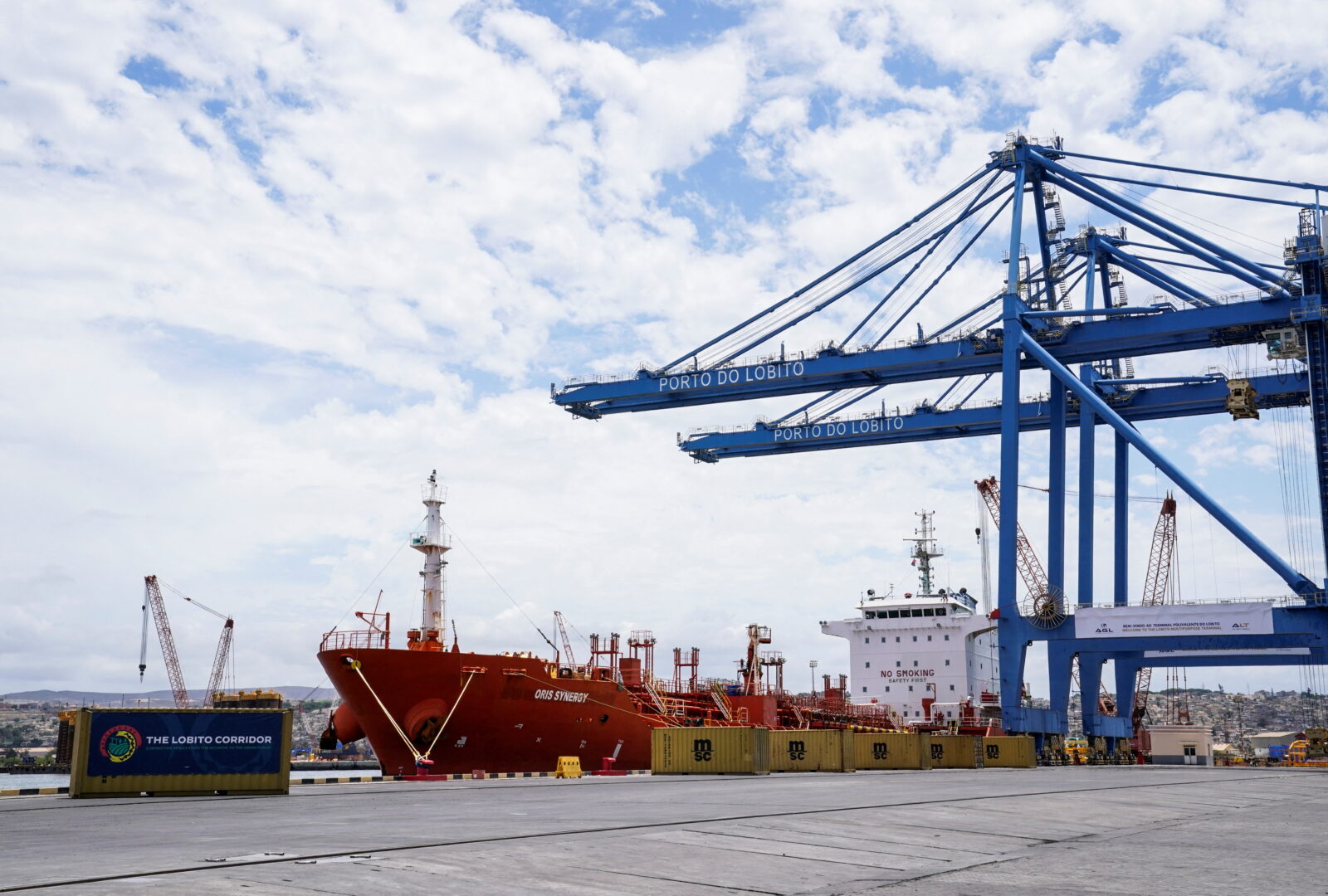
A clear candidate for a future DFC initiative along those lines is the Lobito Corridor. This project would create a massive transit hub for mineral transportation across sub-Saharan Africa and subsequent incorporation into the global market, bolstering local infrastructure, expanding the supply of critical minerals, and providing ample downstream U.S. investment opportunities. Another possible candidate is the brownfield expansion and modernization of the Puerto Bolivar container port in Ecuador’s El Oro province.
Introduction
The United States International Development Finance Corporation, the DFC, is a U.S. government-owned entity that was formed by the Better Utilization of Investments Leading to Development Act of 2018, or the BUILD Act.1
As the United States’ development finance institution, or DFI, the DFC’s focus is primarily centered on supporting private sector investment across low-income, low-middle-income, and occasionally upper-middle-income economies in the Global South.2
The BUILD Act provided an initial contingent liability of $60 billion for five years from the date of its enactment. Given that the DFC’s authorization ended on Oct. 6, 2025, it needs a new contingent liability to be approved by Congress.3President Trump’s administration has been supportive of the DFC’s reauthorization and has released a preferred set of changes it would like to see in a reauthorized DFC.4
Senator James Risch, Republican of Idaho, introduced an amendment in the Senate on August 1 to the National Defense Authorization Act for 2026 that would reauthorize the DFC.5Representative Brian Mast, Republican of Florida, introduced a separate bill in the House to reauthorize the DFC, which aligns almost exactly with the version of reauthorization Trump laid out earlier this year.6
Both bills dramatically increase the contingent liability of the DFC, with Risch’s Senate bill increasing it from $60 billion to $240 billion and Mast’s House bill increasing it to $250 billion. Although both bills offer the DFC greater opportunities to invest in high-income countries, Risch’s bill includes strict guardrails that are not present in the Trump–aligned House version. According to Risch’s bill, these investments are limited to 8 percent of the DFC’s outstanding liability, and the DFC cannot finance more than 25 percent of a project’s cost in a high-income country. Mast’s House bill does not include these guardrails.
Without them, the DFC can easily blow past its mandate and be used similarly to a catch-all sovereign wealth fund that operates at the whim of the chief executive, risking potential corruption. Retaining the DFC’s focus on low- and middle-income countries with a restrained capacity to work in high-income countries allows the organization to maintain its developmental mandate, while still advancing American foreign policy objectives. Having strict guardrails — such as those outlined in Risch’s bill — is essential to ensuring this balance is maintained.
The language in both the House and Senate bills prohibits support for DFC projects that partner with the government of a “country of concern,” a state-owned enterprise from such a country, or projects “operated, managed, or controlled” by such entities. The “countries of concern” are China, Iran, Venezuela, Cuba, North Korea, Russia, and Belarus.
This language is unhelpful and needlessly confrontational. Large-scale partnerships or co-investment projects with these countries, including China, are highly unlikely in the foreseeable future. More to the point, a fierce competition between the United States, as the global hegemon, and China, the only peer competitor, is baked into the international system and is to be expected. Nevertheless, a blanket prohibition on partnerships or co-investment with countries of concern is ill-advised, as there may be cases of American investment that unintentionally intersect with investments of U.S. rivals in countries important to U.S. interests. Avoiding engagement in such cases will not benefit U.S. interests and can exist in a dynamic with China or another U.S. rival that is predominantly competitive.
The challenge for a restraint-oriented approach is to channel this competition into non-militarized areas to the extent possible, even as China’s overreach is balanced in Asia and elsewhere. Fierce commercial competition in the Global South is one such channel. While coercive actions that attempt to expel states Washington sees as adversaries from the Global South are ill-advised, the United States ought to embrace this commercial competition with China by seeking to play to its own strengths. The task for the United States is to emerge as a distinct player in the investment space, developing its own unique sales proposition, and thereby gaining associated influence.
These issues will remain relevant well after the DFC’s renewal, and decisions made on them will have a significant impact on the role the DFC plays in this and future administrations.
DFC reauthorization should go beyond a narrow vision of the national interest
Congress is likely to reauthorize the DFC with overwhelming bipartisan support, a reflection of the agency being perceived as a critical tool to advance the national interest. But this bipartisanship is also a reflection of an increasingly securitized definition of America’s national interests, and thus of the DFC’s role. The rationale for reauthorizing a larger DFC has shifted to a vision that sees it focusing on securing key materials, infrastructure, and supply chains for the U.S. and denying these to America’s rivals, above all to China.
For example, the Trump–aligned House bill for DFC reauthorization says that the DFC’s goals should “… prevent strategic competitor inroads and dominance of key sectors such as infrastructure, critical and rare earth minerals, and critical supply chains and industries.”7
This sentiment is expanded upon in nine clauses of the following Statement of Policy, which references the need to “reduce reliance on state-directed, unsustainable financing by strategic competitors of the United States.” It seeks to counter countries that use resources to “coerce, intimidate, and influence other countries” and “to facilitate the procurement of necessary resources and supply chains for the benefit of the United States and its citizens.”8
Of the nine clauses in the Statement of Policy, eight feature an explicit or implicit reference to some aspect of national security. What was once a broader set of goals that included building American influence by fostering economic development, increasing private sector investment in emerging markets, and delivering returns to U.S. taxpayers appears to be shrinking. The newer view prioritizes controlling specific industries and resources and limiting America’s strategic adversaries’ access to them. This attitude goes well beyond a widely recognized need to diversify the United States’ supply chains, a step that would also ensure greater resilience for the global economy. Instead, what seems to be emerging is a zero-sum mentality that could hurt both the United States and project countries by pushing countries to “pick a side” when it comes to commercial decisions, thus exacerbating global tensions.
A view of the DFC that combines more parsimonious aims with a more belligerent outlook could thus result in a setback for global development. It should be noted that Risch’s Senate bill does preserve more of the agency’s development focus by prioritizing projects in lower-income countries.9
Conversely, retaining a somewhat more expansive view of the DFC’s goals could provide opportunities to build influence through commercial competition that leverages American strengths and delivers quality projects in areas where the United States (by itself or in collaboration with its allies) enjoys a comparative advantage. Such influence would stem less from gratitude — a thin reed that can erode over time — but rather from a process that lessens political anger at underdevelopment and deepens economic interactions between the U.S. and project countries across their public and private sectors.
These processes of development would be further enhanced if the DFC treated increases of physical capital in the developing world — including those initiated by American adversaries — as tying developing countries more deeply to U.S. and world markets. Most states across the Global South are focused primarily on development, comfortable with market mechanisms, agnostic about many ideological conflicts dear to Washington, and seek deeper integration with the global economy to achieve prosperity.10Their economic goals today reflect the ideological aims the U.S. wished them to pursue through much of the Cold War.
And indeed, the Mast bill acknowledges that “facilitating market-based private sector development in countries” can make America “safer, stronger, and more prosperous.” Retaining a vision for the DFC centered on a broader understanding of American national interests would have the benefit of acknowledging that countries in the Global South have both agency and options, rather than treating them solely as a theater of strategic competition. This latter view seems to have become increasingly prevalent in Washington and is more likely to reduce rather than increase goodwill toward the United States.
The enlarged DFC that emerges from this process could also be counterproductive for American influence under two other circumstances. The first concern would be if it is perceived as a vehicle for corruption in the host country, or even in the U.S., because large sums can be spent with limited transparency or accountability to the U.S. Congress. Such risks could be heightened with national security concerns being highlighted in the enforcement of the Foreign Corrupt Practices Act, with an emphasis placed on the activities of foreign competitors of U.S. companies rather than American firms.11Similarly, the agency’s involvement in projects that are seen as asymmetrically tilted in favor of the U.S. could also hurt both the United States’ standing and that of the DFC. One such example was the first iteration of the critical minerals deal with Ukraine that was angrily rejected by President Volodymyr Zelensky.12
There is also a risk that smaller portfolio items focused on indirect financing of small and medium enterprises or microfinance with significant developmental impacts will fall by the wayside. Besides the focus on hard infrastructure, such microprojects are also likely to prove harder to originate with the dissolution of the U.S. Agency for International Development, an entity that, by many accounts, served as a major source of deal flow. However, these changes (which may themselves be reversed over time) need not mean the end of DFC’s impact as an agent of broad-based development, provided that it proceeds consciously in a holistic manner.
In some instances, the scale of projects will bring broader local benefits through the primary or ancillary development of transportation, energy, or telecommunications infrastructure that will have multiple uses (e.g., see the case study on the Lobito Corridor in Appendix). And even when the DFC is not directly involved in financing these ventures, it should seek opportunities to cooperate with other DFIs of states that are not U.S. geopolitical rivals to broaden the benefits from the project and deepen diplomatic ties with public and private entities outside the U.S. It should be noted that any explicit prohibition of Chinese involvement might make collaboration with entities such as the New Development Bank (formerly the BRICS Bank) or the Asian Infrastructure Investment Bank more difficult, even though these include countries with which the U.S. might wish to strengthen relations.
The diplomatic gains to the U.S. could be particularly strong when the DFC collaborates on projects with corporations from third-party middle-income countries in the Global South that lack large outward-facing development finance institutions of their own, such as India or Turkey (e.g., see the case study on Puerto Bolivar in Appendix). When working alongside the DFC, other DFIs with a broader mandate could continue to finance developmental aspects of projects and help counter potential accusations of extractive investment with limited local benefits. Such considerations could matter not just for soft power but also for the political sustainability of projects, and even their physical security.
An enlarged DFC will be the most prominent American carrot in a portfolio of international economic diplomacy that has acquired many more sticks recently. And it can serve as one because commercial motivations that lead to mutual benefit are unlikely to be seen as suspect in most Global South countries. However, project or loan conditionality that requires the exclusion of China or other great powers is likely to backfire except in rare cases like Mexico, where the U.S. is by far both the largest export market and the largest source of inbound investment. Similarly, harping on China’s efforts as “debt-trap diplomacy” might resonate in certain countries but could fall flat more broadly.13Both Latin America and Southeast Asia retain a memory of IMF–imposed austerity that goes back decades and long predates China’s emergence as a global lender.14
To sum up, the DFC can — and should — continue to serve the national interest in many ways:
- By diversifying America’s supply chains (seemingly the dominant aim now) to achieve de-risking.
- By fostering market-based economic development that enhances political stability in countries, while also creating consumers for American exports.
- By demonstrating the benefits of both free enterprise and mutually beneficial economic interactions with the U.S.
- By delivering returns to American taxpayers from projects.
- By creating opportunities to collaborate with business partners both in project and cooperating countries, thus enhancing the U.S.’s international linkages and influence.
- By recognizing the agency and economic aspirations of countries in the Global South, while simultaneously channeling great-power tensions into a fierce but non-militarized commercial competition.
Priority sectors for the DFC
The Risch bill suggests that, for the next two years, the DFC focus on critical minerals and strategic telecommunications infrastructure like long-distance submarine cables.15This emphasis clearly stems from the fact that, according to current CSIS estimates, China controls 60 percent of the global supply of such materials and roughly 90 percent of all processing.16Beijing’s recent move to put strict limits not just on rare earth exports but also on embedded extraction and processing technologies has pushed these anxieties into overdrive.17
There is an obvious element of bilateral hypocrisy as the U.S. and China trade accusations of weaponizing access to chips and rare earths, respectively. In addition, an overly securitized framing of the critical minerals issue could exacerbate global tensions and fuel coercive or exploitative ventures in extractive industries with limited (or even negative) developmental outcomes. This interest can also lead to goals that smack of imperialism, as in the U.S. interest in Greenland, or to interventions in the domestic politics of other countries — as seen in a bailout designed to bolster the position of Argentine President Javier Milei ahead of midterm elections.18
At the same time, increased U.S. involvement in expanding the supply of critical minerals could enhance the resilience of the global economy, provided such efforts do not aim to bifurcate global technology and production stacks and respect the sovereignty of other countries. There are parts of the world where the DFC’s involvement in critical minerals industries could have positive local developmental effects if conducted in a holistic manner.
Mining projects have long been criticized for the potential environmental costs of extraction and their limited benefits in terms of local job creation. However, mining projects typically require significant investments in transportation to make projects viable, which in turn enables other activities. Many countries with critical minerals are also seeking further development opportunities by creating their own processing facilities. Thus, a sectoral focus driven by U.S. concerns about critical mineral supply chain security can lead to broader capital investments in transportation infrastructure where the DFC can work alongside partners from other multilateral or bilateral development finance institutions, as has happened with the multimodal strategy followed in the Lobito Corridor project (see Appendix).
The goal of developing more resilient supply chains, whether for critical minerals or for manufacturing, also depends on a reliable and scalable energy supply, where DFC projects could bolster American technological and industrial expertise. At this political moment, the DFC’s involvement in energy projects will likely feature an increased focus on fossil fuels, which could have certain positive developmental spillovers by enabling industrial activity in developing countries that currently have very low per-capita emissions.19But these technological capabilities are also transferable to renewable energy sources, and the DFC could continue to fund projects in geothermal energy, as with an Indonesian project by Reno–based Ormat.20The DFC could also continue to build its capabilities in funding nuclear power (a non-fossil energy source that does currently enjoy U.S. backing) based on small modular reactors, an extension of its mandate that could be enabled by having recourse to a larger balance sheet.21
Telecommunications security is explicitly mentioned in the Risch bill as an area of DFC focus for the next two years. This is another instance where concerns about the susceptibility to interruption or espionage can fuel the narratives of great-power rivalry. One such effort is a $190 million loan for the first direct submarine cable connection between Singapore, Indonesia, and the U.S. that avoids the South China Sea, and will be used by Google and Facebook.22Even considering the escalatory narratives behind it, this is a DFC–financed competitive response that enhances existing infrastructure while providing systemic resiliency and redundancy. Research from the International Finance Corporation suggests that expanding the undersea cable network leads to significant increases in internet access and affordability in developing countries, boosting growth prospects as well.23
America’s leading role in the artificial intelligence revolution creates another natural area of focus for the DFC. There is immense interest around the world in harnessing U.S. technology and expertise in this area. Some of this interest will come from wealthier regions, like the Gulf states, where DFC involvement might be less necessary. However, there are deep reservoirs of expertise in these sectors in India and Southeast Asia, where DFC involvement could play a big role in unlocking private capital and deepening partnerships in critical data infrastructure.
And for all the trivial or dangerous uses of AI, the ability to recognize complex patterns and conduct iterative simulations will be important in both the services and manufacturing sectors. Countries in the Global South also want such opportunities, and DFC assistance in this area could be targeted toward specialized projects and users. The energy burden will be met in many instances with increased fossil fuel usage (which the administration will likely use to push liquefied natural gas exports), but the DFC could also help American firms in countries seeking nuclear or geothermal solutions for electricity demand.
The case for complementary smaller-scale projects in Latin America
The sectoral and diplomatic priorities set out above suggest the DFC will be engaged selectively throughout the world as the U.S. tries to counter China’s dominance in critical minerals extraction and processing as well as its role in building and operating transportation and telecommunications infrastructure. As noted above, we view both the excessive securitization of the DFC’s role and its departure from its historic developmental role with concern and have suggested ways to mitigate these effects.
Nevertheless, these efforts will likely be intensified in Latin America given that the region’s proximity — and the U.S. perception of its historic role — only heightens such worries. However, Latin America is also the region where the DFC should retain a more expansive developmental mandate and embrace a broader variety of projects, including those of a smaller scale. In other regions of the world, the dominant national security concern that has animated support for a more “muscular” DFC is the perceived need to compete with China. But in America’s immediate neighborhood, such concerns are framed not just around great-power competition and the need for supply chain security, but also around organized crime and migration.
Indeed, in its funding statement before Congress, the DFC singles out this justification, saying explicitly that it invests “in projects that advance stable and healthy communities to prevent threats before they reach U.S. borders and reduce many factors that contribute to migration.” Thus, the DFC could play a critical role through initiatives that expand economic opportunities in Latin America and the Caribbean.
In addition, smaller-scale initiatives within the region could be consistent with an interest in furthering the role of small businesses for both political and economic reasons. In a co-written piece on DFC reform before his nomination, incoming CEO Benjamin Black specifically backed such activities, pointing to its successes with “pro-market SBA–like loans and equity for small business entrepreneurs.”24Such an expanded focus would also require partnerships with, and investments in, local institutions focused on loans to small businesses as well as a deeper local presence, either directly or working alongside other DFIs.
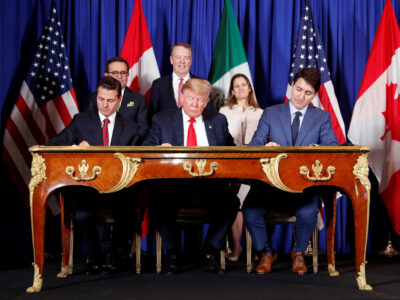
The issues in America’s immediate neighborhood require multiple forms of intergovernmental cooperation to build state capacity and deeper private sector linkages to boost and broaden patterns of economic growth. Within the region, the U.S. has such deep links with its southern neighbor, Mexico, in the form of the U.S.–Mexico–Canada agreement, the USMCA, a subject explored in greater detail in a previous brief.25A renewed DFC can play a key role in expanding U.S. engagement elsewhere in Latin America and the Caribbean.
Making the DFC more nimble and effective
Many of the recommendations supporting the DFC’s reauthorization call for changes that will enable it to tackle a broader range of projects more nimbly and effectively. These include changes in the accounting treatment of equity investments and allowing it to take subordinated debt stakes in projects. Both measures could help projects get off the ground and bring in private sector participants. With a far longer horizon than private firms and a sufficiently diversified portfolio of projects, the DFC can continue to deliver positive returns to the Treasury over time.
A greater focus on large infrastructure projects would also have financial and operational implications for the DFC that could require some balancing. During interviews, some current and former DFC personnel noted that a portfolio heavily invested in large infrastructure projects with long lags to completion could benefit from short-cycle lending to financial intermediaries that generate cash flows more quickly. Thus, financial imperatives could eventually restore indirect DFC assistance to small and medium-sized enterprises with a broadly positive impact on employment and growth.
The DFC should also consider a broader mandate as a financial institution. Beyond expanding its investment options into the acquisition of equity stakes and lending as a subordinated creditor, the institution could also consider a more active approach to deal flow.
It could also expand its palette of financial offerings to provide access not just to political risk insurance but also to local currency hedging tools, as the International Finance Corporation does.26
Perhaps it could eventually also take a role alongside other institutions in creating market infrastructures that help dampen price volatility — particularly in commodities — that might otherwise hit the revenues and profitability of single projects. Efforts in this direction in the U.S. have included a more active role for the Strategic Petroleum Reserve in managing oil prices through strategic purchases and sales and the recent U.S. government stake in MP Materials (America’s only rare earth producer) that also guaranteed a price floor and offtake commitments.27The DFC’s role in the deal with Ukraine allows it to negotiate market-based offtake rights for critical minerals and prevents such rights from being offered to any third country on more favorable terms.28
Recommendations
Don’t impose an overly narrow vision of the national interest on the DFC
The bipartisan push to create a much larger DFC is welcome, but it carries with it a significant risk that the agency will choose sectors, locations, partners, and projects solely based on perceived national security concerns. Such an exclusive focus would serve a narrow, and implicitly bellicose, vision of American national interests that could spur backlash and heighten global tension. Instead, the DFC should ground both its rhetoric and activities in a spirit of commercial competition that leads to broad market-based development and enhances U.S. influence in the world.
Create a bigger, nimbler DFC with deeper country and market knowledge
Increasing the size of DFC’s contingent liability, changing the budgetary treatment of equity and political risk insurance, and allowing it to make subordinated loans would increase both the DFC’s risk-bearing capacity and its ability to crowd in private sector investment. Choices of personnel and office locations in key regions would allow proactive deal origination, structuring, and partnerships. Over time, the DFC should consider other products or interventions to reduce the risks from volatility in currency, raw material, or product markets.
Building big should not mean excluding small
Calls to focus on large projects in hard infrastructure that enhance supply chain resilience and security need not exclude enhancing broader developmental impacts, particularly in collaboration with partners. Some projects in energy, transportation, and telecommunication will inherently have beneficial societywide spillovers. Beyond this, it may also be possible to work with partner DFIs interested in providing smaller-scale funding to small and medium-sized entities to maximize such impacts. Combining small, quick-turnaround initiatives with large investments that are slower to generate revenues could help the DFC’s cash flows.
Do more in the neighborhood
Bipartisan support for a larger and more focused DFC is grounded in national security concerns that the U.S. is falling behind in an infrastructure-building great-power competition. But U.S. security concerns regarding Latin America also include flows of migration and narcotics. Beyond infrastructure-centric projects in this region inspired by worries about an “adversarial presence,” the DFC should retain and build a broader portfolio in the immediate neighborhood based to a greater degree on beneficial social and economic impacts. Over time, it could return to this mission in other regions as well.
Don’t demand the exclusion of other great powers
A bigger DFC is justified in American discourse not just by the need to compete with China’s Belt and Road Initiative, or BRI, but also by the latter’s alleged deleterious political, economic, and environmental outcomes. But outside the U.S., such an approach might run into difficulties — the BRI has had visible successes alongside its high-profile failures, and countries in the Global South have had decades of unhappy experiences with Western creditors. Meanwhile, the sheer scale of China’s economy and its status make it an indispensable trading and investment partner for many countries. Imposing exclusionary conditionality for DFC funding could backfire among countries wishing to keep their geoeconomic options open in a world flush with potential project lenders.
Thus, the DFC should compete on a commercial basis to enable the United States to achieve financial gain for itself and enhance its influence in the Global South.
Appendix
Two examples of current DFC projects that align with the authors’ views and recommendations outlined in this brief are the Lobito Corridor and the Puerto Bolivar shipping port in Ecuador. Although neither project could be easily replicated in whole elsewhere, each has elements that should serve as strong examples of positive DFC–funded work. We explore these two case studies below.
Lobito Corridor
In 2024, the DFC approved a $553 million, 15–year senior secured loan to be used by the Lobito Atlantic Railway S.A. to support “the upgrade, rehabilitation, operation, and maintenance” of the Lobito Corridor. The DFC’s loan is over half of the total investment of $866 million committed by multiple parties.29
The Lobito Corridor is a collection of projects centered on the rehabilitation of a dilapidated railroad and feeder roads connecting the western Angolan port of Lobito eastward to the Angolan city of Luau. Eventually, the railroad is expected to extend into the Democratic Republic of Congo, or the DRC, and Zambia with new greenfield railroad lines and feeder roads reaching key mining cities along the way.30
The corridor is an initiative under the provision of the Partnership for Global Infrastructure and Investment, the PGI, a G7 effort that aims to fund infrastructure projects across the developing world, in part as a response to China’s BRI.31
Though some questions remain about Lobito’s long-term efficacy in downstreaming industries and creating long-term jobs in Africa, when looking at American national interests, Lobito serves as an example of a largely successful multilateral and multimodal DFC initiative that aligns with restraint.32
Geographically, Africa is an increasingly important arena where competition between great and regional powers is playing out. Proxy conflicts, from Sudan to the Sahel, further complicate the continent’s security picture and threaten the health and safety of both local and global assets.33
Lobito serves as an opportunity for the United States to promote its interests in Africa while centering its actions on restraint-friendly policies that bring the United States into diplomatic and economic discussions about the continent’s most pressing challenges, rather than descending into a cycle of hard security assistance. Lobito, and the geoeconomic statecraft upon which it is formed, allows the United States to enter these discussions leaning on the use of economic carrots, rather than military sticks, when engaging with African players. This advances restraint in U.S. policy in Africa.
The seeds of this are already bearing fruit. The region just northeast of the planned Lobito Corridor pathway has been ravaged by a decades-long confrontation between the DRC and Rwanda.34American interest in the region’s minerals — access to which Lobito will help facilitate — spurred the Trump administration to mediate a peace agreement between the DRC and Rwanda, which was signed in Washington in late June.35However, the fighting between the main rebel group, the M23, and the DRC and its backers has continued in the months since, though a framework for a peace agreement between the two was signed in mid–November.36American interest in tapping into the economic benefits of central Africa has successfully enhanced American leadership and led it to mediate a peace agreement. As a corollary to the peace deal, the United States is negotiating mineral deals with the DRC and Rwanda.37This starkly contrasts with the historic military-heavy American response to security challenges on the continent, as evidenced in places like the Sahel and Somalia.38
Sectorally, the Lobito Corridor is centered on supporting American access to critical minerals by investing in a transportation and logistics corridor to support the shipment of critical minerals to coastal ports from which they can access world markets and be integrated into global supply chains. A number of the minerals listed on the U.S. Geological Survey’s list of critical minerals39are located in high quantities in the area surrounding the corridor, and many of the region’s mines will be connected to the corridor over the coming years. The DRC, for example, holds approximately 70 percent of the world’s cobalt levels as well as large lithium and coltan reserves.40These minerals, among others, are necessary inputs in a number of American–made technologies, such as electric vehicles, batteries, and building materials.41
Lobito is a successful example of a multimodal set of projects across a number of different sectors. Beyond rail and roads, the United States has also funded solar farms and telecommunications infrastructure.42The former helps generate the energy needed for the corridor to function as a major transit hub, while the latter allows remote villages to reliably communicate with people across Africa and the world, further connecting them to world markets. This will increase the efficiency of the Lobito Corridor’s connectivity to continental and cross-regional supply chains, and support not just trans-oceanic trade, but also the cross-regional exchange of people and goods.
Centering U.S.–China competition in Africa in a race to build the infrastructure necessary to support companies’ access to critical resources helps advance restraint in American foreign policy by shifting this competition away from hard security and military posturing and toward commercial competition instead. Reducing security and logistical risks and costs inherent to companies working in the region will make it easier for them to do business there, integrating the region into a global supply chain, and connecting raw minerals to downstream processing, creating jobs for Americans, and supporting advances in American technology in a number of industries that rely on raw materials.
The Corridor even allows for the possibility of de facto positive-sum competition with China.43China’s investment in the eastern railroad known as the Tazara Line — which runs along a similar latitude to Lobito on the eastern half of Africa — allows the PGI–invested western Lobito Corridor to connect eventually to the eastern line, and reach the Indian Ocean through the Dar es Salaam port in Tanzania.44Lobito and Tazara are examples of parallel projects by the United States and China that do not involve joint bids or co-investment between the two states, yet advance the economic interests of each nation as well as the needs of African states. Although Lobito’s extraordinary breadth and long-term political and financial commitment will be hard to replicate elsewhere, there are elements of Lobito that should be part of future DFC projects. The DFC should look to invest in projects, like Lobito, that build the infrastructure of countries containing large reserves of resources necessary to power modern economies and connect those resources to global supply chains, allowing American companies to tap into them.
Another element of Lobito that can be mirrored in other projects is the way international bodies, such as the G7, can be utilized as launching pads to build a multilateral funding framework for expensive, long-term infrastructure projects. This allows risk to be spread across multiple investors.
In accordance with our recommendations, the Lobito Corridor does well to partner with local DFIs, such as the African Development Bank and Africa Finance Corporation, both of which are partially funding this initiative. By leaning on local funding sources that have a good understanding of the pulse of local communities and regional economies, the deeper local-country knowledge of those who work for these African–based finance organizations is likely to make the projects more responsive to local needs, ensuring positive externalities and spillover effects touch as wide a group as possible. This is likely to increase local buy-in, ensuring the corridor’s success for generations to come.
Also in line with our recommendations, Lobito is not being built as a single large project, but as a collection of smaller projects that will come together over the course of years. Funding streams are thereby directed to a specific local project within the broader Lobito plan, and in time connected to adjacent projects to build a comprehensive corridor. This allows local input to be gathered along the way, and allows for the benefits of the individualized projects to be realized incrementally while they come together over the years.
Ecuador Port
In 2023, the DFC approved a project to provide funding for the “brownfield expansion and modernization of the Puerto Bolivar container port in El Oro province in Ecuador.” The project will include dredging work, building a 450–meter berth, constructing a cold storage warehouse, installing new cranes, and adding new security and anti-smuggling hardware. The DFC’s commitment is a 15–year loan of up to $150 million with a 36-month principal grace period to Yilport Holdings, a Turkish organization financing and managing the port’s expansion. The final cost is estimated to be around $750 million.45
Like Lobito, the United States is not the only foreign party investing in the project. The Inter–American Development Bank’s private sector engagement branch — known as IDB Invest — agreed in 2021 to provide a loan of up to $100 million for the project.46In line with our recommendations, the IDB’s investment in this project will help ensure deep regional expertise has a voice in decisions made about the funding and construction of the port.
The port serves as one of Ecuador’s leading points of departure for many of the country’s major exports, including shrimp — the country’s top non-petroleum export in terms of value — and bananas.47
Global supply chains are dependent on strong logistical hardware. Just as the Lobito Corridor will help expand American access to critical resources used for a number of downstream technologies, this port’s expansion will allow Americans to access goods in sectors with downstream benefits for American companies. In addition to fresh goods like bananas and shrimp, the port is a major point of departure for important raw materials that are downstreamed in the United States, such as paper pulp and copper.48Investing in a port of this size signals to Ecuador’s government and multinational firms in the country that the U.S. is interested in doing business with the country.
The geographic proximity of Latin America to the United States makes it more likely that conflict and hardship in Latin American countries will spill over into the United States or otherwise harm American interests, or be used as a pretext to intensify American posturing in the region. We’ve seen this in recent months, with the Trump administration responding to border crossings from Mexico with heavy border enforcement measures increasing the assertiveness of the federal government’s deportation efforts against immigrants, including Latinos, living in the United States, and conducting military strikes against boats carrying purported Venezuelan gang members.49
This port serves as an example of a project the DFC should aim to recreate in other parts of Latin America, and closely aligns with our recommendations, especially our recommendation for the United States to do more in its own neighborhood. Investing in projects such as this port can help the United States promote its own interests across the region while ensuring many of the root causes leading to criminal activity and illegal migration — especially economic instability — can be managed or even solved before they bleed into the United States, thus reducing perceived threats to the American homeland in a restraint-friendly way. The new port will also include advanced anti-smuggling detection hardware, allowing the United States to defend against the smuggling of drugs — a major issue for the Trump administration50— without needing to increase military operations in and around Ecuador.51
Related

Ukraine Peace Talks and the Pitfalls of Maximalism in a Multipolar World
How to bring the Ukraine War to a close in a multipolar world.
The USMCA Review: What Future for North American Economic Integration?
We discuss the future of the USMCA.
Program
Entities
Authors

Karthik Sankaran is a senior research fellow in geoeconomics in the Global South program at the Quincy Institute for Responsible Statecraft. With a long background in financial markets and geopolitical consulting, Karthik’s interests include the structure of the international monetary…

Dan M. Ford is a junior research fellow in the Global South Program at the Quincy Institute for Responsible Statecraft. Previously, Dan spent time working and interning in a variety of different organizations, focused mostly on international development, human rights,…
Citations
“FAA Reauthorization Act of 2018,” H.R.302, Rep. Brett Guthrie, 115th Congress, 2nd sess., introduced January 5, 2017, https://www.dfc.gov/sites/default/files/2019-08/BILLS-115hr302_BUILDAct2018.pdf. ↩
“FAA Reauthorization Act of 2018.” ↩
“FAA Reauthorization Act of 2018.” ↩
Katie Auth, “White House and Congress Split in DFC Reauthorization Over Development and Congressional Oversight,” Energy for Growth Hub, Aug. 19, 2025, https://energyforgrowth.org/article/white-house-and-congress-split-in-dfc-reauthorization-over-development-and-congressional-oversight/; Adva Saldinger, “U.S. House Committee Debates DFC Reauthorization,” Devex, Sept. 12, 2025, https://www.devex.com/news/us-house-committee-debates-dfc-reauthorization-110819#:~:text=On%20Thursday%2C%20the%20House%20Foreign,Saldinger%20%2F%2F%2012%20September%202025. ↩
“National Defense Authorization Act for Fiscal Year 2026,” S.Amdt.3658 to S.2296, Rep. James E., 119th Congress, 1st sess., submitted Aug. 1, 2025, https://www.congress.gov/amendment/119th-congress/senate-amendment/3658/text. ↩
“National Defense Authorization Act for Fiscal Year 2026”; Saldinger, “U.S. House Committee Debates DFC Reauthorization.” ↩
“DFC Modernization Act of 2025,” H.R.5299, Rep. Brian J. Mast, 119th Congress, 1st sess., introduced Sept. 11, 2025, § 2(a)(3), https://www.congress.gov/bill/119th-congress/house-bill/5299/text. ↩
“DFC Modernization Act of 2025,” § 2(b). ↩
“National Defense Authorization Act for Fiscal Year 2026,” §1272(1). ↩
Sarang Shidore, “What Does the Global South Want?,” International Politics and Society, Aug. 26, 2024, https://www.ips-journal.eu/topics/foreign-and-security-policy/what-does-the-global-south-want-7733/. ↩
“Guidelines for Investigations and Enforcement of the Foreign Corrupt Practices Act (FCPA),” Department of Justice, June 9, 2025, https://www.justice.gov/dag/media/1403031/dl. ↩
Constant Méheut et al., “Ukraine Rejects U.S. Demand for Half of Its Mineral Resources,” New York Times, Feb. 15, 2025, https://www.nytimes.com/2025/02/15/world/europe/ukraine-minerals-us-deal-rejected.html. ↩
For example, see “Sullivan, Romney Introduce Legislation to Realign U.S. Strategic Investment to Better Compete with China,” Office of Dan Sullivan, press release, Nov. 21, 2024, https://www.sullivan.senate.gov/newsroom/press-releases/sullivan-romney-introduce-legislation-to-realign-us-strategic-investment-to-better-compete-with-china. ↩
Jocelyn Sims and Jessie Romero, “Latin American Debt Crisis of the 1980s,” Federal Reserve History, Nov. 22, 2013, https://www.federalreservehistory.org/essays/latin-american-debt-crisis. ↩
“National Defense Authorization Act for Fiscal Year 2026,” §1282(4)(b)(1). ↩
Gracelin Baskaran and Meredith Schwartz, “Developing Rare Earth Processing Hubs: An Analytical Approach,” CSIS, July 18, 2025, https://www.csis.org/analysis/developing-rare-earth-processing-hubs-analytical-approach. ↩
Gracelin Baskaran, “China’s New Rare Earth and Magnet Restrictions Threaten U.S. Defense Supply Chains,” CSIS, Oct. 9, 2025, https://www.csis.org/analysis/chinas-new-rare-earth-and-magnet-restrictions-threaten-us-defense-supply-chains#:~:text=China%20announced%20a%20ban%20on,new%20tariffs%20on%20Chinese%20goods. ↩
Sam Meredith, “Trump is Fixated on Greenland — A Vast Arctic Island with Massive Resource Potential,” CNBC, Jan. 14, 2025, https://www.cnbc.com/2025/01/14/greenland-critical-minerals-are-big-part-of-donald-trumps-fixation.html; Brian Schwartz, “The U.S. Is Trying to Drive a Wedge Between Argentina and China,” Wall Street Journal, Oct. 21, 2025, https://www.wsj.com/world/americas/the-u-s-is-trying-to-drive-a-wedge-between-argentina-and-china-e4551dd7?mod=world_feat3_americas_pos1. ↩
Todd Moss, “Can We Please Have a Nuanced Discussion of Development and Fossil Fuels?,” Eat More Electrons, Dec. 13, 2024, https://toddmoss.substack.com/p/can-we-please-have-a-nuanced-discussion. ↩
“United States Announces New $126 Million Commitment for Ambitious Indonesian Geothermal Project,” U.S. International Development Finance Corporation, media release, May 22, 2024, https://www.dfc.gov/media/press-releases/united-states-announces-new-126-million-commitment-ambitious-indonesian. ↩
“Report on DFC’s Financing Nuclear Energy-Related Projects Overseas,” U.S. International Development Finance Corporation, March 2024, https://www.dfc.gov/sites/default/files/media/documents/DFC%20Report%20-%20Civilian%20Nuclear%20Energy%202024.pdf. ↩
Winston Qiu, “Telstra International and Trans Pacific Networks Partner on Echo Cable System Connecting Asia–U.S.,” Submarine Cable Networks, Jan. 28, 2024, https://www.submarinenetworks.com/en/systems/trans-pacific/echo/telstra-international-and-trans-pacific-networks-partners-on-echo-cable-system-connecting-asia-us. ↩
Tarna Silue et al., “The Undersea Infrastructure Bringing More People Online in Emerging Markets,” International Finance Corporation, July 2025, https://www.ifc.org/en/insights-reports/2025/undersea-infrastructure-bringing-more-people-online-in-emerging-markets. ↩
Joe Lonsdale and Ben Black, “How to DOGE U.S. Foreign Aid,” Joe Lonsdale, Jan. 10, 2025, https://blog.joelonsdale.com/p/how-to-doge-us-foreign-aid. ↩
Karthik Sankaran, “The U.S. and Mexico: A Special Relationship,” Quincy Institute for Responsible Statecraft, July 25, 2025, https://quincyinst.org/research/the-u-s-and-mexico-a-special-relationship/#. ↩
“IFC Local Currency and Hedging Solutions,” International Finance Corporation, October 2017, https://www.ifc.org/content/dam/ifc/doclink/2017/201710-ifc-local-currency-and-hedging-solutions.pdf. ↩
Arnab Datta and Alex Turnbull, “Buffer Stocks and Better Futures: A Strategic Resilience Reserve to Reshape Market Stability,” Roosevelt Institute, April 29, 2025, https://rooseveltinstitute.org/blog/buffer-stocks; “MP Materials Announces Transformational Public-Private Partnership with the Department of Defense to Accelerate U.S. Rare Earth Magnet Independence,” MP Materials, press release, July 10, 2025, https://mpmaterials.com/news/mp-materials-announces-transformational-public-private-partnership-with-the-department-of-defense-to-accelerate-u-s-rare-earth-magnet-independence/. ↩
“DFC to Play Critical Role in New U.S.–Ukraine Minerals Deal,” Hunton, May 7, 2025, https://www.hunton.com/insights/legal/dfc-to-play-critical-role-in-new-u-s-ukraine-minerals-deal. ↩
“Public Information Summary Lobito Atlantic Railway S.A.,” U.S. International Development Finance Corporation, https://www.dfc.gov/sites/default/files/media/documents/9000116004.pdf. ↩
Sarah Way, “What to Know About the Lobito Corridor — and How it May Change How Minerals Move,” Atlantic Council, Dec. 20, 2024, https://www.atlanticcouncil.org/blogs/africasource/what-to-know-about-the-lobito-corridor-and-how-it-may-change-how-minerals-move/. ↩
“Partnership for Global Infrastructure and Investment Lobito Corridor: Supporting Transcontinental Connectivity,” U.S. Department of State, press release, Sept. 24, 2024, https://2021-2025.state.gov/partnership-for-global-infrastructure-and-investment-lobito-corridor-supporting-transcontinental-connectivity/. ↩
E. D. Wala Chabala and Judy Hofmeyr, “A Game Changer in Flux: Recent Developments and Risks in the Lobito Corridor,” Africa Policy Research Institute, May 5, 2025, https://afripoli.org/a-game-changer-in-flux-recent-developments-and-risks-in-the-lobito-corridor. ↩
Natasha Booty and Farouk Chothia, “A Simple Guide to What is Happening in Sudan,” BBC, Nov. 10, 2025, https://www.bbc.com/news/articles/cjel2nn22z9o; “Violent Extremism in the Sahel,” Council on Foreign Relations, Center for Preventative Action, Sept. 4, 2025, https://www.cfr.org/global-conflict-tracker/conflict/violent-extremism-sahel. ↩
Damian Zane and Wedaeli Chibelushi, “What’s the Fighting in DR Congo all About?,” BBC, July 1, 2025, https://www.bbc.com/news/articles/cgly1yrd9j3o. ↩
“Peace Agreement Between the Democratic Republic of the Congo and the Republic of Rwanda,” U.S. Department of State, press release, July 27, 2025, https://www.state.gov/peace-agreement-between-the-democratic-republic-of-the-congo-and-the-republic-of-rwanda; Dan M. Ford and Kenya Sanchez, “Could Trump’s Congo–Rwanda Mineral Deals Actually Save Lives?” Responsible Statecraft, June 27, 2025, https://responsiblestatecraft.org/congo-rwanda-peace-deal/. ↩
“Combat Resumes Between Congolese Army and M23 Rebels Despite Peace Treaty,” Le Monde, Aug. 12, 2025, https://www.lemonde.fr/en/le-monde-africa/article/2025/08/12/combat-resumes-between-congolese-army-and-m23-rebels-despite-peace-treaty_6744285_124.html; Imad Creidi, “Congo, M23 Sign Framework for Peace in Qatar, More Steps Needed,” Reuters, Nov. 15, 2023, https://www.reuters.com/world/africa/congo-m23-sign-framework-agreement-peace-deal-qatar-2025-11-15/. ↩
Ford and Sanchez, “Could Trump’s Congo–Rwanda Mineral Deals Actually Save Lives?” ↩
Alice Hunt Friend, “DoD’s Report on the Investigation into the 2017 Ambush in Niger,” CSIS, May 15, 2018, https://www.csis.org/analysis/dods-report-investigation-2017-ambush-niger; Luis Martinez, “U.S. Orders Airstrikes Against ISIS Targets in Somalia,” ABC News, Feb. 1, 2025, https://abcnews.go.com/Politics/us-orders-airstrikes-isis-targets-somalia/story?id=118348401. ↩
“Department of the Interior Releases Draft 2025 List of Critical Minerals,” U.S. Geological Survey, press release, Aug. 26, 2025, https://www.usgs.gov/news/science-snippet/department-interior-releases-draft-2025-list-critical-mineral. ↩
Rabah Arezki, “Beyond Critical Minerals: Capitalizing on the DRC’s Vast Opportunities,” Atlantic Council, May 23, 2025, https://www.atlanticcouncil.org/in-depth-research-reports/report/beyond-critical-minerals-capitalizing-on-the-drcs-vast-opportunities/#:~:text=Indeed%2C%20the%20DRC%20holds%20around%2070%20percent,energy%20generation%20and%20batteries%20for%20electric%20vehicles. ↩
Daniel F. Runde and Austin Hardman, “Elevating the Role of Critical Minerals for Development and Security,” CSIS, Sept. 1, 2023, https://www.csis.org/analysis/elevating-role-critical-minerals-development-and-security. ↩
“Fact Sheet: Partnership for Global Infrastructure and Investment at the G7 Summit,” The White House, May 20, 2023, https://bidenwhitehouse.archives.gov/briefing-room/statements-releases/2023/05/20/fact-sheet-partnership-for-global-infrastructure-and-investment-at-the-g7-summit/. ↩
Judd Devermont, “Two Railroads, One Vision,” CSIS, Oct. 10, 2024, https://www.csis.org/analysis/two-railroads-one-vision. ↩
Duncan Miriri, “China’s CCECC to Invest $1.4 Billion in Tanzania–Zambia Railway,” Reuters, March 20, 2025, https://www.reuters.com/world/africa/chinas-ccecc-invest-14-billion-tanzania-zambia-railway-2025-03-20/. ↩
“Public Information Summary Yilport Terminal Operations S.A,” U.S. International Development Finance Corporation, https://www.dfc.gov/sites/default/files/media/documents/PublicInfoSummary_YilportTerminalOperations.pdf. ↩
“Puerto Bolívar,” IDB Invest, https://www.idbinvest.org/en/projects/puerto-bolivar. ↩
“Puerto Bolívar,” IDB Invest. ↩
“Puerto Bolívar, Ecuador Latin America Terminals,” Yilport Holdings, https://www.yilport.com/en/ports/default/Puerto-Bol%C3%ADvar-Ecuador-Latin-America-Terminals/119/0/0. ↩
Juliana Kim, “How Trump’s Tax Cut and Policy Bill Aims to ‘Supercharge’ Immigration Enforcement,” NPR, July 3, 2025, https://www.npr.org/2025/07/03/g-s1-75609/big-beautiful-bill-ice-funding-immigration; Priscilla Alvarez, “ICE has Deported Nearly 200K People Since Trump Returned to Office, On Track for Highest Level in a Decade,” CNN, Aug. 28, 2025, https://www.cnn.com/2025/08/28/politics/ice-deportations-immigrants-trump; Eric Schmitt, Helene Cooper, and Charlie Savage, “U.S. Strikes a 2nd Venezuela Boat, Killing 3, Trump Says,” New York Times, Sept. 15, 2025, https://www.nytimes.com/2025/09/15/us/politics/trump-venezuela-drug-boat-strike.html. ↩
“Trump Warns Drug Traffickers: ‘We Will Blow You Out of Existence’,” Reuters, Sept. 23, 2025, https://www.reuters.com/world/americas/trump-warns-drug-traffickers-we-will-blow-you-out-existence-2025-09-23/. ↩
“Public Information Summary Yilport Terminal Operations S.A,” U.S. International Development Finance Corporation. ↩