
The Seizure of Russian Assets Is Not in the Interest of Peace
Overview
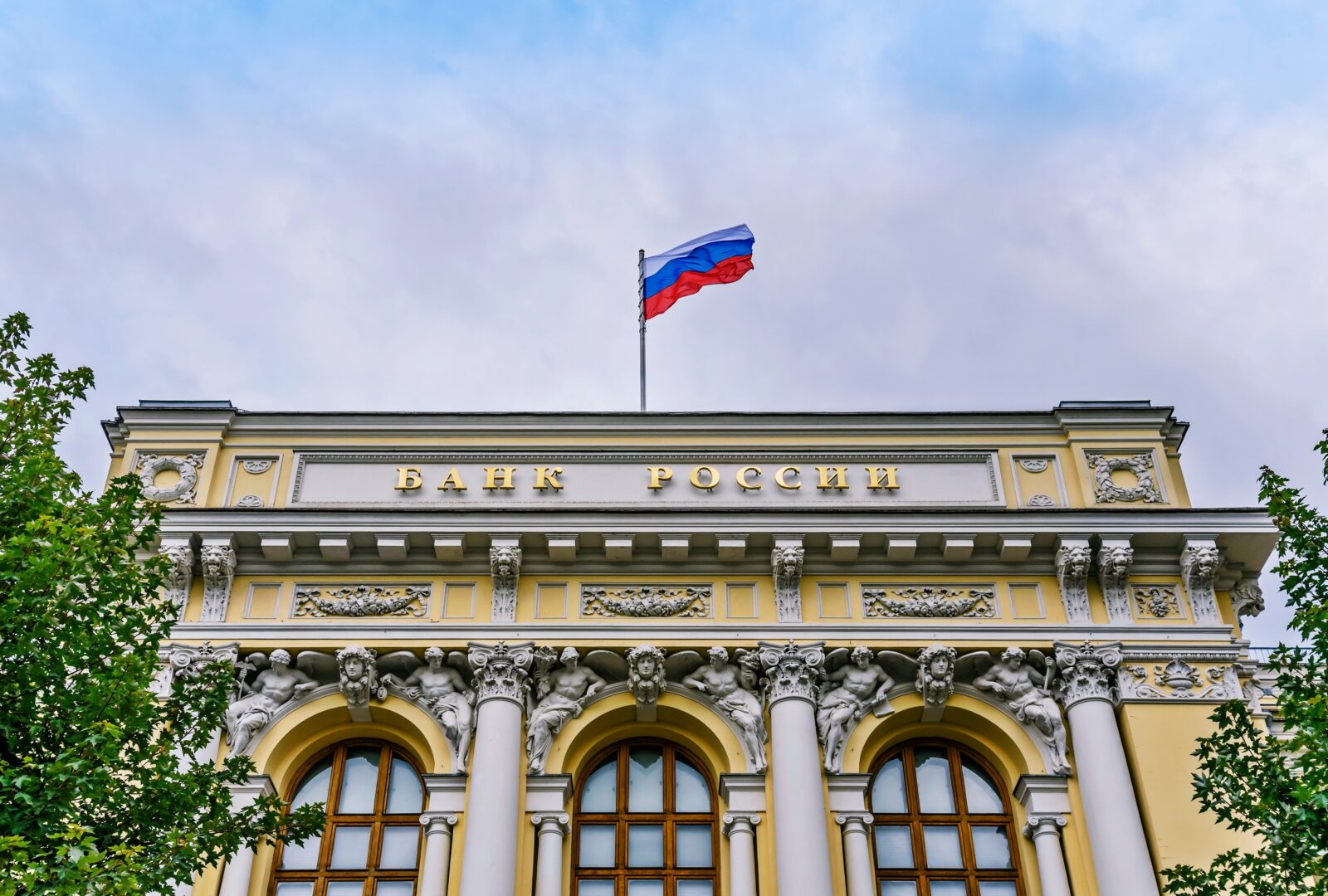
European leaders are doubling down on a plan to utilize 165 billion euros worth of frozen Russian assets in a bid to keep Ukraine’s war effort afloat into the next year.
Roughly 190 billion euros in Russian sovereign assets have been frozen in Europe since Russia’s 2022 invasion of Ukraine. The majority of this amount consists of Russian central bank reserves, primarily held by the Euroclear securities depository in Belgium. An additional 25 billion euros of Russian funds are being held in private bank accounts across Europe.
Previous attempts to seize these assets have sputtered in the face of concerns over legality, Russian retaliation, and the long-term consequences for Europe’s financial system. However, Kyiv’s mounting military and economic difficulties have raised Europe’s risk tolerance to such a degree that the confiscation proposal has gone from a nonstarter to being seen by some European leaders as the only game in town.
The plan would provide Ukraine with a zero-interest 165 billion euro loan backed by Russia’s frozen assets, subject to repayment only if the war ends and Russia agrees to pay reparations to Ukraine. The plan’s supporters say that this repayment stipulation, along with a set of ancillary measures intended to reassure Belgium, are enough to resolve previous drafts of the plan’s shortcomings. Belgian Prime Minister Bart De Wever and the proposal’s other critics remain unconvinced, arguing that the underlying risks have not been adequately addressed. Still, European leaders are racing to secure approval for the reparations loan by the European Union’s Dec. 18–19 summit and are preparing legal work-arounds to override the individual member state vetoes if necessary.
If Europe proceeds with seizing Russia’s state assets, despite the likely illegality of such a move, it would expose both itself and Ukraine to a set of near- and long-term consequences. These include:
- Legal obstacles. Seizing Russia’s sovereign assets would sharply undermine the credibility of E.U. financial systems in the eyes of international investors and at a time when the bloc already faces acute macroeconomic headwinds. The move would exercise a chilling effect on non–Western investors, set the stage for further capital flight, and erode the euro’s status as one of the world’s foremost reserve currencies. The blowback from such an action would risk hobbling European financial competitiveness for years to come.
- Implications for the Ukraine peace process. The reparations loan scheme risks torpedoing delicate negotiations around a Trump administration proposal to secure Russia’s voluntary agreement for transferring its sovereign assets into a Ukraine reconstruction fund. Preemptively seizing Russia’s assets will not change the trajectory of the war in favor of Ukraine, but it would undermine the West’s bargaining position in ongoing peace talks with Moscow and disincentivize Russia from pursuing a negotiated settlement.
- Russian retaliatory measures. Though precise estimates vary, it is widely acknowledged that European firms and other entities hold well over 100 billion euros worth of assets and equity in Russia. Nearly all of these funds would be irretrievably lost if Russia retaliates against European expropriation in a commensurate manner. Additionally, Moscow has been clear that it will treat seizure of its assets as an overtly hostile act to “be met with a tough response.” Such a response may extend to the domain of infrastructure sabotage in Europe and other hybrid actions.
- Disproportionate risks. The 140 billion euros worth of frozen Russian state assets in Euroclear’s custody represents one-fifth of Belgium’s annual gross domestic product. Belgium’s custody over the vast majority of Russia’s European assets all but ensures, in the absence of vast and exceedingly robust assurances that other European states have so far been unwilling to provide, that any repercussions from the seizure will be disproportionately shouldered by Brussels.
Discussion
Harmful repercussions for Europe
There is no established measure, let alone one that enjoys meaningful precedent, in international law that would allow the European Union, a third-party nonbelligerent to the war in Ukraine, to irreversibly assert control over Russia’s sovereign funds. Russia could respond by bringing a barrage of lawsuits and complaints before international bodies, including the International Court of Justice and World Trade Organization, and the domestic courts of European states.
The plan’s latest version introduces a condition that, according to its proponents, allows Europe to access the funds without formally disputing Russia’s sovereign ownership over its state assets. Namely, Ukraine would have to repay its zero-interest 165 billion euro loan if Russia agrees to pay reparations after the war. The scheme uses Russia’s assets as collateral against a “loan” that is to be repaid through future Russian reparations. This work-around purportedly satisfies the criteria in international law that countermeasures must be temporary and reversible. But this is, at best, a surface-level revision that does nothing to alter the risks and costs involved. It is abundantly clear to all parties that there is no reasonably likely war-termination scenario in which Russia is compelled or voluntarily agrees to pay reparations as such. As Belgian Prime Minister De Wever pointed out in a letter to European Commission President Ursula von der Leyen, “In the very probable event Russia is ultimately not officially the losing party, it will, as history has shown in other cases, be legitimately asking for its sovereign assets to be returned.” Any provision that conditions repayment on something as prima facie improbable as Russia being formally recognized as the defeated party fails the reasonableness test under contract law and does not satisfy, in a good faith manner, the temporary and reversible proviso for legal countermeasures.
There is widespread recognition that the plan, despite the tinkering around its edges, is of questionable legality. European leaders maintain that the necessity of supporting Ukraine’s budget through mid–2026 outweighs any risks stemming from the confiscation, yet the European Commission reportedly admitted that it did not, in fact, carry out a stakeholder consultation or impact assessment for the plan it seeks to foist on Belgium and 26 other member states by Dec. 18.
A senior Russian banker threatened Europe with “50 years of litigation” if the reparations loan scheme comes to fruition. There are several overlapping domestic and international jurisdictions available to Russia, which include legal proceedings against Belgium under the USSR–Belgium/Luxembourg 1989 bilateral investment treaty, or BIT. Even in the unlikely event that European defendants prevail in all current and future lawsuits, Russia has the ability to embroil Europe in a form of long-term, costly lawfare that risks exercising negative spillover effects on European financial institutions. The plan blurs the line between the European Union as a geopolitical actor and the European Central Bank’s ability to independently execute monetary policy, degrading the euro’s attractiveness as a reserve currency in the eyes of international investors.
Damage to the Ukraine peace process
Ukrainian and some European officials insist that the reparations loan scheme will strengthen Kyiv’s hand at the negotiating table. It would signal to Russia, the argument goes, that Ukraine is prepared to fight for as long as it takes to secure a just and lasting peace. This position misses two crucial factors. First, seizing the assets now deprives the West of a potent bargaining chip that can be used to get the best deal possible and gives Moscow one less reason to compromise on its war aims. Second, this line of thinking assumes that Moscow bucks at the thought of prolonging the war into mid/late 2026. In fact, all available evidence points in the opposite direction. Russian President Vladimir Putin is increasingly confident, not without reason, that a protracted war favors Moscow.
Though Ukraine is not faced with the danger of immediate collapse, its domestic and military challenges are compounding in ways that likely cannot be reversed. There are signs that the present manpower and firepower gap between Russia and Ukraine will tilt more, not less, heavily in Moscow’s direction next year. It is therefore Ukraine, not Russia, that is incentivized to secure a sustainable end to the fighting as soon as possible. Appropriating the frozen assets will help stabilize Kyiv’s budget in a way that allows Ukraine to continue the war, but it cannot change the war’s trajectory. Using the assets as a means of prolonging the war, rather than as a tool for advancing a negotiated outcome, is militarily and diplomatically wrongheaded.
Russia, one way or another, will get a vote over the fate of its sovereign assets. Working within this reality rather than against it paves the way for a creative compromise arrangement that allows Ukraine to benefit from reparations in everything but name, protects Europe from any consequences, and helps seal a framework deal to end the war. The Trump administration’s Ukraine peace initiative taps the assets as part of the West’s leverage for securing a settlement on the best possible terms for Kyiv and the West. The proposal would transfer Russia’s frozen assets, with Moscow’s permission, into a larger international reconstruction fund to help Ukraine rebuild after the war. Russia will be allowed to benefit from a portion of this fund as a condition of its acquiescence, but the lion’s share would go to Ukraine.
Conclusions and recommendations
The Russian asset seizure scheme is dangerous to Europe and misguided from the standpoint of helping Ukraine secure a lasting peace. The latter is directly connected to President Donald Trump’s ongoing efforts to stop the bloodshed in Ukraine, as the already tenuous path to a negotiated settlement will get tighter still if European leaders succeed in pushing through their reparations loan initiative. But the larger strategic implications should also concern the White House. As made abundantly clear in the new National Security Strategy, the Trump administration seeks to renegotiate the terms of American engagement with Europe along more pragmatic lines: less of a civilizational, values-driven project and more of a mutually beneficial partnership driven by the economic, diplomatic, and military value-added offered by both sides. This arrangement gets harder to realize if the European Union, in a last-ditch effort to prolong the most dangerous and destructive war on the continent since 1945, deepens its own extant intra-bloc fractures, opens itself to legal repercussions, and erodes the credibility of its own financial institutions for years to come. A Europe that facilitates its own downward spiral into stagnation and financial uncompetitiveness has less to offer potential partners, thus reducing its long-term potential for effective engagement with the United States.
Even as the United States works toward a peace settlement in Ukraine, it is also faced with the challenge of helping E.U. leaders avert a mistake that would set back both European and U.S. interests. To this end, the White House should pursue bilateral talks — especially with southern and central E.U. member states, where the scheme is regarded with more skepticism — to build support for President Trump’s reconstruction fund as a realistic, safer, and more effective reparations model for Ukraine. At the same time, it should engage governments leading the seizure effort in frank, constructive talks aimed at getting them on board with the reconstruction fund proposal. U.S. officials can offer, as the price for consensus support, to calibrate the numbers in a way that opens the door for European firms to profit from the fund and from future efforts to reconstruct Ukraine. The United States can take steps, as appropriate, to reassure Belgium over its strong position in support of the American peace initiative.
The pieces are slowly coming together for a durable Ukraine peace deal that can be realized in the near future, but its execution depends on a proactive U.S. approach aimed at constantly bridging Russian and Ukrainian positions while leaving space for constructive European engagement. Though difficult sticking points remain, the assets issue should not be one of them. The optimal solution for driving the peace process forward is the reconstruction fund model that is already on the table, and it is squarely within U.S. interests to ensure that this remains the case.
Related
Ukraine Peace Talks and the Pitfalls of Maximalism in a Multipolar World
How to bring the Ukraine War to a close in a multipolar world.
Program
Entities
Authors

Mark Episkopos is a research fellow in the Quincy Institute’s Eurasia Program. He is also an Adjunct Professor of History at Marymount University and was formerly the National Security Reporter at The National Interest.