
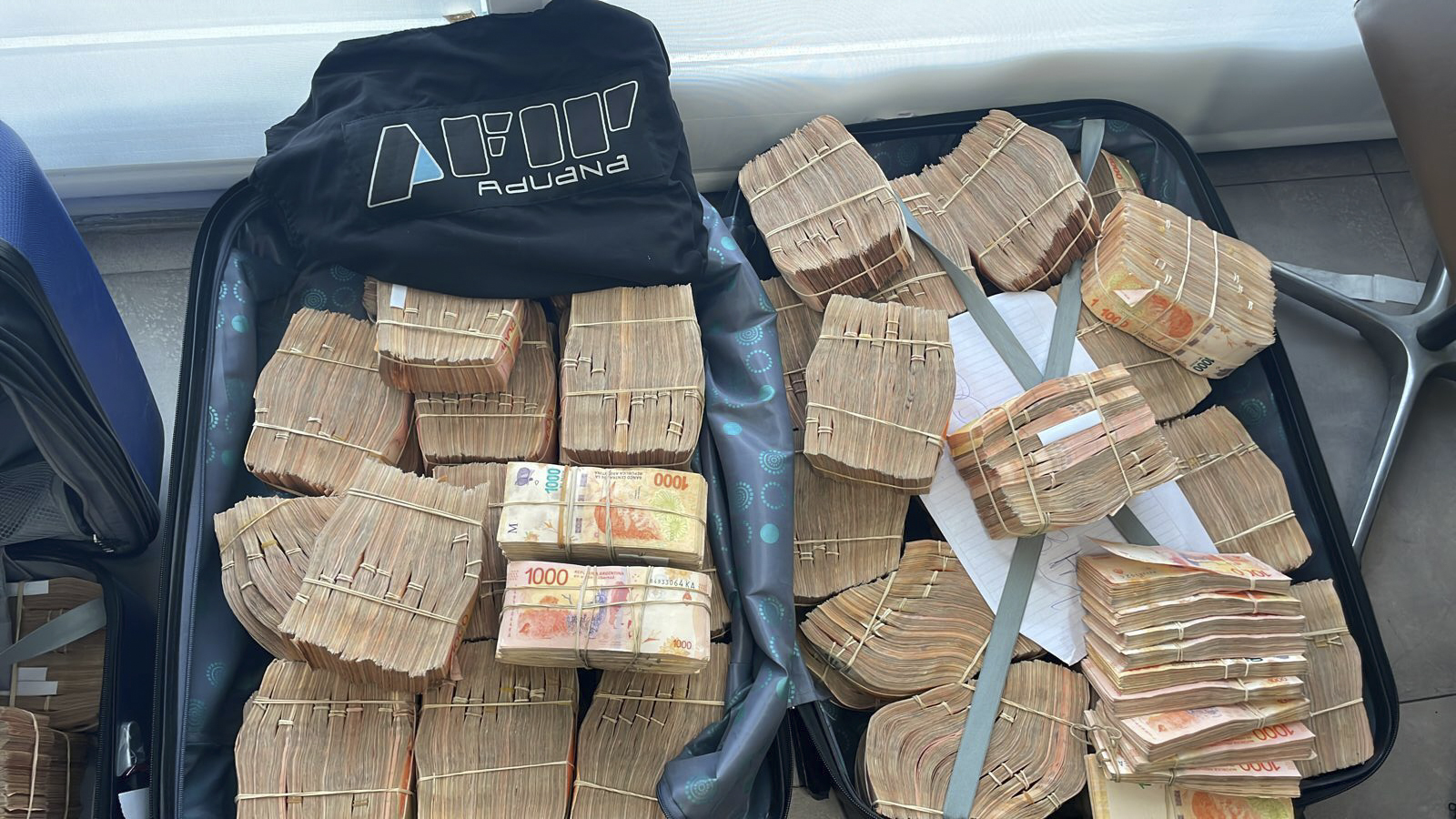
Follow the Money: Countering Narcofinance in Latin America
Overview
The Trump administration has significantly expanded the use of military force to combat the flow of narcotics into the United States and degrade transnational criminal networks operating in the Western Hemisphere. Such actions, however, risk the lives of US service members, carry diplomatic costs with key allies like Mexico, offer uncertain benefits when aimed at low-value targets and high-value “kingpins” alike, and could even undermine more effective anti-narcotics measures. The US government has better options to dismantle these complex cross-border enterprises.
International money laundering is a multitrillion-dollar industry that continues to adapt and evolve, making it easier for designated Foreign Terrorist Organizations, or FTOs, to disguise illicit rents and more difficult for US law enforcement to suppress them. Key methods for criminal activity and money laundering operations include: bulk cash smuggling; trade-based money laundering; underground banking systems (including Chinese money laundering networks, or CMLNs); and virtual platforms and cryptocurrencies. CMLNs are complex private enterprises unaffiliated with the Chinese government that enable capital flight from China by delivering dollars overseas in exchange for renminbi payments that can be used to source licit or illicit materials (such as fentanyl precursors) from Chinese producers.
While transnational networks launder proceeds from numerous illegal activities, those derived from narcotics — particularly fentanyl, methamphetamine, and cocaine — pose a multifaceted threat to US national security, public health, and the integrity of our borders, commerce, and financial system. Using a network-based approach, US authorities can deploy precisely targeted financial tools to disrupt trafficking syndicates, deter those enabling the narcotics trade, and deepen cooperation with institutional partners in producer, transit, and consumer countries alike.
This policy note offers a roadmap for more effectively identifying, disrupting, and seizing the illicit financial flows that sustain complex criminal networks, threaten populations, and corrupt institutions across Latin America and the United States. As suggested below, strong actions by the Treasury Department’s Financial Crimes Enforcement Network, or FinCEN, improved interagency coordination, and more international cooperation could avoid the risk and cost of military operations while more effectively countering narcotrafficking that threatens US communities.
Discussion: Tools
Treasury and FinCEN–Specific Improvements
FinCEN is central to the federal government’s efforts to fight criminal activity within or enabled by the financial sector. It uses tools like the Bank Secrecy Act, or BSA, to require financial institutions to monitor the identity and activities of their customers. It also requires reporting suspicious transactions, enabling FinCEN to launch investigations, identify patterns of money laundering or other illicit activity, and transmit advisories to the financial industry and coordinate with other regulatory authorities and law enforcement.
Recent FinCEN activities have included designating three Mexico–based banks for money laundering in connection with synthetic opioids and prohibiting US entities from transacting with them. The measures highlight FinCEN’s power, but their impact could be amplified by coupling such designations with more frequent, preventative, and comprehensive advisories that not only alert the industry to the perils of money laundering but also spur more complete information gathering and active compliance. Publicized designation can also serve as a deterrent.
In this regard, international experts on anti-money laundering in the Western Hemisphere who spoke with the authors expressed concern that a recent Treasury Department decision to end the requirement that US companies and persons report beneficial ownership to FinCEN could significantly compromise the fight against money laundering. Beyond ending the mandate, the decision will also delete such information about any individual FinCEN “reasonably believes is a US person.” It also eliminates the requirement that foreign companies report “US applicants” who helped them to register their business in the United States. In doing so, Treasury has gone against recommendations from Congress, law enforcement, and anti-corruption groups to implement and enforce the bipartisan 2021 Corporate Transparency Act. While banks are still required to collect this information, the decision would eliminate a centralized federal repository of such data, hindering oversight, investigation, and enforcement of shell and front companies suspected of narcotics-derived money laundering.
Given criminal organizations’ increasing use of virtual assets to launder illicit funds, smart and targeted regulation of crypto platforms should also be pursued based on national security exigencies. A Treasury Department rule proposes implementing and maintaining customer identification programs, suspicious activity reports, or SARs, and other anti-money laundering and countering the financing of terrorism, also known as AML/CFT, tools for stablecoin issuers, as required for banks. This rule should be applied to all US–based stablecoin issuers. Such measures could prove toothless, however, if inconsistent enforcement of stringent AML/CFT measures on crypto platforms is seen as selective or politically motivated.
A government-wide approach
Beyond the Treasury Department, other components of the federal government play a strategic role in combating money laundering. Despite several US government-wide entities and information-sharing channels to combat illicit financing, the US has no whole-of-government anti-money laundering strategy, as the UK recently announced. While the Treasury Department releases a national anti-money laundering risk assessment every two years, it currently has no equivalent to the national strategic document US administrations publish for drug control or counterterrorism. In its absence, the administration could resurrect and give teeth to the dormant counter-fentanyl strike force, a Treasury–led interagency initiative launched in 2023 to pursue special investigations, expand financial intelligence sharing, and cross-reference shipping ledgers, asset seizures, and surveillance records to map and interrupt narcotics-derived illicit flows.
There is also room to streamline and improve the functioning of the government’s major interagency task forces engaging with illicit finance. Last year, the administration disbanded the Department of Justice’s Organized Crime Drug Enforcement Task Forces, or OCDETFs, a prosecutor-led, multi-agency body pursuing long-term money laundering investigations. They have since been replaced by Homeland Security Task Forces, co-led by the Department of Homeland Security, an agency focused more on immigration enforcement. This shift has diverted resources away from complex money-laundering probes and contributed to a decrease in fentanyl-related investigations and seizures, according to government auditors. Current and future administrations should consider restoring the OCDETF model to widen investigations, share intelligence, expand colocation, and boost prosecutions.
There should also be a government-wide push to process, analyze, and act on the millions of pieces of financial data FinCEN collects through the BSA, SARs, and related reporting. Treasury’s Office of Intelligence and Analysis, together with other elements of the intelligence community, should be empowered with AI and other cutting-edge tools to identify trends and patterns from the information at their disposal, and provide clear advisories for industry partners and law enforcement. FinCEN’s budgetary and other constraints require that it lead but share the burden with specialized agencies in the law enforcement and intelligence communities.
Finally, the Trump administration’s designation of nearly two dozen Latin American and Caribbean criminal organizations as FTOs opens new opportunities to combat illicit financing if done in a targeted, judicious, and cooperative way, as exemplified by a recent action against an Ecuadorean fuel and logistics network. These FTO designations and related sanctions should deter financial institutions, enabling or corrupt officials, and cryptocurrency operators from facilitating the international narcotics trade. However, FTO–based enforcement actions against foreign officials or institutions should not be carried out unilaterally or for politically motivated reasons. In the same vein, wielding FTO designations to advance military campaigns masquerading as law enforcement operations, as occurred in Venezuela, should be avoided given the potential costs both to America’s diplomatic standing and international cooperation on narcotics.
International cooperation
Because the laundering of illicit rents derived from the narcotics trade affects every continent, US government efforts to weaken criminal organizations must not be contained to the domestic realm. Fortunately, the federal government has diplomatic and technical tools to strengthen existing international anti-money laundering initiatives and foster new ones. One constructive approach is to promote the passage of laws abroad — particularly, but not exclusively, in Latin America — that regulate cryptocurrencies, including where they are not legal tender. This includes both bilateral technical assistance and multilateral efforts, such as through the Financial Action Task Force, to close jurisdictional seams and fill regulatory voids by encouraging nations to craft comprehensive crypto standards. Similarly, the Department of Justice should be given the resources needed to expand its overseas prosecutorial development, assistance, and training programs, particularly in Latin American economic and financial crime units. This will help partner nations build investigative capacity to trace complex financial structures while delivering key intelligence to support US prosecutions.
US officials can also encourage foreign financial intelligence units like Mexico’s, which faces severe budget constraints, to consider giving local and state law enforcement increased access to the SARs they receive as a way to distribute responsibility and improve the quality of information available for criminal investigations. To that end, the US and Mexico should, through the multilateral Transnational Organized Crime Working Group, convene industry leaders to improve communication between regulators and financial institutions, promote the free flow of information, provide authoritative guidance, and explain process failures that triggered past enforcement actions.
Similarly, the US can increase grants available through the US Coast Guard’s International Port Security Program at key trafficking nodes in Latin America and Europe to boost inspections of suspicious cargo. The fight against narcotics and other suspect shipments should remain a priority even as tariff evasion, rules-of-origin enforcement, and related issues take up Customs and Border Protection, or CBP, bandwidth. This, along with greater emphasis on the CBP’s Container Security Initiative, can help detect trade-based laundering schemes, as can incentivizing False Claims Act reporting from cooperating employees or competitors of trade-based racketeers. Meanwhile, enhanced outbound border enforcement programs can deter bulk cash smuggling.
Lastly, the Trump administration should pursue diplomatic engagement at the highest levels, particularly with China, on the shared priorities of curbing capital flight and regulating precursor chemical exports for the manufacture of fentanyl, as initiated by the US–China Counternarcotics Working Group in 2024. China’s interest in upholding strict capital flight laws and US law enforcement’s interest in combating the “mirror transactions” through which CMLNs have revolutionized the money laundering business offer a rare point of convergence in the fraught bilateral agenda.
Conclusion
Across the political spectrum, there is consensus on monitoring and disrupting the illicit flows that sustain complex global criminal operations. While financial tools to combat drug trafficking will not entirely displace coercive tools, they should serve as a complement and deserve increased resources. Kinetic strategies often provide short-term victories rather than systemic disruptions. While drawn-out, behind-the-scenes investigations may not attract headlines, they are a more durable way to degrade the financial lifeblood of transnational criminal organizations, reduce the exposure of US military personnel in operations abroad, yield more actionable intelligence, and help build broader cases and prosecutions.
However, the pursuit of heavily militarized and politicized anti-narcotics strategies can undermine effective anti-drug efforts, whether by straining international cooperation, interfering with ongoing investigations, or diluting domestic capacity. Examples include using drug-trafficking as a rationale to impose tariffs on Mexico and Canada or to abduct a sitting head of state in Venezuela. Meanwhile, leaders with alleged (and even adjudicated) links to narcotics have gained presidential pardons, as in Honduras, or become close allies for other administration priorities, such as third-country removals in El Salvador. Performative kinetic strikes at sea may poll well with the president’s base, but can chill legitimate economic activity without yielding actionable information to prosecute large-scale operators. At home, longstanding counternarcotics forces have been constrained by the demands of more stringent immigration enforcement and a significant expansion of restrictive goods trade measures.
Instead of such counterproductive efforts, Treasury and FinCEN should strengthen AML/CFT enforcement through more preventative advisories, restoration of stronger beneficial-ownership rules, and tighter crypto regulation. The administration should also improve interagency coordination, restore and resource OCDETFs, expand financial-data analysis, use advanced tools for pattern recognition across finance, trade, and other data, and wield targeted FTO designations carefully. Internationally, the US should promote virtual-currency regulations, prosecutorial capacity, information-sharing, port security, customs enforcement, and diplomatic engagement on capital flight and precursor controls.
Related
Follow the Money: Countering Illicit Finance in Latin America
Prominent experts discuss the suite of financial tools the U.S. government has at its disposal to counter illicit finance.

Money Beyond Borders: Global Currencies From Croesus to Crypto
How secure is the dollar’s position as the world’s leading currency?
The War on “Narco-Terror”: Illicit Economies, Organized Crime and Better Approaches in Latin America
Lessons in Latin American counternarcotics policy.
Program
Countries/Territories
Entities
Authors

Lee Schlenker is a research associate with the Global South program at the Quincy Institute for Responsible Statecraft, where he focuses on Latin America. His research interests include US-Cuba relations, Colombian peace and security issues, counternarcotics, sanctions policy, and regional…

Karthik Sankaran is a senior research fellow in geoeconomics in the Global South program at the Quincy Institute for Responsible Statecraft. With a long background in financial markets and geopolitical consulting, Karthik’s interests include the structure of the international monetary…