
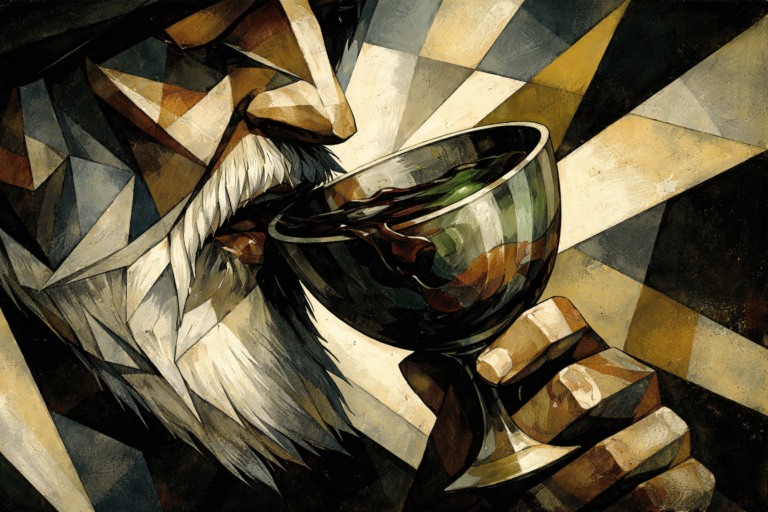
Drinking from the Bitter Chalice in the Middle East, Again
In August 1988, with his country bled white by eight years of war against Saddam Hussein’s Iraq, a million dead, the economy in ruins, the revolutionary generation exhausted, Ayatollah Ruhollah Khomeini accepted a U.N. ceasefire. He called it “more deadly than taking poison.” He was drinking from the bitter chalice of defeat.
And then what happened? The Islamic Republic survived. It did not moderate, liberalize, or reckon with its failures. It nursed its wounds, rebuilt its Revolutionary Guard, and spent the next three and a half decades constructing the very proxy network and missile arsenal that the United States and Israel are now trying to destroy. Khomeini’s humiliation became the seedbed of everything that followed.
Fourteen days into the American-Israeli air campaign against Iran, it is worth recalling that history — because we may be about to repeat it.
The opening strikes were, by any military measure, devastating. Supreme Leader Ali Khamenei is dead. Iran’s navy has been sent to the bottom. Its missile stocks are reportedly down by 90 percent, its drone capacity by 95 percent, although as Ukraine has demonstrated, this can be reconstituted in the face of relentless attack. The nuclear program, already set back by last June’s 12-day war, has been hammered further. From the air, the United States and Israel appear to have Iran in a vise.
Related
A Post-US Regional Order? The Shifting Security Architecture in MENA Amid the Iran War
Join us a for discussion of the future of the Middle East’s security architecture.